



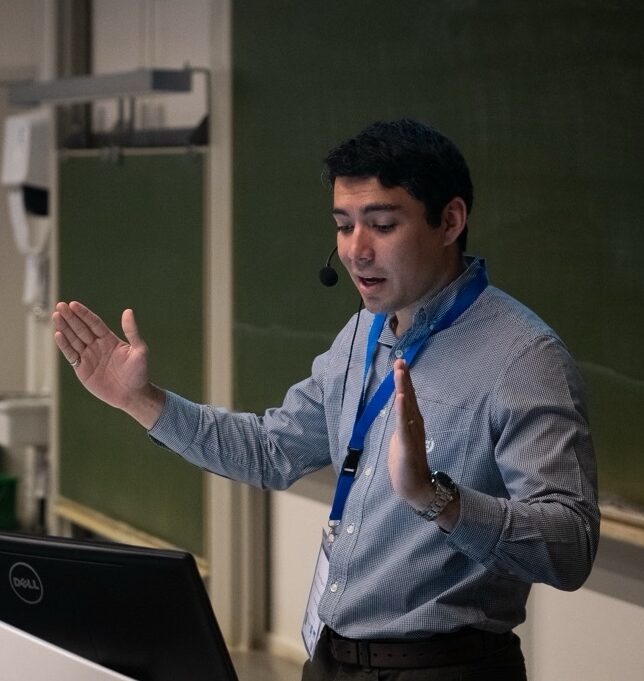
Today we’d like to introduce you to Vinicius Taguchi
Hi Vinicius, thanks for sharing your story with us. To start, maybe you can tell our readers some of your backstory.
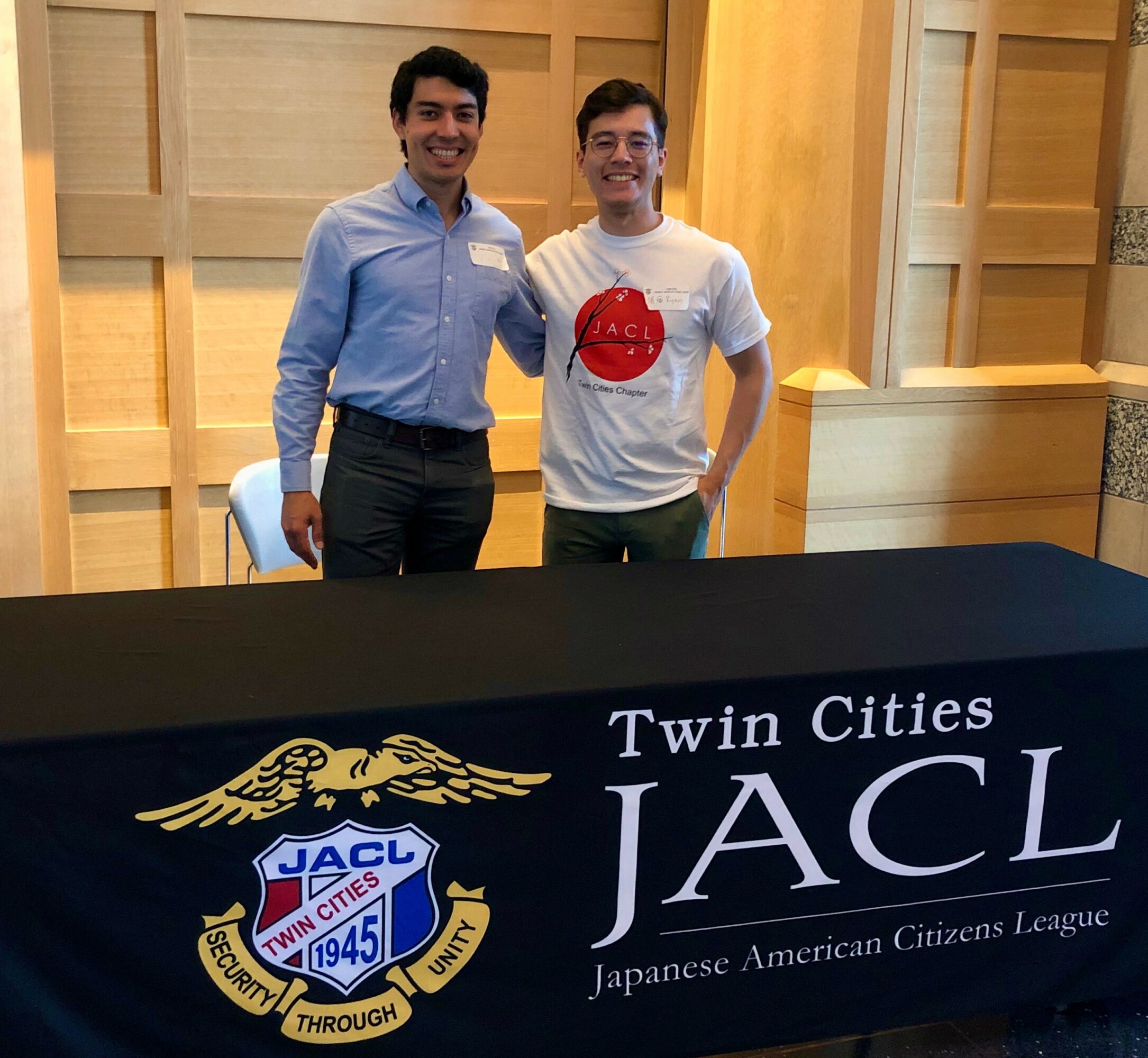
I have been organizing with the Japanese American Citizens League (JACL) since 2016, when I first came to Minnesota to pursue my PhD in Civil Engineering at the University of Minnesota’s St. Anthony Falls Laboratory. I grew up in North Carolina since the age of two, having been born in Germany to two Brazilian parents. In addition to the cultural melting pot that is Brazilian heritage, my parents have recent ancestry from Italy, Lithuania, and Japan. My late maternal grandfather was born in Japan shortly before World War II and moved to Brazil as an adolescent.
Growing up, Japanese culture, and particularly food, was always present in our home. And although I grew up visiting my Japanese Brazilian grandfather every few years in Brazil, I did not visit my relatives in Japan for the first time until 2014. In order to do so, I first had to take Japanese language classes to the point of being conversational because my Japanese relatives don’t speak any English. It was through one of my Japanese language teachers that I first learned about the JACL.
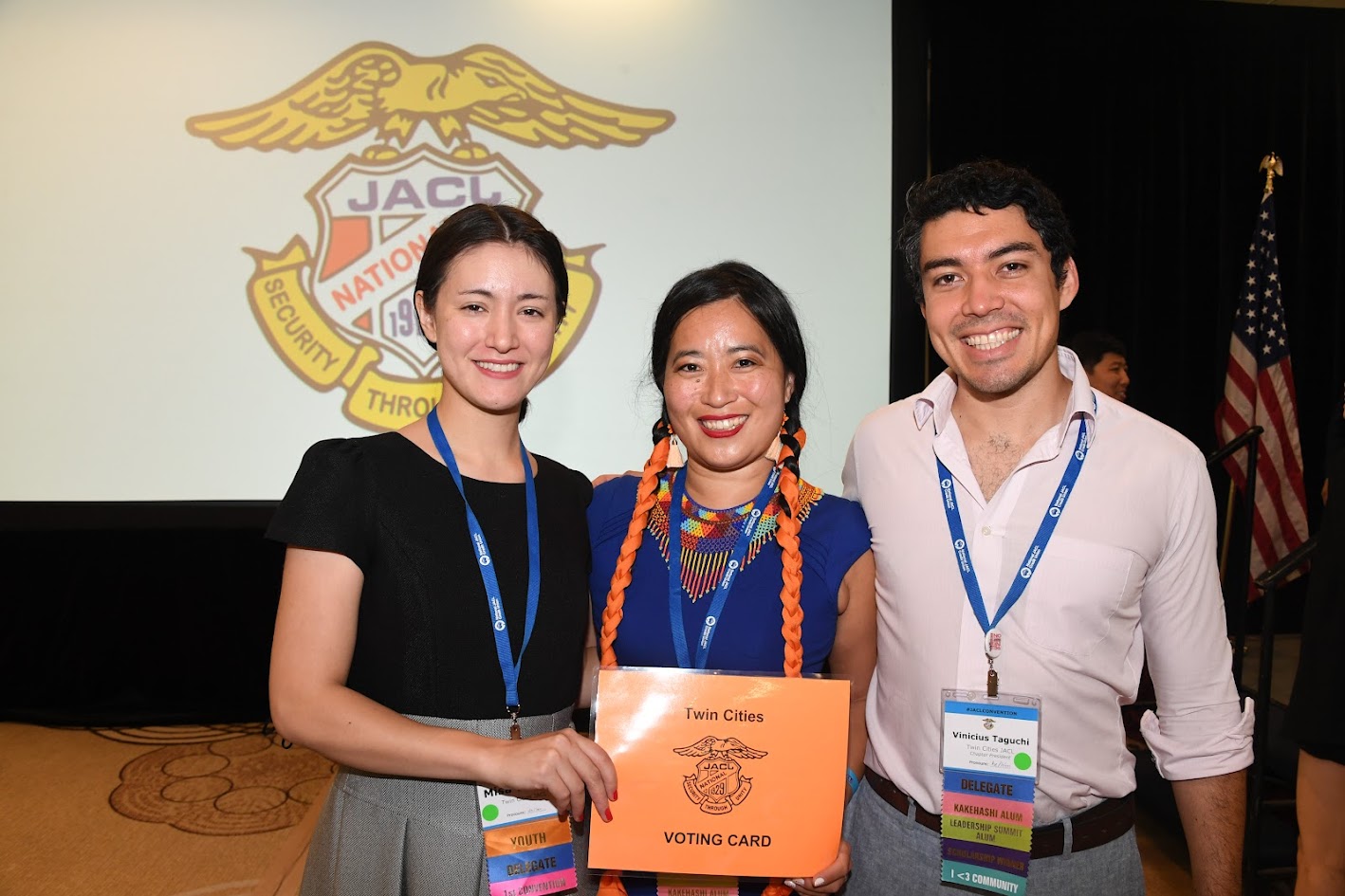
The Japanese Ministry of Foreign Affairs hosts a program called Kakehashi (“building bridges”) that brings groups of young people to Japan in order to build person-to-person relationships. The JACL administers one annual cohort of this program specifically intended to connect young Asian Americans with Japan. My brother and I were accepted into the 2015 cohort. And although traveling to Japan was special enough, the most memorable part of the trip for me turned out to be spending a week together with a diverse group of Asian Americans. Having grown up in North Carolina, I was not connected with the Japanese Brazilian community of my grandfather, and there was not a historic Japanese American community to speak of. What struck me the most about my Kakehashi cohort was how varied the backgrounds and identities represented were. We had differences in immigration histories, racial identities, ethnic identities, gender identities, sexual orientations, generations, and countless other factors. And yet, we quickly formed a strong connection and found that we had much more in common than we had differentiating us.
The following summer, I moved to Minnesota, joined the local JACL chapter, and began doing what I could to support their community organizing and social justice goals. There were two other cohort experiences offered to JACL members that profoundly impacted me. In 2018, I was accepted into the JACL/OCA Leadership Summit in Washington, DC. This was a multiethnic, multiracial space coorganized with OCA, another large civil rights organization representing Asian Americans. Together, we learned how to advocate for our communities at the federal level and strengthened our community organizing skills. The second experience was the Kansha Project, organized by JACL Chicago and open to all JACL members in the Midwest. I was accepted into the 2019 cohort, and together we visited Little Tokyo in LA and Manzanar, a concentration camp where over 11,000 Japanese Americans (many of them US citizens) were incarcerated during World War II without due process or being charged with a crime simply because of their ethnic and racial identities. Experiencing these physical representations of the shared Japanese American community history was something I had never imagined. With a more solid foundation of my place in the community, I was ready to become more involved in my chapter.
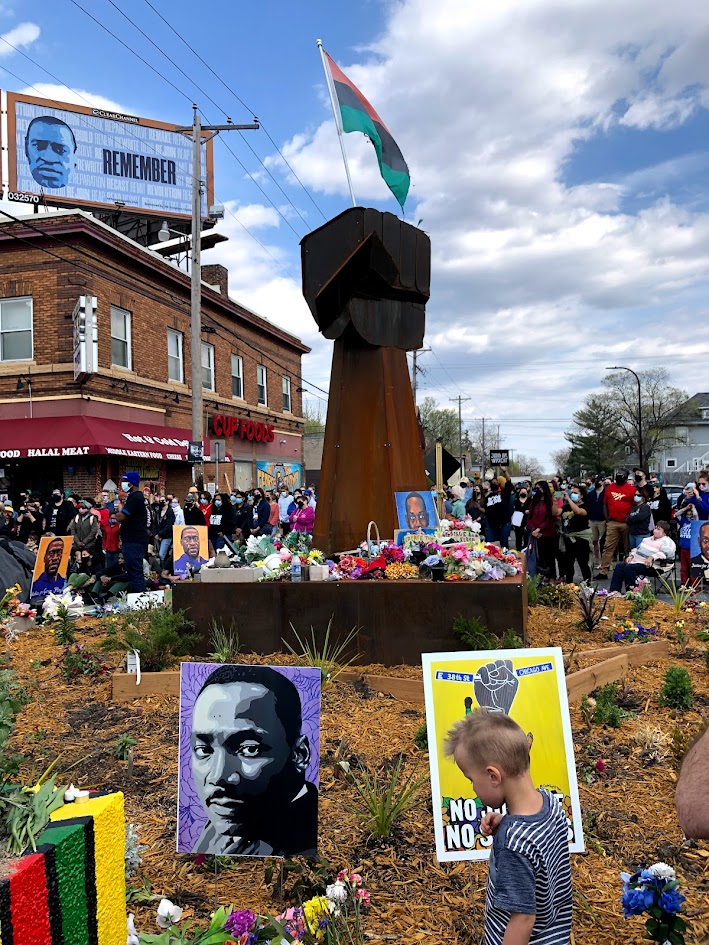
Cognisant of the fact that I was a full-time engineering PhD student, I had previously tried to limit my JACL activities to weekends. However, in the strong tradition of getting “voluntold,” I quickly found myself becoming the Youth/Student Chair and then a member of the Executive Board. It was in that latter role that I began taking on more responsibilities. During 2020, I helped support our chapter and community as we navigated the COVID-19 pandemic, rampant anti-Asian hate, and the solidarity movement following the murder of George Floyd. This dynamic landscape with an emphasis on coalition-building and multicultural organizing was where I was able to make a difference. And at the end of 2020, the Executive Board asked me to be their next Chapter President, a responsibility I still hold today.
I’m sure it wasn’t obstacle-free, but would you say the journey has been fairly smooth so far?
Being a chapter president in a civil rights organization is a lot of work, and it was almost too much to do at the same time as getting my PhD. Luckily, I have an incredible Executive Board of hardworking and passionate individuals who support me and are always looking out for our community. As the saying goes, many hands make light work.
Another challenge was learning how to be a good community leader. As an engineering student, this wasn’t a skill set I had learned in school. Instead, I had to learn by doing and absorb what I could from the other incredible community leaders in the Twin Cities. There are too many to list, but the Coalition of Asian American Leaders (CAAL) deserves a special mention. After George Floyd was murdered, CAAL established an inter-organizational coalition that would come to be called the Asian Minnesotan Alliance for Justice (AMAJ). Meeting regularly and organizing together with all of these groups really taught me how to become a more effective community organizer.
In addition to the countless challenges, hardships, and tragedies that came with the COVID-19 pandemic, we were also faced with the need to become more accessible. As most JACL activities became virtual overnight, I was well poised to help make that transition due to my familiarity participating in and hosting virtual meetings and webinars in my role as a PhD student. By moving certain activities virtually, we also greatly reduced the time and logistical burden on our volunteers (we have no permanent staff and all chapter leadership is fully volunteer only). By not having to fight traffic or live close enough to the Twin Cities, we were able to encourage participation from community members across the state of Minnesota and beyond. Because of these advantages, we have maintained virtual and hybrid meetings and programming as central aspects of our activities.
Alright, so let’s switch gears a bit and talk business. What should we know about your work?
The JACL was established in 1921, at a time when immigrants from Japan were not allowed to become US citizens, regardless of how long they lived in the country. And so, it was the second generation of natural-born US citizens who took up the responsibility of advocating for the rights of Japanese Americans, which is why the organization has the word “Citizens” in its name.
During World War II, the community faced increased racism fueled by wartime hysteria. Under the unsympathetic FDR administration, over 126,000 Japanese Americans, many of them US citizens, were systematically stripped of their constitutional rights and incarcerated indefinitely, without due process, simply for the crime of looking like the enemy (a charge that most Italian and German Americans were spared). This was possible because of presidential executive order 9066 as well as the Alien Enemies Act of 1798, which remains on the books today.
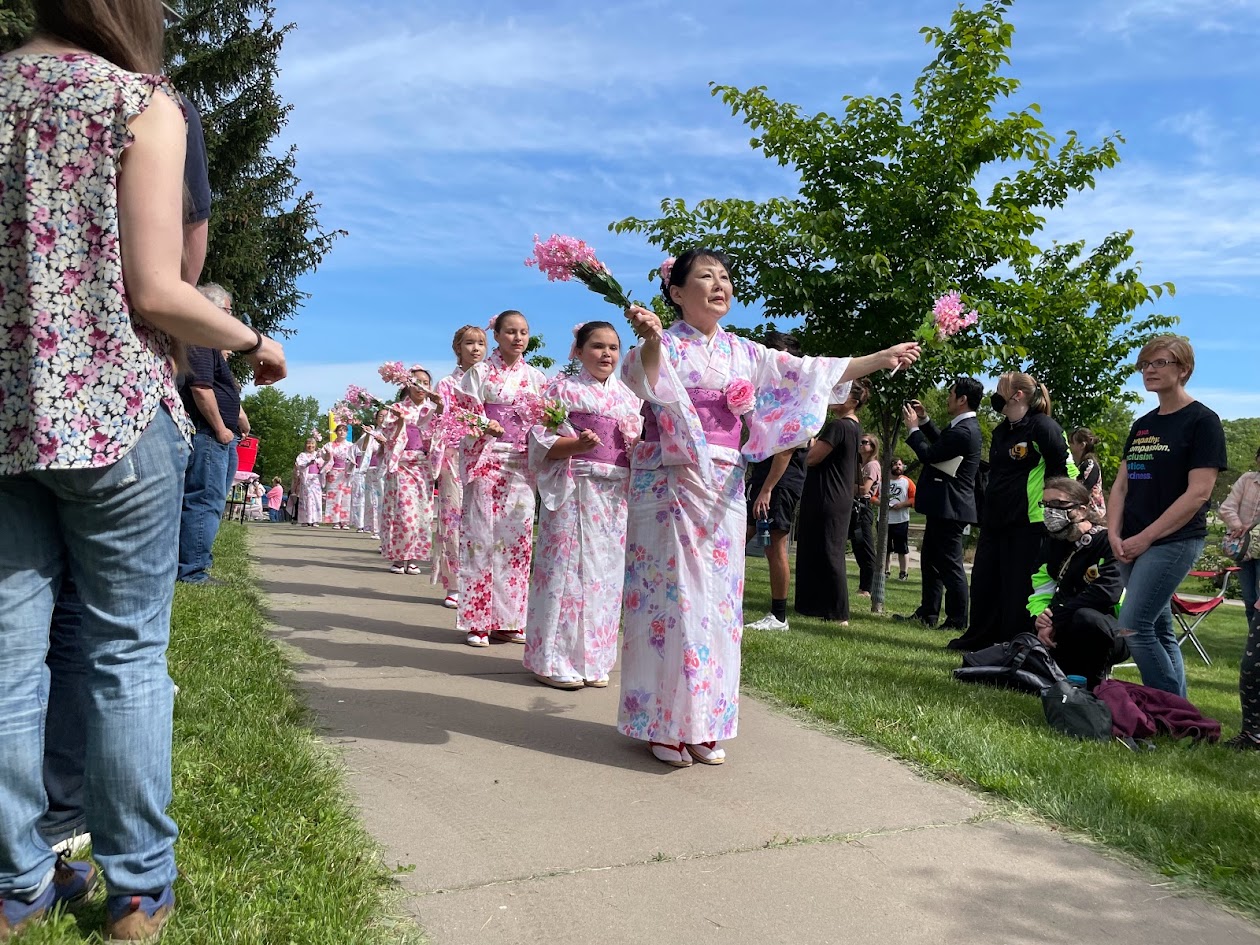
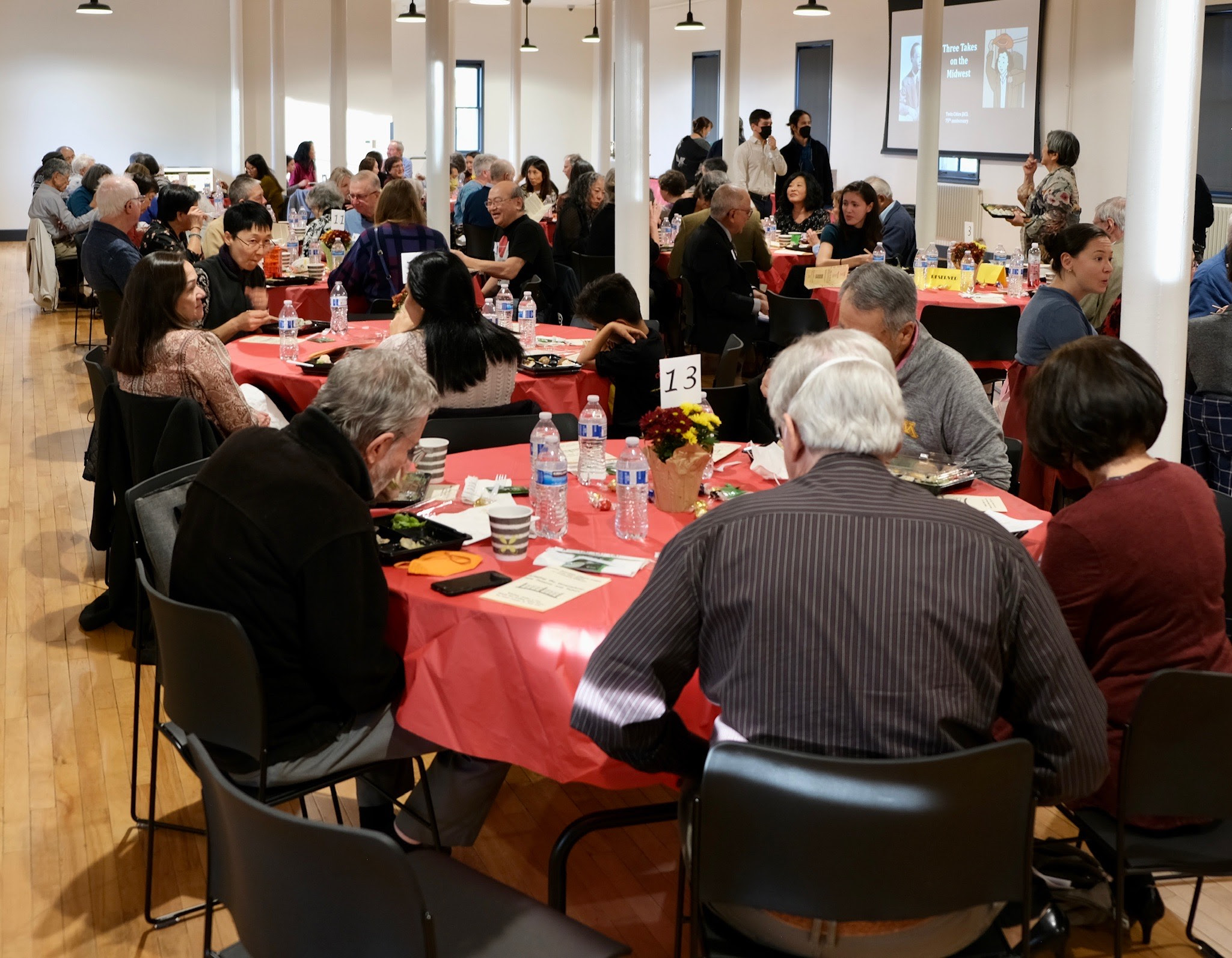
Prior to World War II, the vast majority of Japanese Americans lived on the West Coast. Our small community in Minnesota can trace its roots to Fort Snelling. More specifically, second-generation Japanese Americans were recruited out of American concentration camps and trained in the top-secret Military Intelligence Service (MIS) Language School to serve as Japanese-language interpreters, translators, and interrogators on the Pacific front. This program was originally housed in San Francisco but moved to Camp Savage, MN and, later, Fort Snelling, MN, where the public was less hostile toward the young Japanese American soldiers. After the war, many of the MIS veterans returned to Minnesota because of how welcoming they had found the community. And in 1946, they founded our JACL chapter.
After the war, a primary focus of the community was to address the injustices they had faced during the war. Many older Japanese Americans had been ashamed by the perception that they were not American enough and sought to integrate their families more fully in American culture. Many others felt betrayed by the US government, which had wrongfully branded them as potential traitors, and demanded a formal apology and financial compensation for the hardships. Regardless, our community endured a long and difficult struggle that ultimately culminated in the passing of the Civil Liberties Act of 1988, an apology from then-president Ronald Reagan, and redress payments of $20,000 to each surviving victim of wartime incarceration. Since then, the JACL has used its unique platform as one of the few communities to have received an apology from the US government, to advocate for other similar causes such as the struggle for Black reparations, the Native American Land Back movement, Islamophobia, and countless perils facing immigrant communities under the current administration.
Can you tell us more about what you were like growing up?
I always joke that a room becomes more diverse the second I walk in. I’m mixed race, raised in North Carolina, born in Germany, with Brazilian parents, and with Japanese, Italian, and Lithuanian grandparents. As such, I’ve always been exposed to different languages and cultures, and understanding my identity has been a long and continuous journey. I spoke Portuguese as my first language, and quickly learned English in the US. In elementary school, I began learning Spanish. In high school, I began learning German (since I did not live there long enough to learn it naturally). In college, I began learning Japanese. And in grad school, I began learning French (because I have a French brother-in-law). Italian is next on my list. And although I am by no means fluent in all of these languages, I have found that learning what I have has been an incredibly valuable tool for connecting with others and understanding different sets of values and ways of thinking.
I was drawn to the field of Civil Engineering (and, more specifically, that of Green Infrastructure and Stormwater Management) at an early age, always playing with water and alternating building and destroying dams and channels along creeks and streams. But the further I got into my engineering education, the more I felt something was missing. It seemed wrong to define a project or challenge only on the technical objectives. What about the community that would benefit from the rain gardens we create? It’s easy to dismiss a consideration as outside of a project scope when it can be assumed to be altruistic or taken care of by another person. That is not always the case, however. Green infrastructure is incredibly popular right now, and the types of infrastructure I’m helping to build are a part of just about every “urban redevelopment” project. That also means that green infrastructure is a part of raising property values and, therefore, gentrification. So if I don’t consider the community I’m attempting to serve, how can I make sure they will be able to stick around and benefit from the infrastructure I create? Am I in fact serving the more affluent community that will buy them out as rent and cost of living increases? Clearly, a broader scope is needed.
Now, I carry my environmentalist and social justice lenses with me everywhere I go. In my day job, I am always thinking about community impacts and how best to include them in decision-making processes. In my community organizing role, I am always looking out for the broader context and how the environment and development are presenting challenges and opportunities.
Contact Info:
- Website: https://www.tcjacl.org/
- Instagram: https://www.instagram.com/twincitiesjacl/
- Facebook: https://www.facebook.com/twincitiesjacl
- Youtube: https://www.youtube.com/@twincitiesjacl