



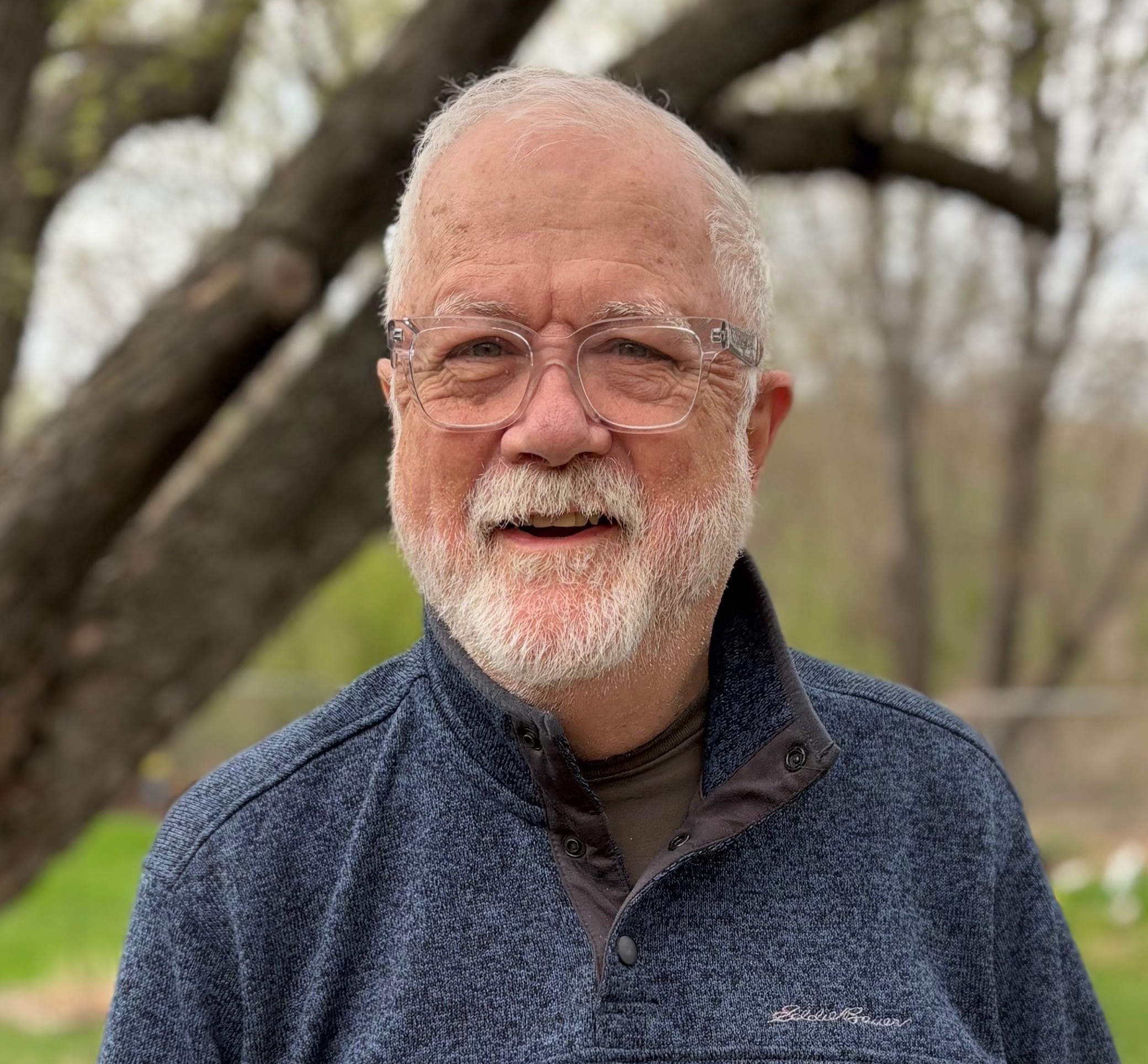
Today we’d like to introduce you to Bob Keller.
Hi Bob, thanks for sharing your story with us. To start, maybe you can tell our readers some of your backstory.
I tell people I came out of the womb with a pencil in my hand. I was the classic kid that likes to draw. When I was five or so my dad would bring home typing paper pads and pencils from the office to keep me from drawing on the walls and in books. I was virtually an only child, my siblings were already out of the house by the time I started school. I had a very active imagination and entertained myself by making up stories. I think the impulse to draw all the time came from wanting to visualize the world of my imagination. Lots of race cars, space ships, sports and all the things young boys are into.
When I was ten or eleven I started taking classes at the Rourke Art Gallery in Moorhead. James Rourke was my first mentor, as he was to so many artists that grew up in the Fargo-Moorhead area. He introduced me to painting and it wasn’t long until I had me in the adult painting classes. All I ever wanted to be was an artist.
I went to Carleton College where I took a drawing course from Dean Warnholtz. Dean introduced me to printmaking and opened my eyes to abstract art. That’s when I started dabbling in abstract expressionism. Carleton had a great art department, but not many art majors. My father was dead set against my majoring in art, so my plan was to major in economics and go to law school. In my junior year he passed away and freed from my fear of disappointing him, I switched my major to art.
After graduation I spent some time printing lithograph editions for prominent local artists at Martin Graphics. After that I was hired by Bob Gadbois, a local illustrator to work in his studio part time while I was bartending at the Black Forest Inn. Then I spent a year doing old school cell animation work at Bajus Jones. Is anyone old enough to remember the great Old Dutch Potato Chip movie parody commercials?
Most of my jobs throughout the years were somehow related to art, I did Illustration and page layout at the StarTribune, freelanced as a illustrator and graphic designer, taught illustration at Brown Institute, and spent 13 years working for the US West Direct/Dex yellow pages, the last 10 of which I co-managed the art department there.
When I retired I did a little freelancing and worked part time doing page layout for the Minnesota Spokesman-Recorder.
Around that time I started painting again, I didn’t really know what I wanted to paint. I was doing a lot of neo-impressionist still lifes, landscape and portraits. I was just starting to dabble in abstract painting when the Robbin Gallery asked me to submit a proposal for a show, based on an abstract piece they saw in the MIA Foot in the Door exhibition where every 10 years they accept art no more that a foot square.
My proposal was accepted, fortunately I had a year to build up an inventory of abstract work. I think during that year I found my voice and started showing my work locally. I’m currently represented by Follow the Muse Gallery in the Northrup King Building.
I’m currently the president of the Robbin Gallery Board of Directors.
.
Can you talk to us a bit about the challenges and lessons you’ve learned along the way. Looking back would you say it’s been easy or smooth in retrospect?
Does any artist have a smooth road? It was up and down my whole career. Bob Gadbois laid me off so he could bring his son into the business. I was laid off at Bajus Jones, but I was glad that happened. Even though as a kid I dreamed of working at Disney, I soon found out animation was not for me. Working at the StarTribune was my dream job, but I was there as a freelancer and after a year the union rule is they need to hire you or let you go. They let me go.
In 1991 I had two daughters and a mortgage and we were pretty close to belly up. After several good years of illustration work I suddenly went completely dry. Fortunately my wife had a good job as a producer at Martin Williams Advertising or we would have really been up the creek.
My sister, who sold employment classifieds at the Pioneer Press tipped me off that US West Direct was hiring artists. Although I was reluctant to take that very unglamorous job, I really had no choice. I sometimes call it a soul sucking job from hell but it paid the mortgage and put my daughters through college. Looking back it was a good job and because of it we are financially secure in retirement.
As you know, we’re big fans of you and your work. For our readers who might not be as familiar what can you tell them about what you do?
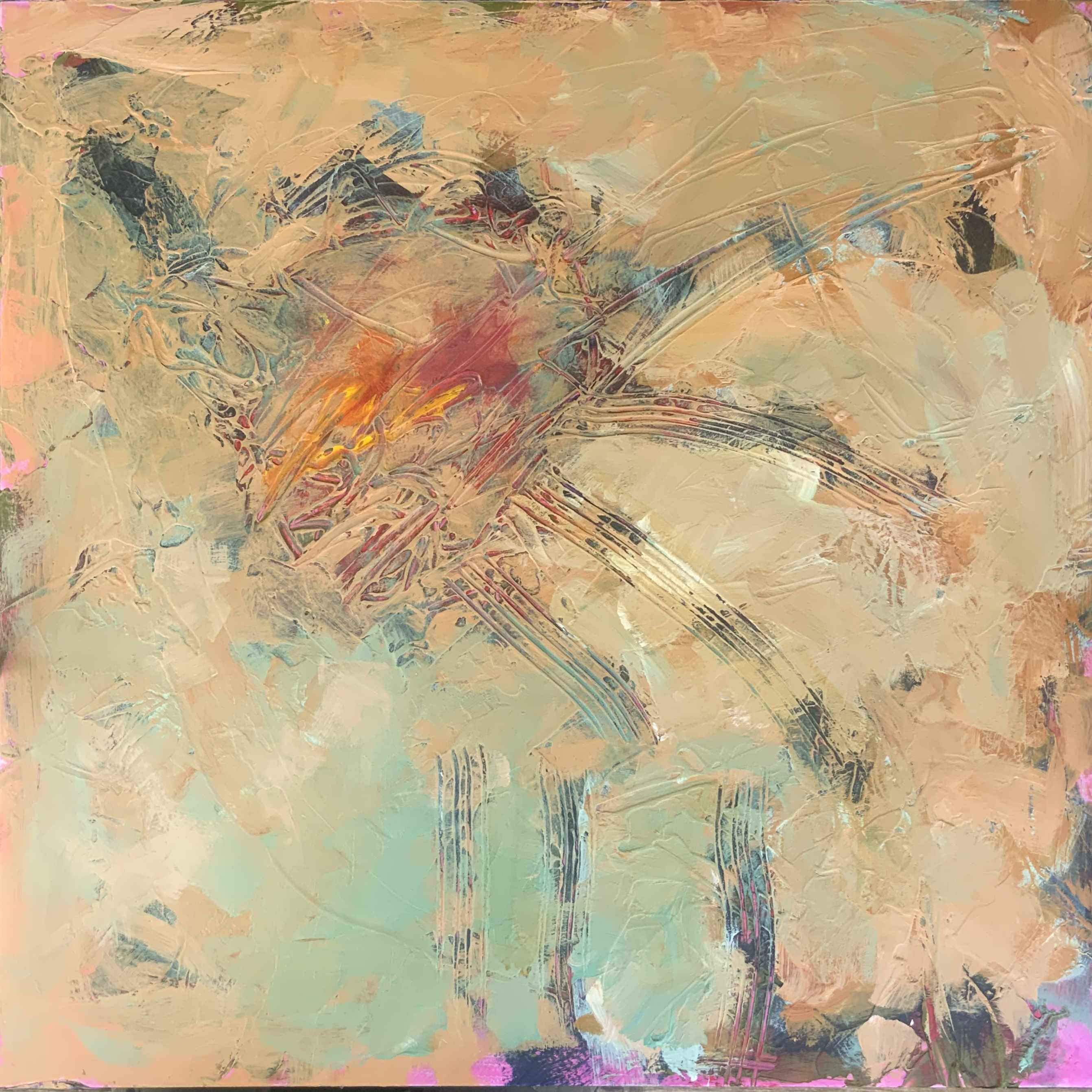
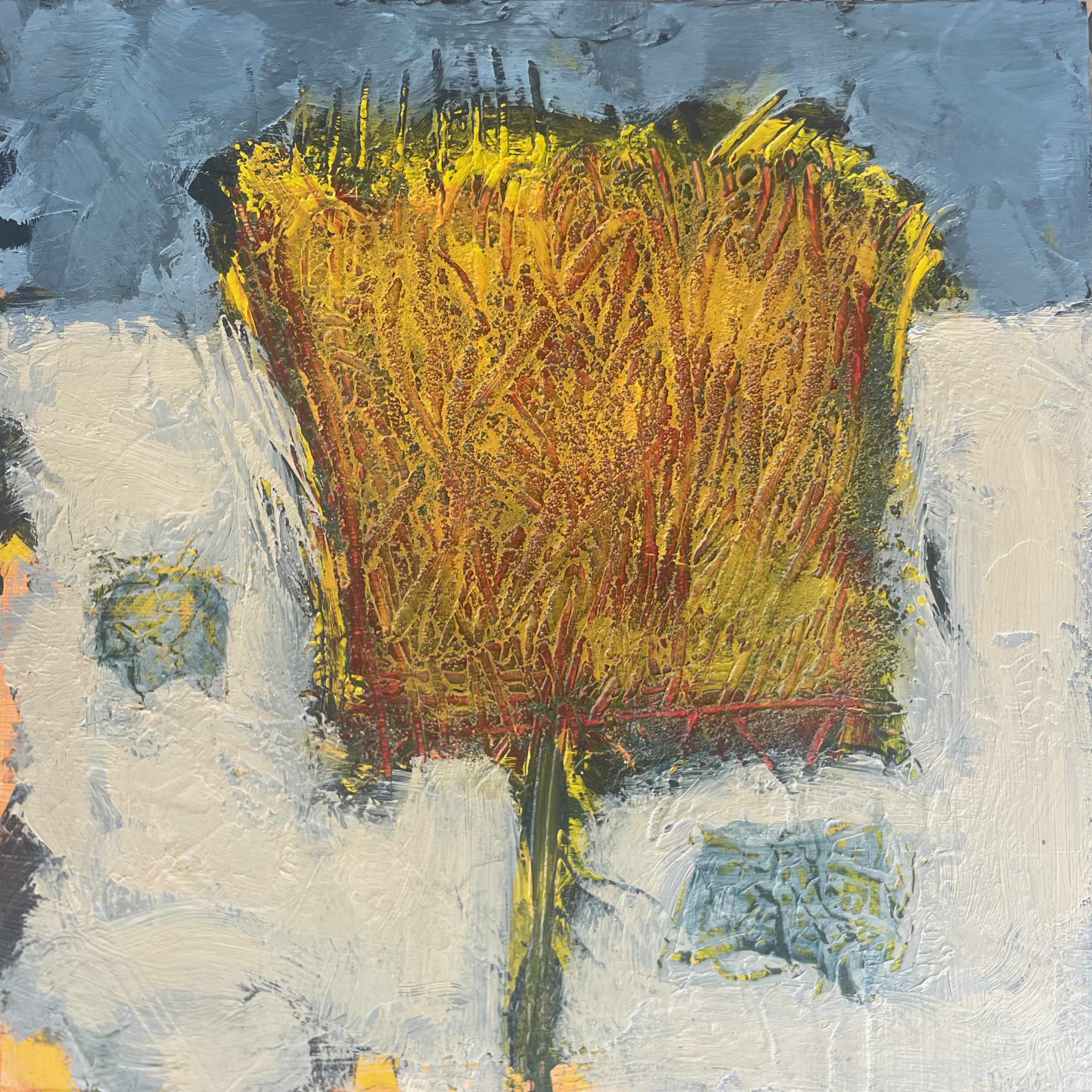
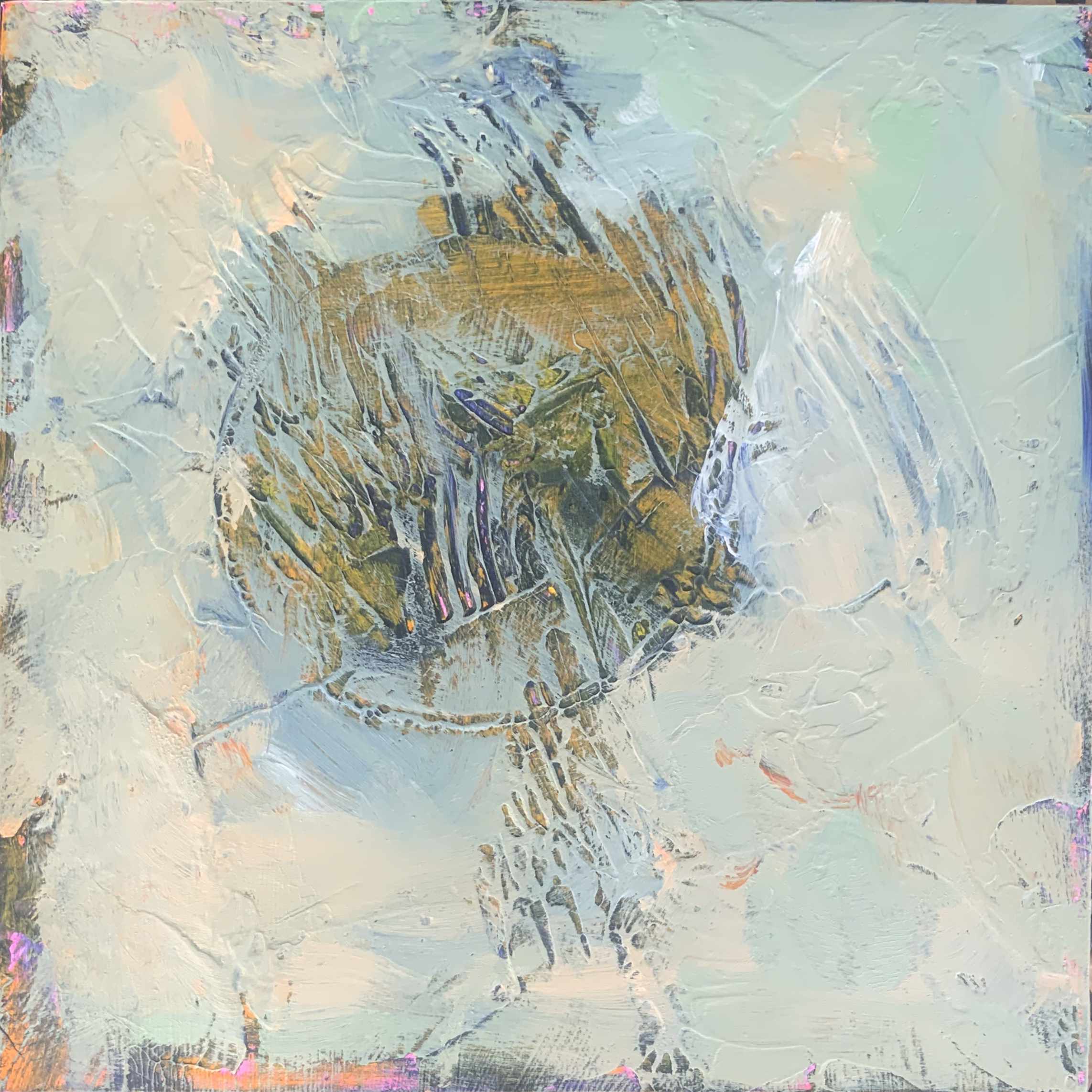
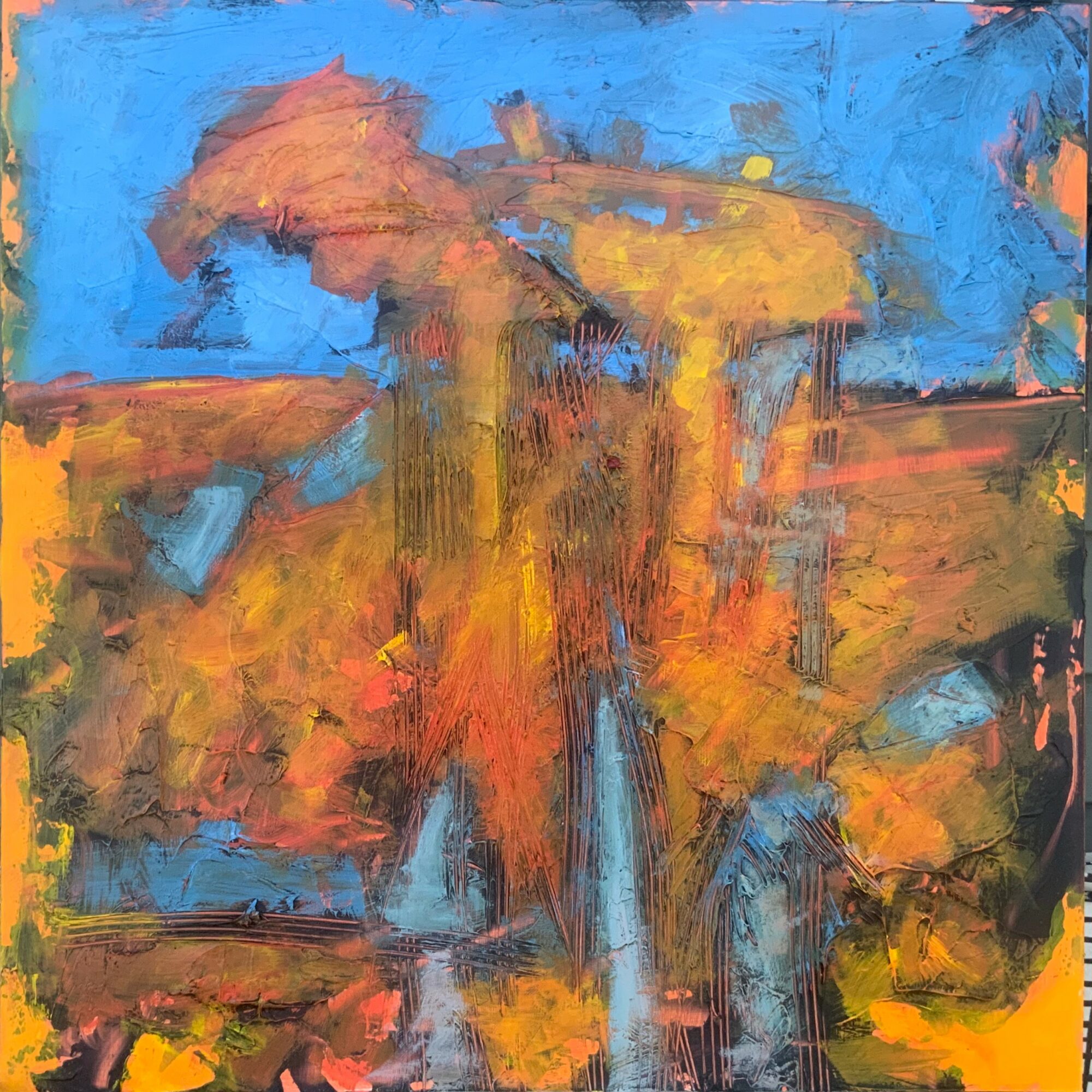
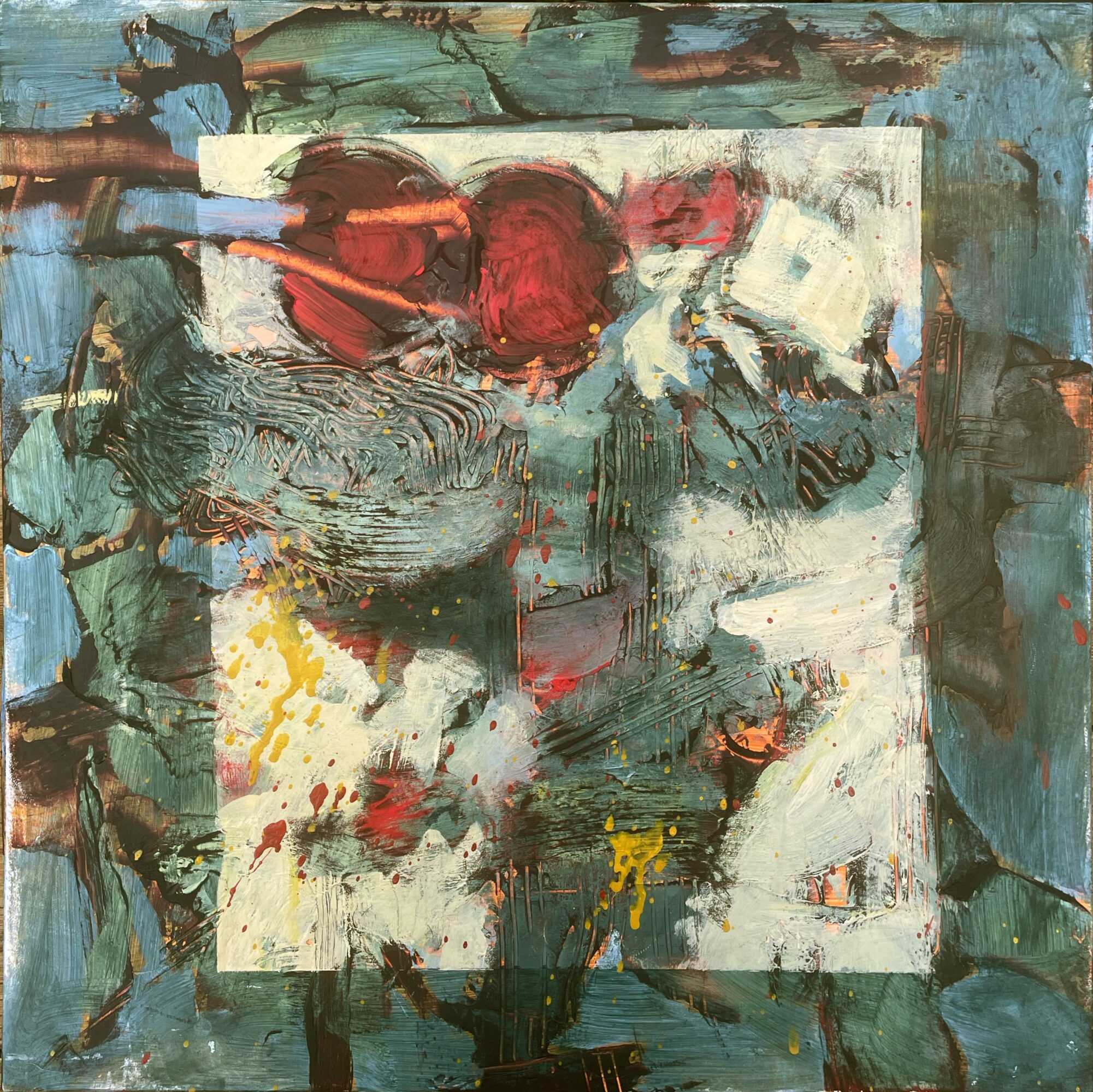
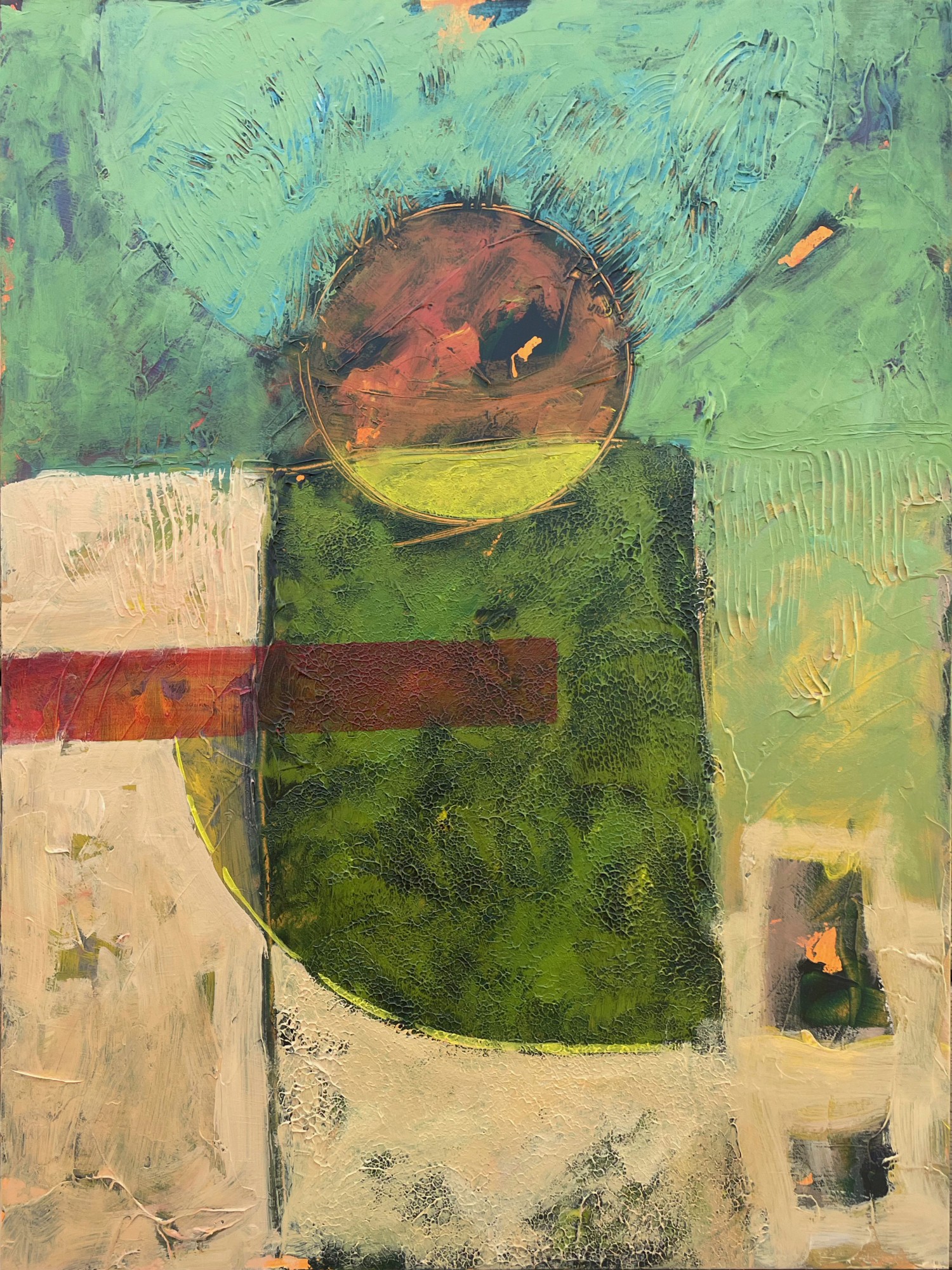
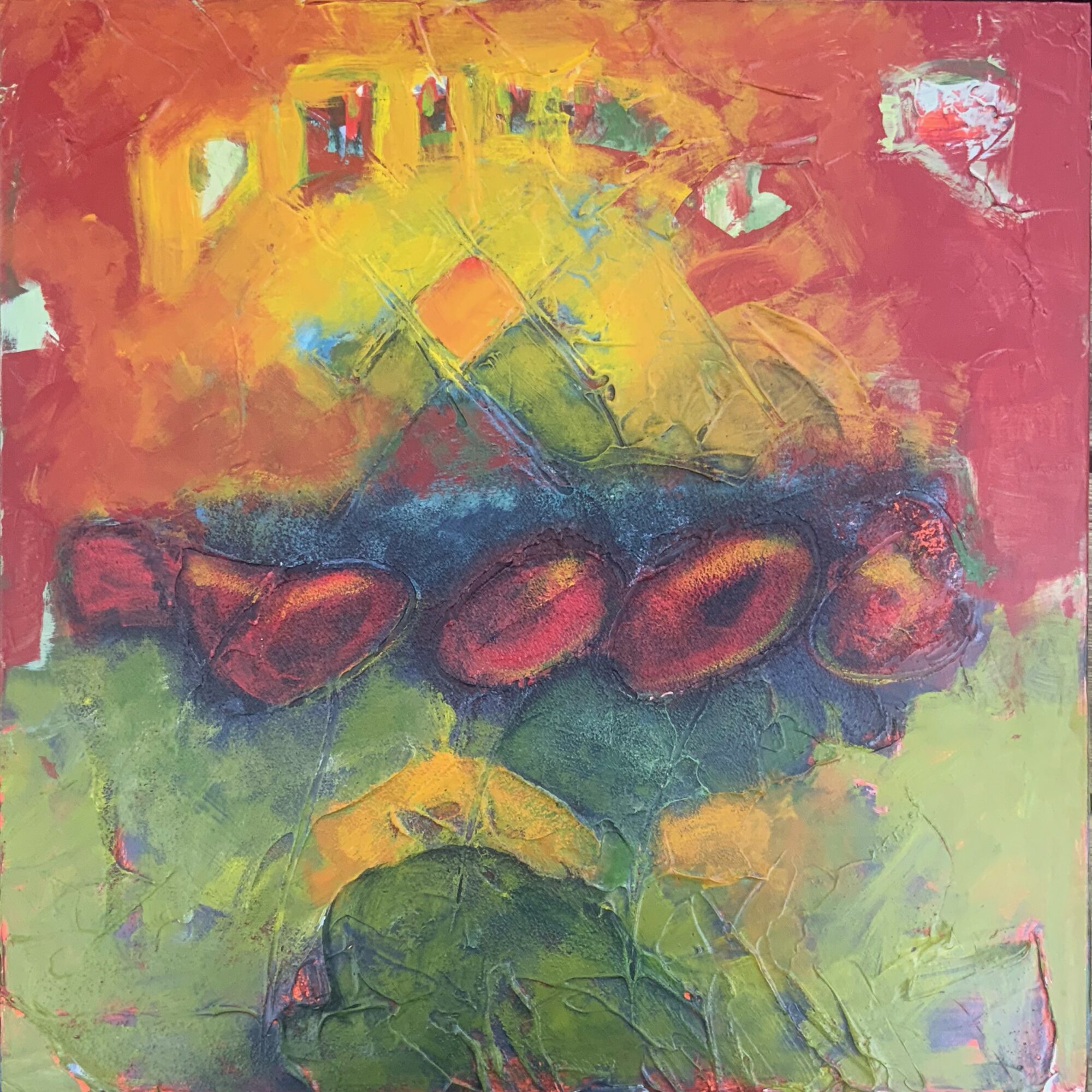
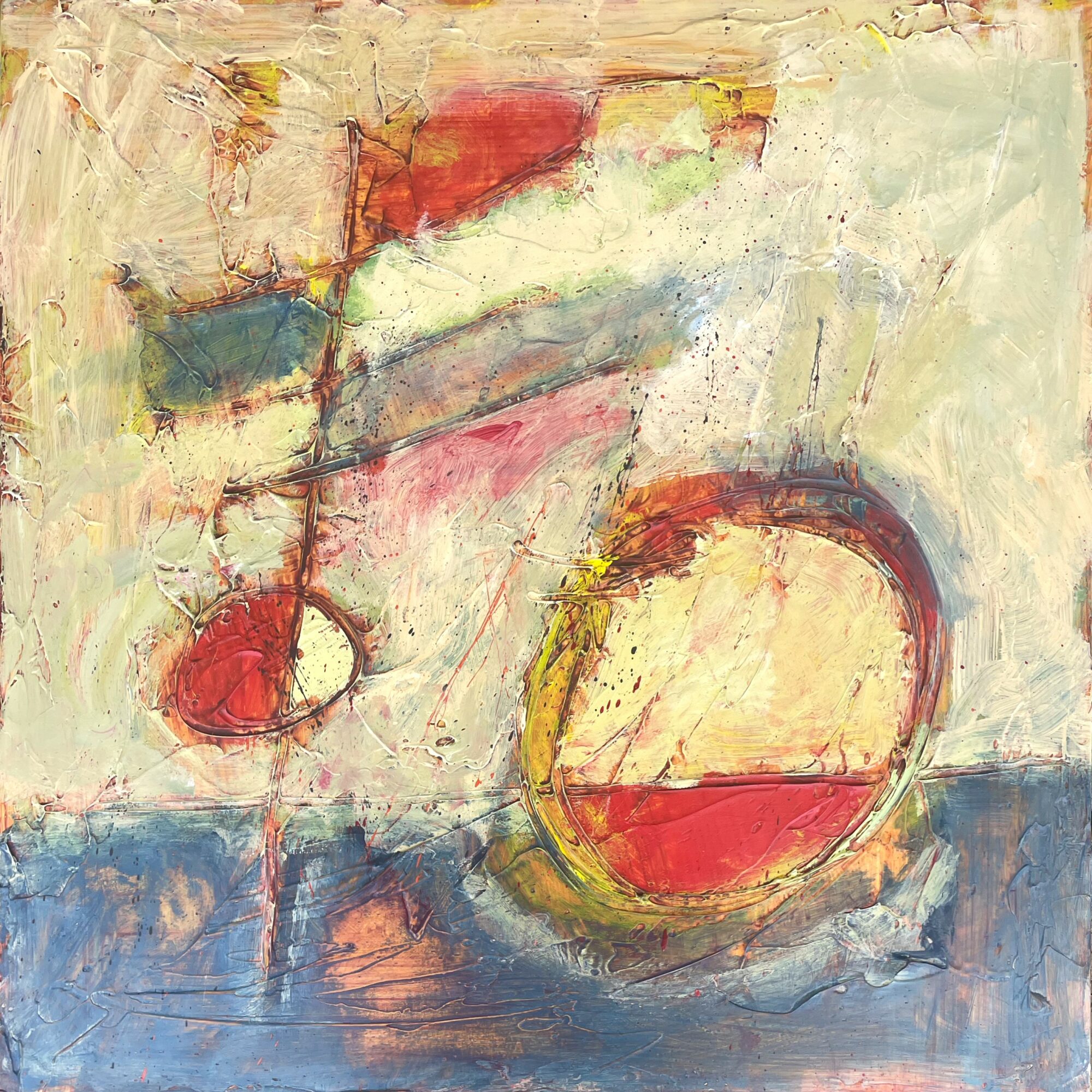
I paint. I create abstract painting that are heavily textured with acrylic gel medium. I press textural elements (window screen,burlap, pumice and whatever else I can find) into the surface and sometimes embed them in the surface. I build up the surface with layers of paint, using different painting techniques like glazing and dry brush, letting the texture do the work. I make marks with various tools, I use plastic forks a lot. Sometimes I sand the surface to reveal the layers below.
I call my approach intentionally unintentional. I start by just slinging paint with no preconceived concept in mind, trying to remove my conscious mind from the process. As I get further along in the process becomes like a dialogue between the painting and me, I spend a lot of time looking, trying to let the work tell me the next mark to make. Someone once told me my paintings look like aerial photographs, my reply was yes, or the bottom of a petri dish.
I think I’m most proud of the positive feedback I’ve gotten from other artists that I admire. It’s really gratifying when someone responds in a way that shows they understand what I’m doing. The Twin Cities have a really vibrant art community.
I’ve been told by several people that my style is very recognizable and unique.
Can you talk to us about how you think about risk?
I think art is risky business. You are putting yourself out there to be judged, It can be pretty intimidating.
Dean Warnholtz told me you have to be brave to be and artist, You have to be brave enough to say that a painting is finished, and brave enough to keep working to improve it, even though you know the next mark might completely ruin it. I sometimes stare at the work for hours, trying to decide if it’s done or if I can keep going at the risk of overworking it. I’ve talked to so many artists who feel the same way.
Contact Info:
- Website: https://bobkellerart.com
- Instagram: @bobkellerabstractart
- Other: https://horizontalambition.com