




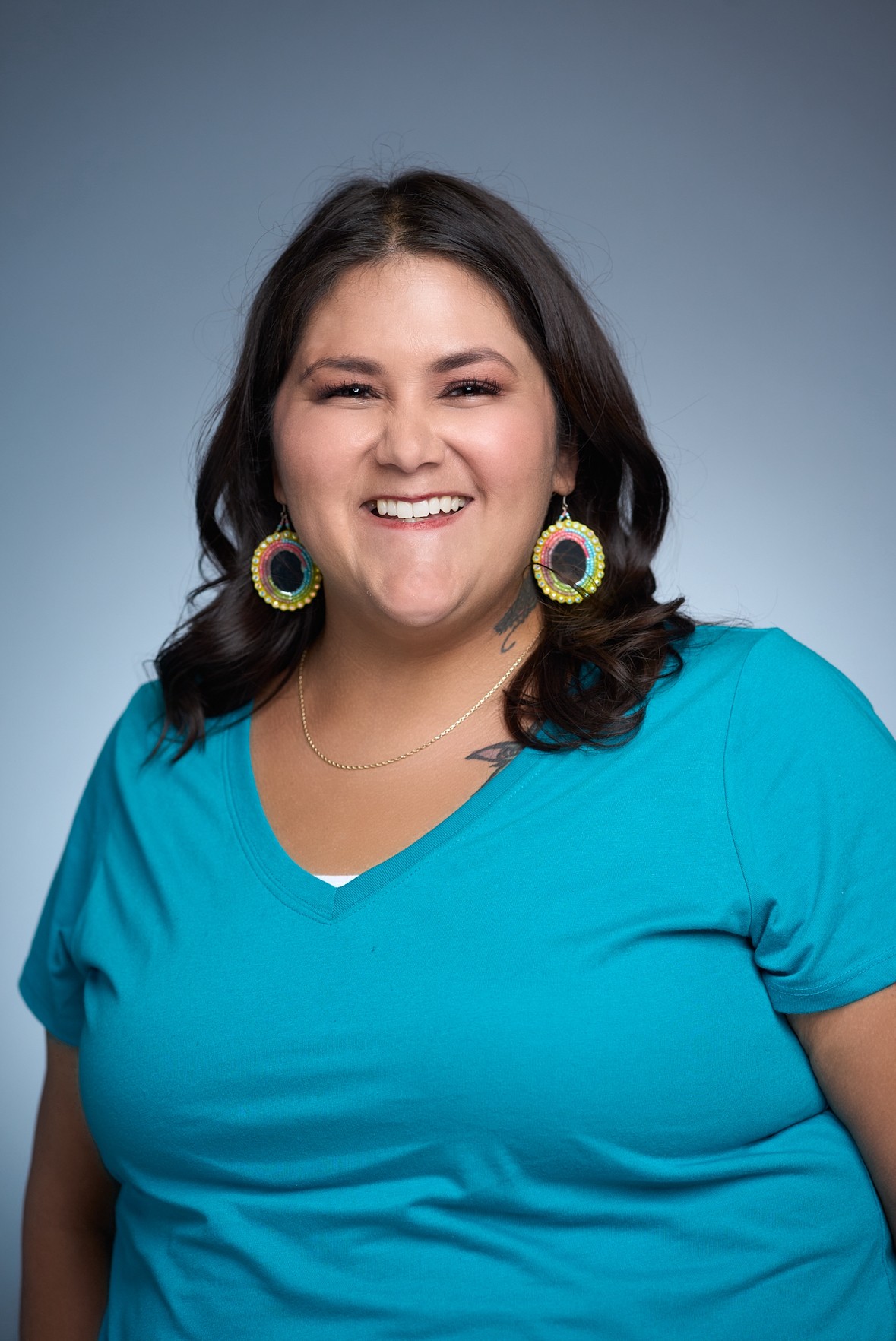
Today we’d like to introduce you to Kelly Miller.
Hi Kelly, so excited to have you with us today. What can you tell us about your story?
Well, my story is probably similar to a lot of people who feel called to make a difference in their community. My early twenties had some ups and downs, some really hard moments, but also a lot of growth.
Meeting my husband was a turning point for me, and when our daughter was born, it really grounded me and pushed me to think differently about the kind of life and impact I wanted to have.
I started as an intern at the Department of Indian Work, which is a set of programs within Interfaith Action of Greater Saint Paul, working in the food shelf. I quickly fell in love with the work, the mission, the community, and the relationships. It was not just about food access. It was about walking alongside people and understanding what stability really looks like.
From there, I grew into different roles, intake specialist, food shelf coordinator, director of Department of Indian Work, and eventually Chief Program Officer at Interfaith Action, where I oversaw multiple programs focused on supporting families and strengthening community.
Through that work, I really saw how systems impact people’s everyday lives, housing, food access, and economic stability, and how important it is to have leadership that understands that on both a personal and professional level.
I was approached by the board chair about running for county commissioner, and after some thought, it felt like the right moment. I had spent years doing the work on the ground, and I wanted to bring that experience into policy and decision making.
Now, as a county commissioner, I am focused on making sure our systems work better for people, especially those who are often left out, and that we are building a community where everyone has the opportunity to thrive.
I’m sure it wasn’t obstacle-free, but would you say the journey has been fairly smooth so far?
Personally, no, it has not been a smooth road, but I think that is true for anyone who is really working to change their life. I experienced the benefits cliff as I moved into new roles, which made each step forward a little more complicated than people might expect. At the same time, I went back to college to continue my education while also growing our family, so there was a lot to balance.
Professionally, it definitely was not smooth either, and I say that with a little bit of a laugh now. A lot of the challenges came from stepping into leadership roles at a young age. I did not grow up in the Saint Paul Native community, and there were times I questioned whether I belonged in those spaces. I was young, I did not have a college degree yet, and I was still learning how to navigate those environments.
And beyond that, the work itself is hard. Anyone who has worked in the nonprofit sector knows that. You are constantly navigating funding challenges, staffing, and trying to meet real needs in the community. You are working to address health, education, and economic disparities, and those are not easy things to change.
But I think all of those experiences shaped me. They pushed me to grow, to stay grounded in community, and to lead in a way that is both informed by lived experience and focused on real impact.
Thanks for sharing that. So, maybe next you can tell us a bit more about your work?
I currently serve as a Ramsey County Commissioner, and my work is really focused on making sure our systems are working for people in real, meaningful ways. Before that, I spent most of my career in the nonprofit sector at Interfaith Action of Greater Saint Paul, where I worked my way up from an intern at the Department of Indian Work to Chief Program Officer overseeing multiple programs.
My background is really rooted in community-based work. I specialize in connecting people to resources and thinking about how systems can better support families, especially when it comes to housing stability, food access, and economic mobility. A lot of my work has been about bridging gaps between community and government, and making sure services are not just available, but actually accessible and culturally responsive.
I think what I am most proud of is being part of building and growing programs that truly center community voice. Work like the Economic Mobility Hub and the services at the Department of Indian Work were not just about delivering programs, but about creating spaces where people feel seen, supported, and connected.
What sets me apart is that I bring both lived experience and professional experience into my work. I have navigated many of the same systems that I now help oversee, and that gives me a different perspective. I am always thinking about how decisions made at the policy level show up in someone’s everyday life. I also lead with relationships. I believe strong partnerships and trust are what actually move the work forward.
At the end of the day, I hope I am known for being grounded in community and focused on getting things done in a way that makes a real difference for people.
What do you like best about our city? What do you like least?
I live in Maplewood, and I really love this city. It is always striving to be a better place for people to live, work, and play. I especially appreciate the city’s willingness to work with the community and try new approaches to meet people’s needs. You can see that effort in how they show up and partner with residents.
More broadly, when I think about Ramsey County, I love that we are so mission-driven. Our communities are truly the backbone of everything we do, and we are incredibly diverse. That diversity is one of our biggest strengths, and it shows up in our culture, our neighborhoods, and the way people care for each other.
If I had to say what I like least, it is that we still have real disparities across our communities. Not everyone has the same access to opportunity when it comes to housing, economic stability, or health outcomes. That is something we have to continue to be honest about.
But I also see that as a call to action. We have strong partnerships, engaged communities, and leadership that is willing to lean into those challenges. So while it is something I wish we did not have to navigate, it is also where a lot of our work and focus needs to be.