




Today we’d like to introduce you to Michelle Horovitz and Ralph Nuara.
Hi Michelle and Ralph , it’s an honor to have you on the platform. Thanks for taking the time to share your story with us – to start maybe you can share some of your backstory with our readers?
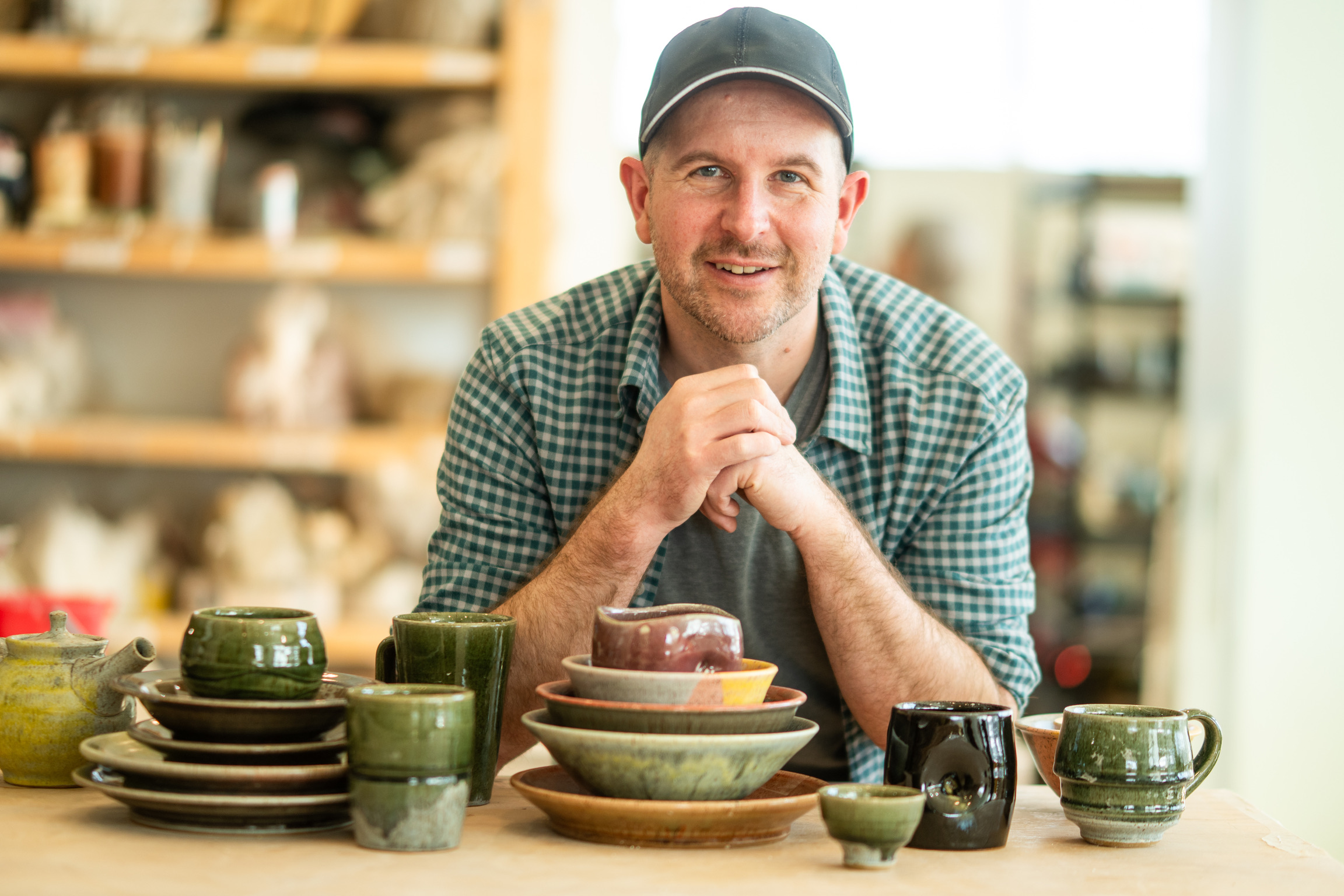
Forma Clay came together the way a lot of good partnerships do — through a shared studio and a shared itch to build something more. Michelle had always been a hobby potter with a background in business and leadership, and she knew she wanted to open her own studio one day. Ralph was already a professional potter and teacher, full of ideas about what a truly great clay studio could look like, but he didn’t want to run one alone. When the two met at another studio, Michelle pitched the idea of teaming up — pairing her business sense with his deep knowledge of the craft. It just clicked.
Three years ago, we opened Forma Clay in the East Harriet neighborhood of Minneapolis, built around three core principles: flexibility, community, and modernity.
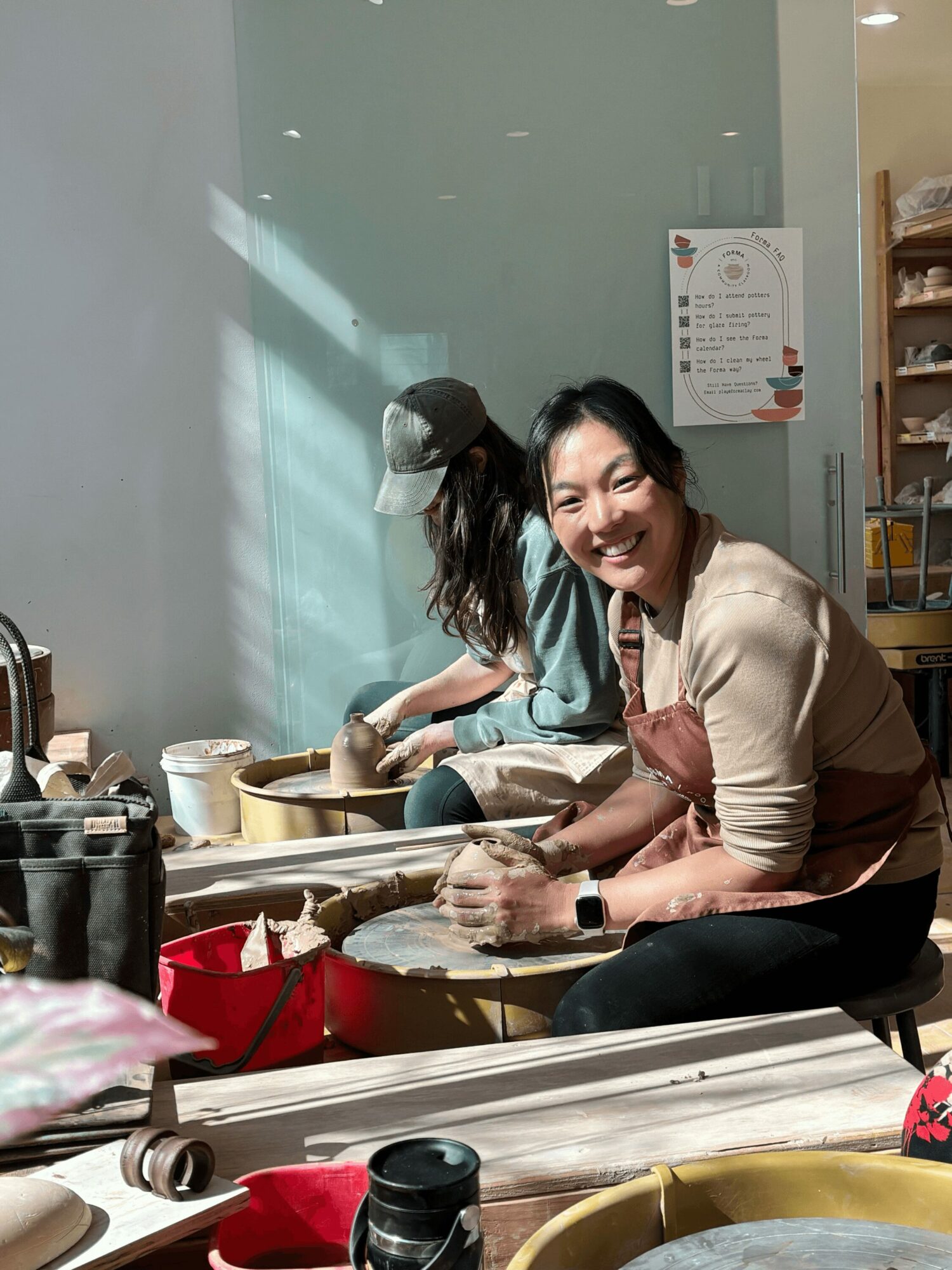
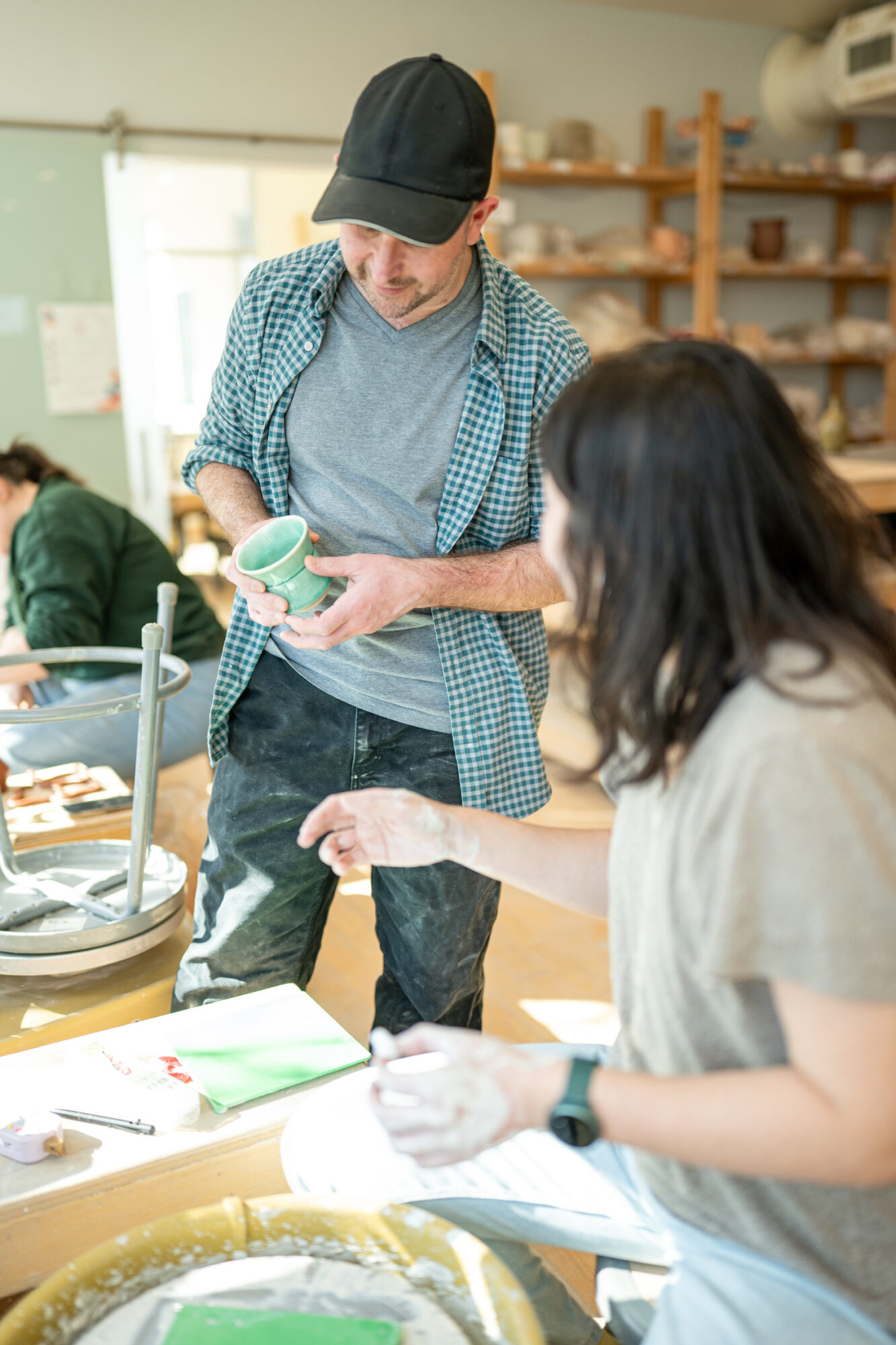
Flexibility means members get 24/7 access to wheels, hand-building space, in-house glazes, and a full range of shared and specialty tools — plus Potters Hours, where a teacher is on hand to help whenever it’s needed.
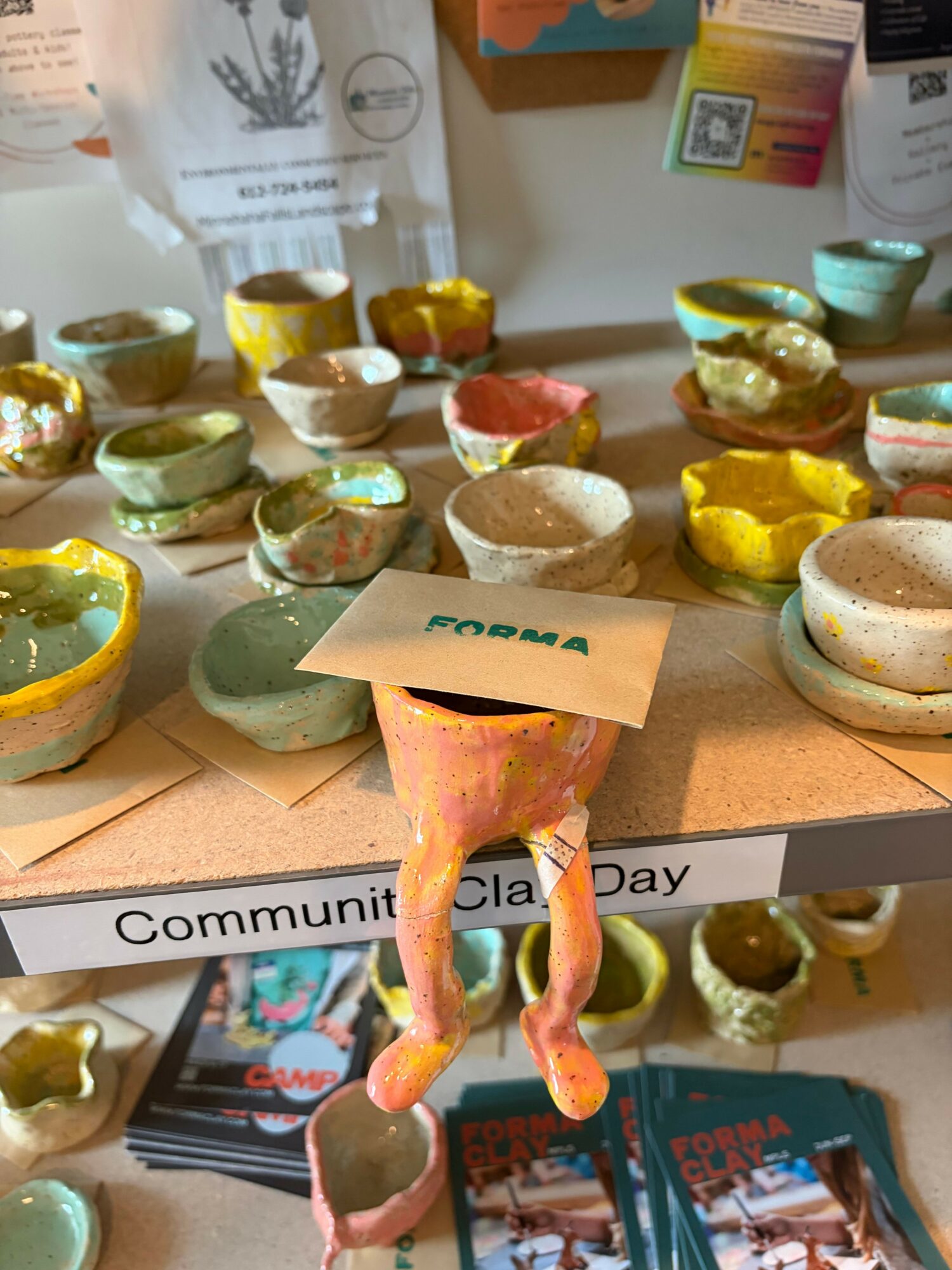
Community is the heart of it. We’ve worked hard to build a culture of conversation and collaboration, where people learn from and teach each other. That shows up in things like our Community Clay Days, where anyone can get a taste of the studio for free, and our critique events where members can bring in work for feedback.
Modernity is about making a premium studio experience accessible. Ceramics can get expensive fast, so we stock a full community tools library and a wide range of glazes, stains, and underglazes — all included, so nobody has to buy their own.
Today, that same spirit has grown into summer camps and a Young Potters Program for kids, a second-floor gallery where members (including many first-time sellers) can showcase and sell their work, and — coming soon — a small retail space in partnership with Brasa downstairs.
What keeps us going is pretty simple: Michelle loves creating something people genuinely want and need, and Ralph finds real joy in passing on the craft he loves to others. Three years in, Forma Clay still feels like exactly what we set out to build — a place that’s tactile, grounding, and just a little messy, in the best way.
Would you say it’s been a smooth road, and if not what are some of the biggest challenges you’ve faced along the way?
Not entirely — though we’d say the challenges have mostly been the good kind, the ones that come with building something from scratch.
One of the biggest early hurdles wasn’t creative — it was structural. We actually started Forma Clay with a third partner who ended up not staying in the business. Working through that transition and buying her out took a real toll on our time and energy, energy we would have rather been putting toward actually running and growing the studio. It was a distraction we hadn’t planned for, and it set us back at a point when we needed to be focused on getting the studio off the ground.
Merging our own two skill sets took some adjusting too. Ralph brought deep expertise in the craft but hadn’t run a business before; Michelle brought the business and leadership experience but was still a hobby potter herself. Figuring out how to blend “professional studio standards” with “welcoming to total beginners” took a lot of conversation early on.
Balancing the different needs of our community has been an ongoing challenge, too. We offer summer camps and a Young Potters Program because we love bringing kids and teens into ceramics young — but not every member wants a studio full of kids around while they’re trying to focus on their own work. Finding a rhythm that serves both groups, without either feeling like an afterthought, has taken real thought and some trial and error in scheduling and space.
Ceramics is also just an inherently expensive hobby to make accessible. Kilns, wheels, glazes, tools — none of it is cheap, and we wanted to stock a full community tools and glaze library so members never felt like they had to buy their own. Balancing that level of investment with keeping membership and class costs reasonable has been an ongoing puzzle, not a one-time fix.
And then there’s the pace of growth itself. It’s tempting to grow fast — more members, more classes, more space — but we’ve had to be disciplined about matching that growth to what our financials and day-to-day operations could actually support smoothly. Growing too quickly can strain a studio just as much as not growing at all, so we’ve tried to expand deliberately rather than chase every opportunity at once.
None of it has been a dealbreaker kind of struggle, but it’s been a steady process of learning as we go, which honestly feels true to ceramics itself — you rarely get it right on the first try, and that’s part of the appeal.
Alright, so let’s switch gears a bit and talk business. What should we know about your work?
At its core, Forma Clay is a community clay studio for makers of all levels — offering classes, memberships, and guided studio time so people can build real skills in a space that feels both structured and welcoming. We offer 24/7 member access to wheels, hand-building space, in-house glazes, and shared tools, alongside one-time workshops for the clay-curious, multi-week classes that build skill over time, and full membership for those who want ongoing studio access. Our instructor team ranges from self-taught artists to those with master’s degrees who’ve taught at the university level.
What we’re probably best known for is how much we put into accessibility and generosity of resources. Ceramics can be an expensive hobby, so we built a community tools library stocked with every tool a potter could want, plus a full range of glazes, stains, underglazes, and underglaze pencils — all included for members and students to share rather than something they need to buy piece by piece.
We’re also known for Potters Hours — supervised studio time with a “potter on duty” who offers demos, feedback, and troubleshooting to both members and students. A lot of studios in town offer something similar only occasionally, or only to members; we built it into the rhythm of the studio itself, so anyone working here has access to real-time guidance, not just open, unsupervised space.
Community is at the heart of it. Our Community Clay Days give the public a free, no-strings way to try the studio and get a piece fired, and our critique nights bring members together to share and improve each other’s work. Because membership is capped to protect quality and access, we run a waitlist rather than let the space get overcrowded — but we’ve tried to make sure that cap doesn’t come at the cost of warmth or availability the way it can elsewhere.
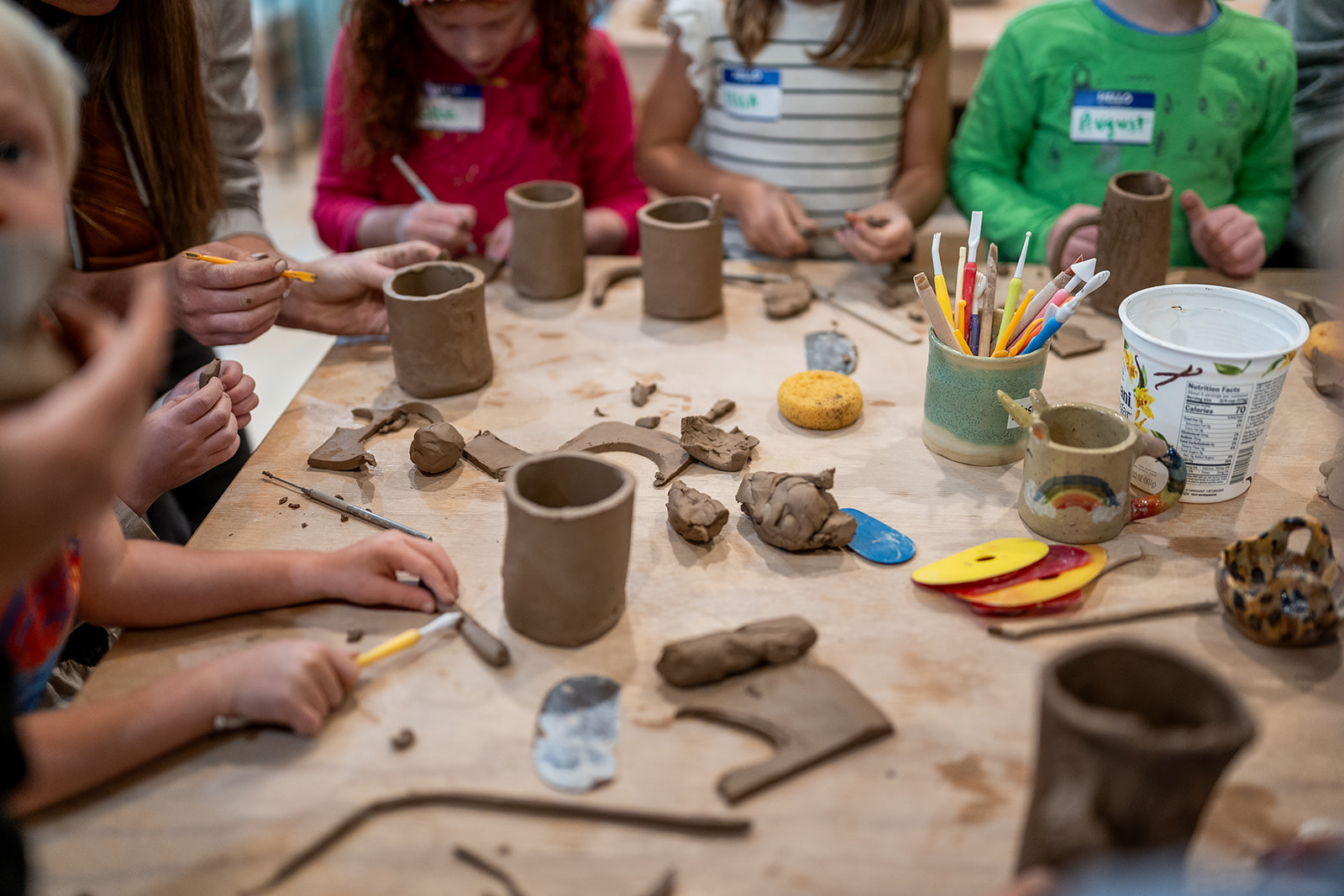
One thing we’re especially proud of is how we balance serving kids and adults without either group feeling like an afterthought. Our Young Potters Program and summer camps welcome kids 6 and up, while also protecting focused studio time for adult members and students — a balance we’ve had to be thoughtful about, since not every studio chooses to serve both audiences at all.
We’re also proud of our gallery, a second-floor space where members can show and sell their work. Some of our artists have been selling for years, but many are selling for the very first time, and we love that Forma Clay has become an entry point for people to learn how to price their work and take that first step as a working artist.
What sets us apart, ultimately, is the partnership behind it. Ralph brings deep, hands-on expertise in the craft of ceramics and a career’s worth of teaching experience. Michelle brings business and leadership skills along with her own love of the craft as a hobby potter. That combination means Forma Clay isn’t just a place with nice equipment — it’s a space designed by people who understand both the art and the business of running a studio well, built specifically to give members and students things they can’t get anywhere else in the Twin Cities.
Where do you see things going in the next 5-10 years?
Honestly, we think the next decade is a really good one for studios like Forma. People aren’t just popping in for a one-off “paint a mug and go” kind of night anymore — they want an ongoing practice, a place that’s theirs, a community they keep coming back to. That’s basically our whole Clayroom philosophy already, so we feel like the industry is finally catching up to what we’ve been building since day one.
A big part of that is the wellness piece. Clay has always been this quiet, screen-free way to slow down and get your hands dirty, and as more people burn out on scrolling and Zoom calls, we think that appeal only grows. We already hear it from our members constantly — they come in stressed, they leave lighter. That’s not a trend to us, that’s just clay, but we do think more of the world is going to catch on to it.
We also think studios are going to keep becoming more than just a place for individual hobbyists. Corporate team nights, school partnerships, birthday parties, bachelorette parties — group and community programming is only going to grow, and we’re excited about that because it’s basically an extension of what we already do with Community Clay Days and our critique nights.
On the flip side, running a kiln isn’t getting any cheaper — energy and materials costs keep climbing — so we think the “everything’s shared, nothing to buy” model is going to matter more than ever. Fewer people will be able to justify a home setup, which means a well-run community clayroom becomes even more essential, not less.
And the people walking through the door are going to keep getting more varied — Gen Z finding pottery through Instagram and TikTok, retirees looking for something purposeful, families wanting screen-free time together. We think the studios that figure out how to hold space for all of those folks at once, without any one group crowding out another, are the ones that’ll really thrive.
As for us? We plan to keep leaning into what’s already working — deepening the community side of Forma, expanding our teaching team, growing the gallery so more of our artists can sell their work, and building out that retail partnership with Brasa. We’re not chasing every trend — we’re just doubling down on being a genuinely good clayroom, and trusting that the industry will keep moving in our direction.
Pricing:
- One time workshop $75 per person
- $420 for 8 week class
- $210 for 4 weeks
- $300 for kids camp
- memberships range from $25 – $250 per month
Contact Info:
- Website: https://www.formaclay.com
- Instagram: formaclay
- Facebook: formaclay
- LinkedIn: https://www.linkedin.com/company/98787637
- Yelp: https://www.yelp.com/biz/forma-clay-minneapolis