



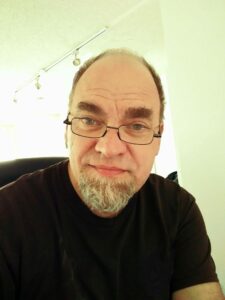
 Today we’d like to introduce you to Mark Granlund.
Hi Mark, so excited to have you with us today. What can you tell us about your story?
I have always been drawing and painted. I was born in Minneapolis, Minnesota but my family moved away a few weeks later. I grew up in Northern New Jersey, just outside of New York City, and then in the Western suburbs of Chicago. In school, I was always recognized as a good drawer and an artist. This naturally led me to continue making art for my whole life.
I attended Bethel College in Minnesota, receiving a degree in Art. A few years later I returned to New York City to attend CUNY at Brooklyn College and received a Master of Fine Arts degree in painting and 2-dimensional media. I enjoyed my time in New York City but was offered an art teaching position at my alma mater and returned to Minnesota.
After teaching undergraduate courses for a couple of years, like many artists, I bopped around for a bit. My wife and I bought a house and eventually had a daughter. Through the lean years to follow, I kept a practice of making art. I eventually landed at the Como Park Zoo and Conservatory developing art classes. I became the Artist in Residence and helped to develop the education department. Over nine years I developed and administered a very popular botanical art and illustration program and created a dozen murals and installations with youth. I continued to make my own art and exhibited it widely around the Twin Cities area.
Eventually, the City of Saint Paul tapped me to start a citywide beautification program administering the public gardens and maintaining the public art collection – one of the largest in the state. I developed the Blooming Saint Paul program working with more than thirty community groups and thousands of volunteers to maintain and expand gardens throughout the city. I had a staff of up to sixty to help with the gardens, as well. I hoped to sustain myself as an artist but had not yet reached that goal. Until then, using my artistic skills to beautify my city was the next best thing. I was Saint Paul’s Arts and Gardens Coordinator for fourteen years.
I continued with my own art practice and began to create large collaborative projects. For example, “The Book of Bartholomew” where I wrote forty-eight short stories and illustrated them with sixteen other artists. I also led a team that created a display for the International Children’s Festival six years in a row. These displays were made of as many as ten thousand flowers and included items like a thirty-five-foot tall spinning daisy and a two thousand pound upside-down carved tree trunk. It was a fun period of big projects and big ideas.
For the last six years, I have been working for Metro Transit as their Public Art Administrator and rededicating myself to my own art practice. I have been exhibiting and selling my work consistently over the last five years and just completed a five-year creative arc dedicated to landscape paintings. Now, stimulated by collaborations with fellow artists, I am finding new inspirations in the studio. Where this will lead I do not know and am excited about the journey.
A key part of my art practice is to continuously consider and hone an earth friendly focus. As a landscape painter, I am very concerned about the plight of the planet and want to do all I can to make sure that my art-making is not adding to the problem. For instance, because cotton is water and pesticide-intensive, I have switched to linen which is virtually organic when grown in a supportive environment. I have also changed my canvas primer to avoid Gesso, a chemical-based polymer whose production is not good for the environment. I now use oil ground, a better if not perfect choice. My next step is creating my own stretcher bars from sustainably-forested lumber. This is just beginning and I am very excited about it. I will soon be painting on the most sustainable canvases that are available.
My goal in the near future is to help other artists make their own practice as sustainable as possible. This will be through sharing what I have learned and providing access to sustainable materials and practices.
We all face challenges, but looking back would you describe it as a relatively smooth road?
My biggest struggle is a personal one. I have always had a hard time balancing helping others and doing the things I need to do for myself. I love helping other people and receive a lot of satisfaction from it. At each of my jobs, I have enjoyed setting up systems that make it easy to work with and support others. Art-making has been such a base part of my own psyche for so long that I am now hard-wired to process my experience through it. If I spend too much time away from my studio I do not process my experiences and start to have a hard time making decisions and feeling good about myself.
Of course, there are larger struggles, such as living in a society that values art experiences but is hesitant to actually purchase art to hang in the home. There are struggles of being seen in this contemporary world full of online creatives and short attention spans. And there is just the struggle of holding on to the momentum. The art world moves fast. It is hard to catch that first solid opportunity and then it is harder to hold on and grow. I am an introvert, one who is comfortable interacting with people. My preference is to sit in my studio and get lost in the world of my making. Coming out of my studio and having to talk about myself does not come naturally.
As you know, we’re big fans of you and your work. For our readers who might not be as familiar what can you tell them about what you do?
I am a painter. I paint with oil paint. I like to paint large canvases that relate to body scale: up to eight feet long or eight feet high. I like to paint water and reflections. My most recent body of work has been representational landscapes with some abstract elements in them. I am continually trying to make things better, from my art to my environment. And the scale of how I do this changes from project to project. Sometimes the scale is small and it fits on an easel. Sometimes the scale can be across an entire city or metro region. Currently, I am redesigning the room in which I am writing this. Last year I finished renovating an old small run-down house into the perfect art studio for me.
I like to collaborate and I purposefully seek out new artists and talk with them about art and life. My work is about creating something that shares my experience of this life and then starting a dialogue about it. My art is a form of connection.
Finally, in my work, I try to be sustainable as possible. This is simply because I want to be able to do this – I want everyone to be able to do this – for as long as possible. I am not blind to the ways in which my practice can hurt me in the long run.
How can people work with you, collaborate with you or support you?
There has always been support, in one form or another, throughout my art life, yet it has very seldom felt like there was enough support throughout my art life. That is the hard part of being an artist. So much has to be derived from your own internal vision and fortitude. People don’t understand what is going on inside of you, why you have to make things, and why you continue even when you are not draped with success. Yet, my friends and followers are continually encouraging me because they are getting something else from my work. It is two sides of the same coin.
It is that deeper interaction that I seek in collaborations. It is fun working with other artists because we share a level of dialogue not possible with those who do not have a creative practice. That is where the base-level changes get made.
Contact Info:
- Website: https://www.markgranlund.com/
- Instagram: https://www.instagram.com/markgranlundstudio/
- Facebook: https://www.facebook.com/MarkGranlundStudio/
- Linkedin: www.linkedin.com/in/markgranlund
- Twitter: https://twitter.com/markgranlund
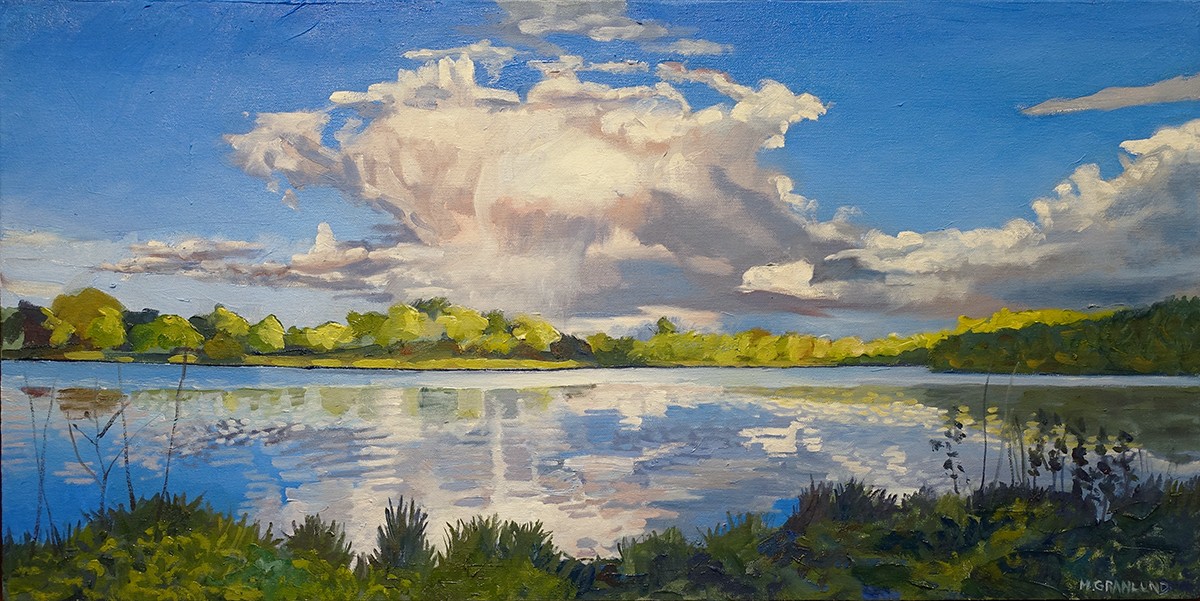
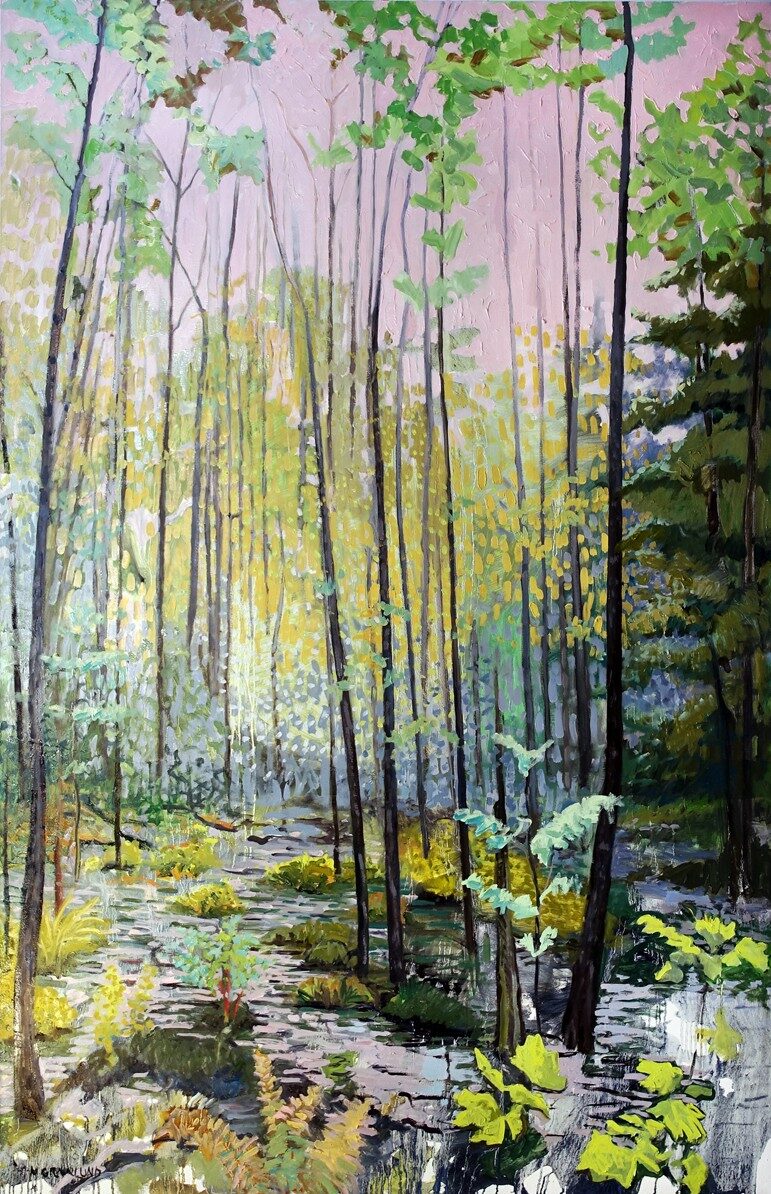
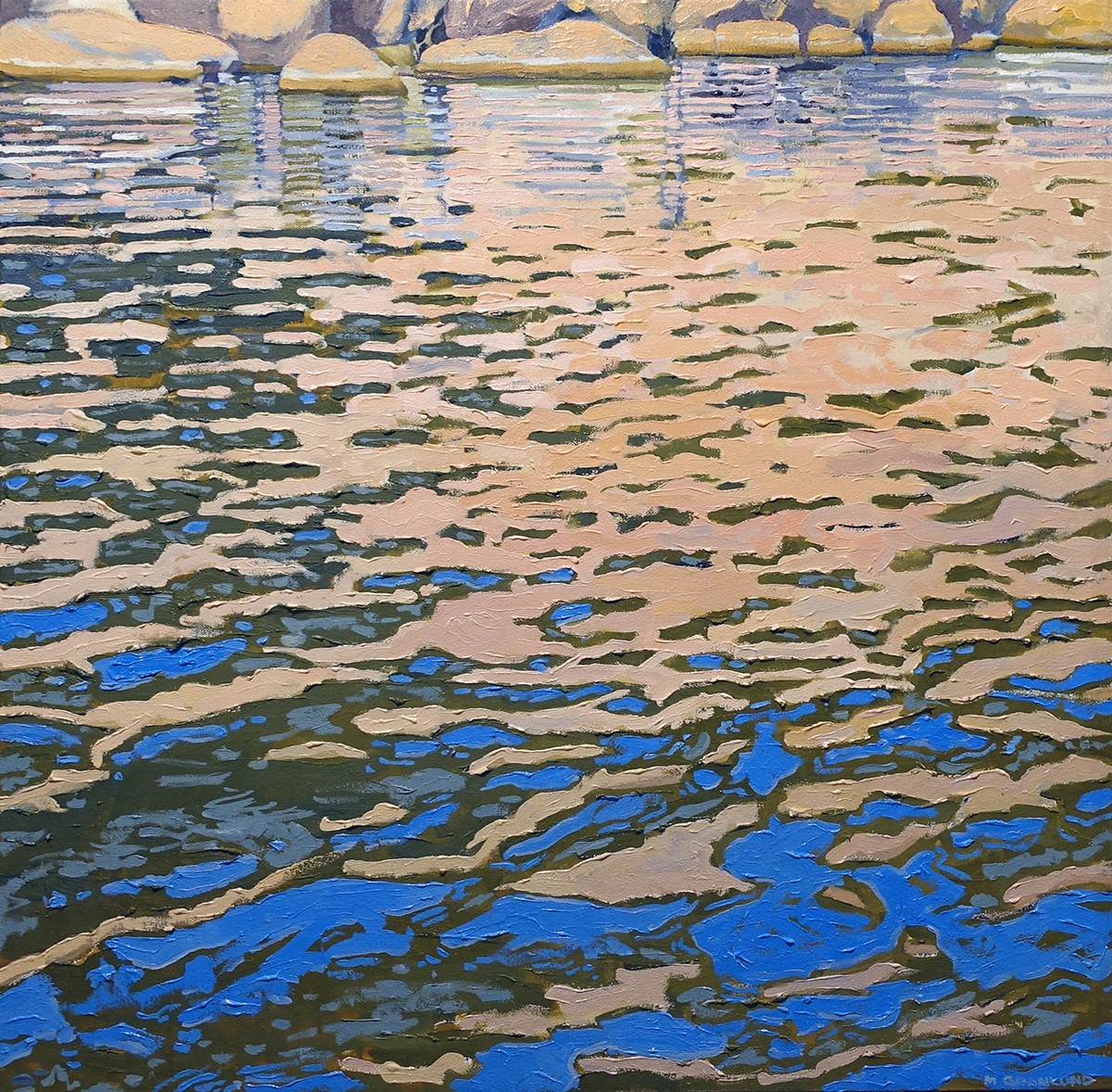 Image Credits
Cloud Over Como Park Water Pattern – IV Lowland