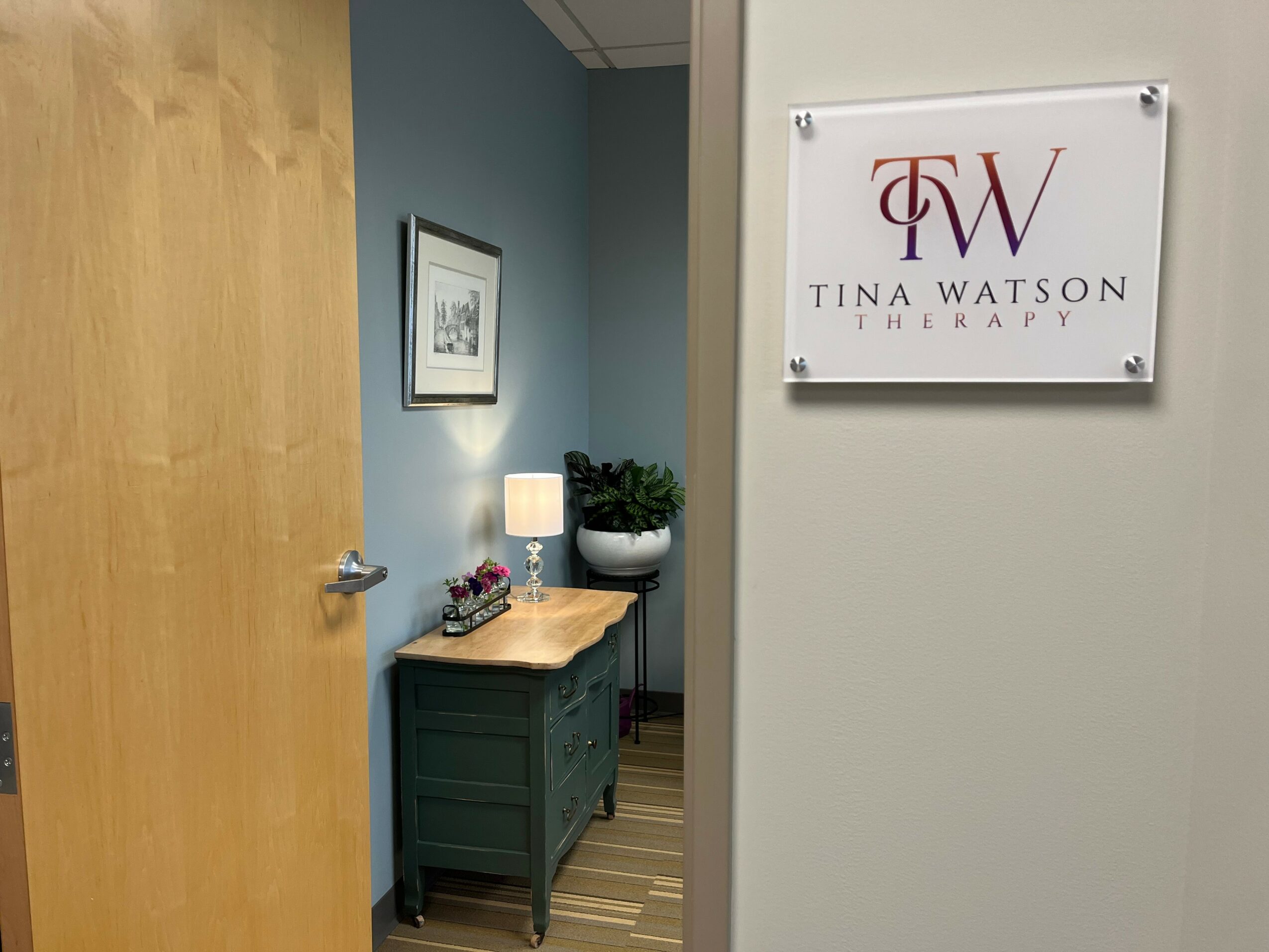






Today we’d like to introduce you to Tina Watson.
Hi Tina, so excited to have you on the platform. So before we get into questions about your work-life, maybe you can bring our readers up to speed on your story and how you got to where you are today?
I found my way into this field almost by accident. Years ago, I was volunteering with a nonprofit that worked with teenagers and quickly realized I was in over my head. Many of the teens were navigating very complex personal and family challenges. And while I cared deeply about the teens I worked with, and many were highly motivated to change their internal experiences and external circumstances, it became clear that surface level changes were not enough to shift the powerful formative and intimate relational dynamics that greatly influenced their lives. That experience opened my eyes to the need for formal training and inspired me to apply to graduate school. I earned my degree in marriage and family therapy and discovered what I had been seeking — the intersection of empathy and expertise fosters genuine transformation and lasting change!
I spent several years working in community mental health clinics before moving into academia as an assistant professor of marriage and family therapy. I loved teaching, developing, and mentoring future therapists, and I stayed in the classroom for 17 wonderful years. Eventually, though, I felt drawn back to the heart of the work — being in the therapy room with clients. After being a licensed therapist for 22 years, I opened my own private practice and haven’t looked back. These last three years of owning my practice and providing bespoke care for every individual, couple, and family that walks through my door, have been the most fulfilling of my career.
We all face challenges, but looking back would you describe it as a relatively smooth road?
Starting my private practice from the ground up was both exhilarating and overwhelming. One of the first challenges was determining whether to join insurance networks or establish myself as a private pay provider. I ultimately chose private pay so I could have more therapeutic flexibility, focus fully on the clinical process, and offer financial transparency to my clients. I’ve been very mindful of the changing landscape of behavioral health care and the increased involvement of corporate and private equity investments. While that model works for some, I knew I wanted to stay independent and personal, with soulful care and skilled connection at the center of my work.
Another challenge has been integrating all the various aspects of my life. Being a small business owner could easily become a 24/7 experience. But, I’m also a spouse, parent, child, sibling, friend, neighbor, mentor, and citizen. I’m learning to integrate those aspects in healthy ways, attending to the ebbs and flows of life and business, and pushing myself to see problems and failures as invitations and opportunities for growth and change. Starting my own practice has taught me things about myself I never knew and has expand my sense of self. It’s humbling and lifegiving at the same time.
Appreciate you sharing that. What else should we know about what you do?
I work with clients across the lifespan, addressing a wide range of challenges, with specializations in trauma and couples work. While I stay current with the latest research and evidence-based practices, I also know it can be risky to emphasize scientism or protocols in isolation. Ultimately, therapy is about the soulful and skillful experience of being deeply seen and understood by another human being. That’s where real transformation and healing happens.
As a trauma therapist, I’m trained in multiple modalities, and have found Accelerated Resolution Therapy (ART) to provide relief from trauma with life-changing results in just a few sessions. I reserve space on my appointment schedule for first responders and those experiencing acute stress or trauma so they can receive top-notch care quickly. And as a couples therapist, I use developmental and attachment based frameworks to identify and assess the complexity of the couple. This involves awareness of the different needs, levels of growth and change, and health within each partner and the couple relationship itself. For couples who decide it’s healthy to stay together, we focus on building a new relationship based on where each partner is and where the couple wants to be, instead of rebuilding a relationship that was in pain.
I think my experience as both therapist and university professor adds a unique flavor to my work — I bring years of teaching and hard earned practical insights directly into the therapy room. I approach clients with humility, honoring their unique experiences, faith traditions, and cultural backgrounds, and creating a space where they feel truly seen, supported, challenged, and empowered to be brave. It’s an amazing privilege to partner with clients and collaborate in the growth process together. I love my work, I’m passionate about the therapeutic process, and I wake up every morning ready to laugh, cry, listen, talk, and join my clients in this courageous work.
Do you have any advice for those just starting out?
I’m a fan of building professional communities that offer enough safety to be transparent and enough truth and honesty to give constructive feedback. It’s wise to stay in conversation with others who are on similar journeys, and yet think differently than you do. Remind yourself that echo chambers are risky and opposing ideas can highlight strengths and weaknesses with the potential to propel everyone forward. Trust the process of synergy and believe that we can be better together.
During a very difficult season, I was reminded of a quote from C.S. Lewis — here’s my paraphrase: “What may seem like an interruption to what you think you should be doing, is actually your real life, happening right before you, so attend to it appropriately.” This has caused me to slow down and be curious. I ask myself, is this additional form, permit, license, approval process, etc. an interruption or my real life? Is my child’s meltdown an interruption or my real life? Is my parent’s need for assistance an interruption or my real life? Is the store clerk’s difficulty in processing my order an interruption or my real life? I have found it very helpful to slow down and become curious about how I “show-up” in my real life, rather than living my life as a series of interruptions. It keeps me grounded and connected to my integrity and values, and makes me a better business owner and person.
Contact Info:
- Website: https://www.tinawatsontherapy.com/
- Other: https://www.psychologytoday.com/us/therapists/tina-watson-oakdale-mn/1103162