





Today we’d like to introduce you to Rebecca (Becky) Schueller.
Hi Rebecca (Becky), thanks for joining us today. We’d love for you to start by introducing yourself.
I’ve worked in the nonprofit world nearly my entire professional life. I started working in Chicago for one of the first Women’s Foundations in the country, then I moved into refugee services, and ended my Chicago worklife at the national office of the YMCA, which I refer to as my “corporate nonprofit experience.” A project I will never forget visiting while at the Chicago Foundation for Women was Genesis House, which helped women in prostitution with a safe place to live, recover, and then find new work. The Cambodian Association of Illinois gave me the opportunity to experience multi-cultural work, and I remain incredibly impressed with how much resilience and persistence it takes to rebuild your life in a new country. the U.S. is definitely stronger due to the refugees and immigrants who are creating new lives here. At the YMCA of the USA, I worked in the International Division and coordinated U.S.-based resource development for international YMCA projects in approximately 30 countries. I was incredibly impressed with the training and professional development the Y invested in its people at both the local and national levels.
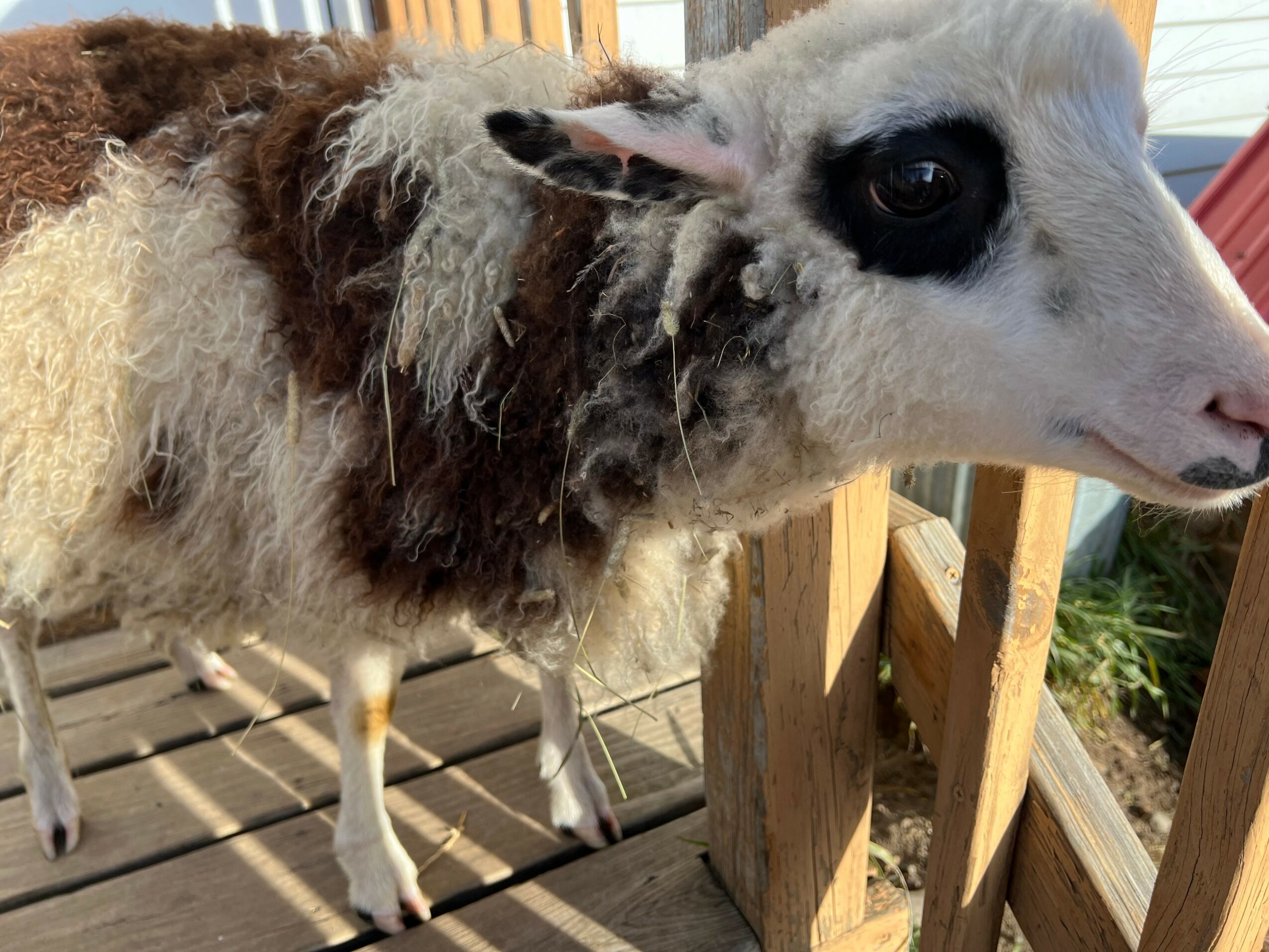
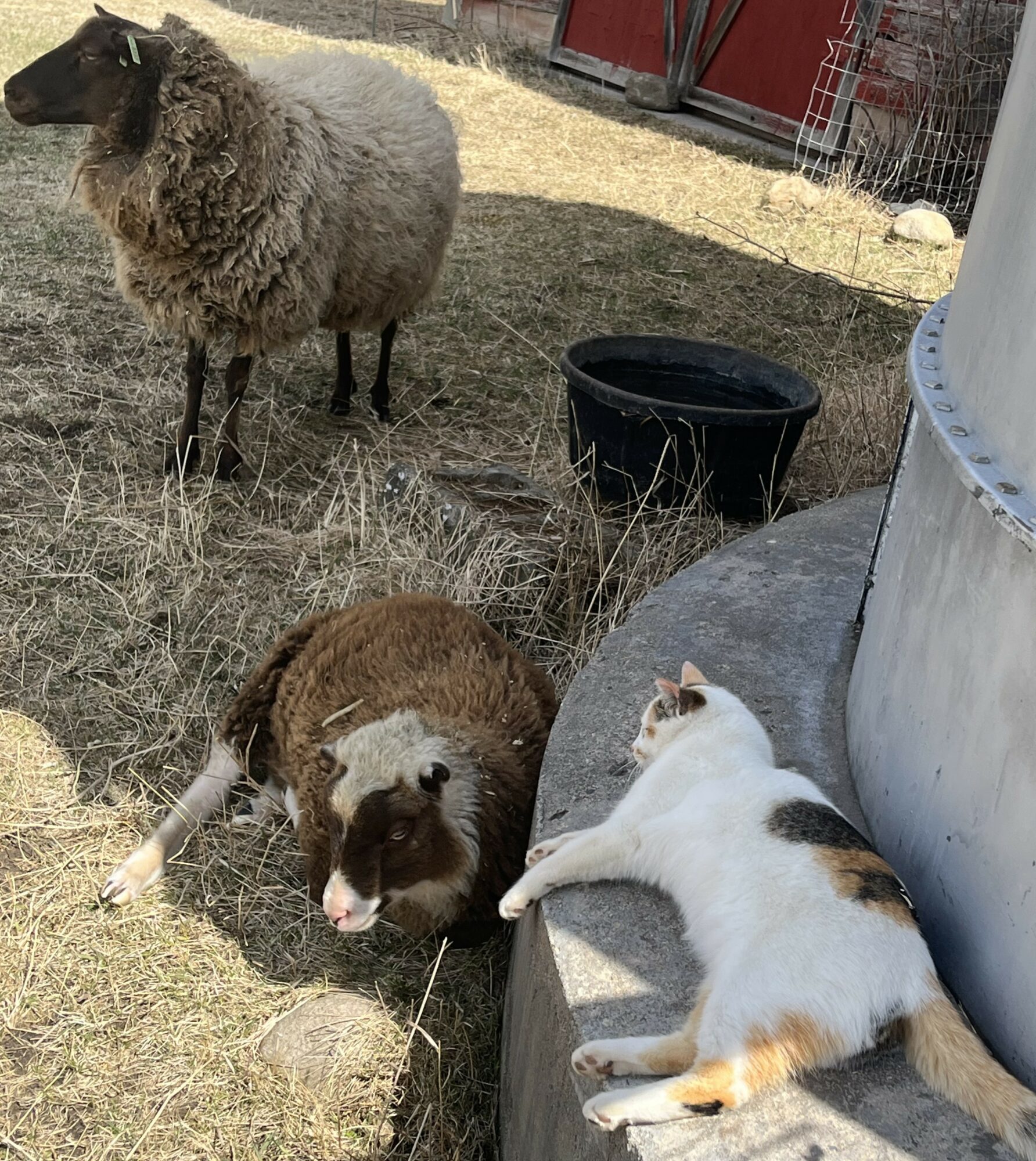
In the late 1990s, I made the career move that baffled my family and relocated to an unpaid apprenticeship on an organic farm in a very rural area that had a market garden, free range chickens and turkeys, and a milk cow. I met my husband there are we relocated to Bemidji, MN. My husband was born and raised in MN and wanted to return. He had visited Bemidji as a child and young adult and thought I was appreciate the natural beauty of the area. It also has a university so we hoped we could both find interesting work. We bought a small 20-acre farm in 1999. Over the years, we’ve had chickens, sheep, and llamas and a large garden. I love seeing the animals react to and interact with each other. I’m also so glad my two sons were raised on our farm and always had access to the outdoors, our animals, and the garden.
I took a year off when our first son was born and then, a month after 9-11, was hired as an executive director for a mid-size nonprofit that provided emergency shelter, transitional housing, mental health services, independent living skills, a drop-in center, a food and hygiene pantry, and other services for youth, young adults, and families. I loved being part of Bemidji’s nonprofit community. One of my favorite roles was developing and coordinating a large, annual conference that attracted 400+ participants, presenters, and vendors. I was incredibly impressed with many of the high quality speakers who came to our conference over the decade+ that I managed it.
In 2017, after nearly 16 years, I left my role, took some time to reflect, and opened my training and consulting business, primarily serving staff from nonprofits, Native Nations, and counties.
On a person note, in 2025, I became a Master Gardener through the Univ. of Minn Extension. Sharing my passion for gardening with others is one of my greatest joys.
We all face challenges, but looking back would you describe it as a relatively smooth road?
I think starting out and trying to make a living is hard the first few years. For nearly 25 years, I’ve been the sole source of support for my family. You definitely need to have “faith in the end of the story” as you build your business. I took a contractual role for a nonprofit that worked with HUD for a year. That was financially a help, and it was also a huge stress and definitely took time and energy away from building my business. When I ended that role, I had to reinvest in rebuilding.
Last year, I would have said my current greatest challenge was technology. The move to a cloud-based subscription system is extremely expensive. Software subscriptions are one of my largest expenses. I find the customer service to be generally poor and that is a real frustration as technology is not my first language!
Today, I would say one of the greatest challenges is the new administration in DC and the funding cuts and changes to longstanding federal programs that affect the health, human services, and community safety net. This impacts states, counties, and cities as well, and it definitely impacts nonprofit and tribal funding. The assaults on immigrant and refugee communities and the population in the Twin Cities and other cities and towns across the country has been horrific. It is hard for people to focus on their jobs and anything else important in their lives.
Alright, so let’s switch gears a bit and talk business. What should we know about your work?
I work as a trainer, consultant, and coach to nonprofits, Native Nations, and counties. Occasionally I serve staff from schools and small businesses. I have a publicly marketed schedule of trainings, which I publish on my website roughly a year in advance. In the first few years, I trained in person. When Covid-19 closed things down, I was forced to go virtual. It was actually good for my business. It was easier for staff in rural areas and for agencies with multiple sites to have staff participate remotely because they didn’t have to worry about travel distances, Minnesota’s weather or other challenges. In the past two years, I’ve increasing received custom requests for in-person training. In-person training is a lot more work and it can also be an incredibly powerful experience.
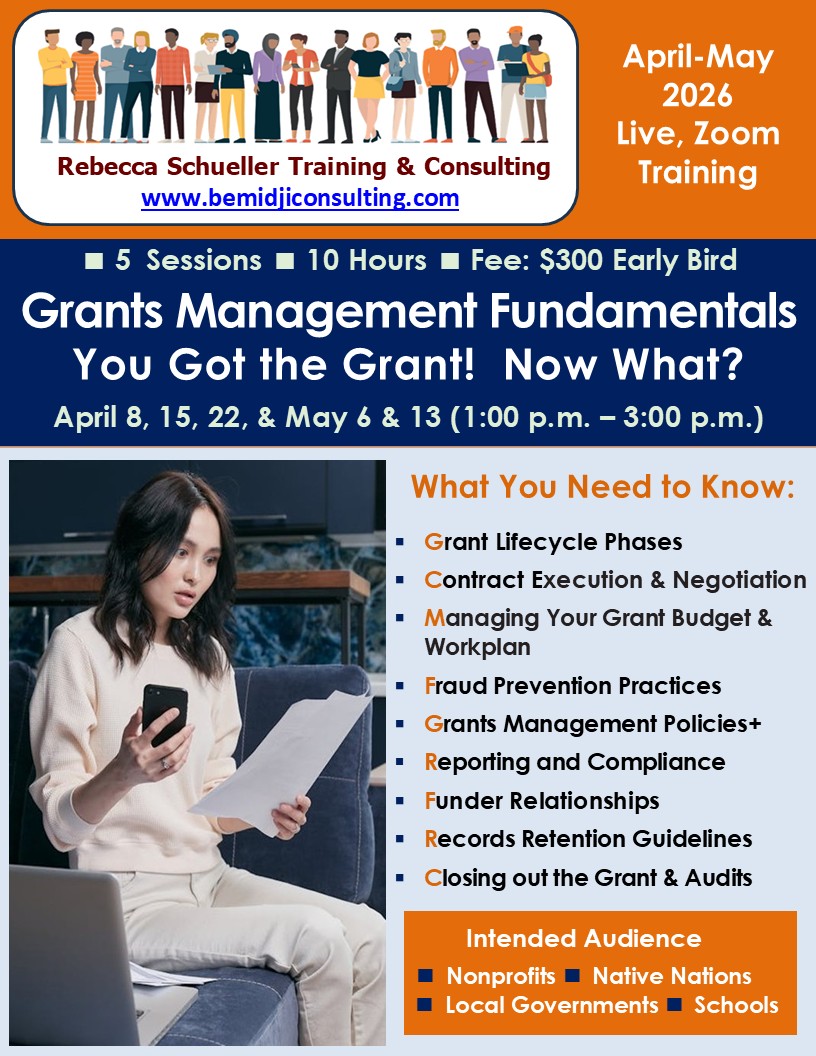
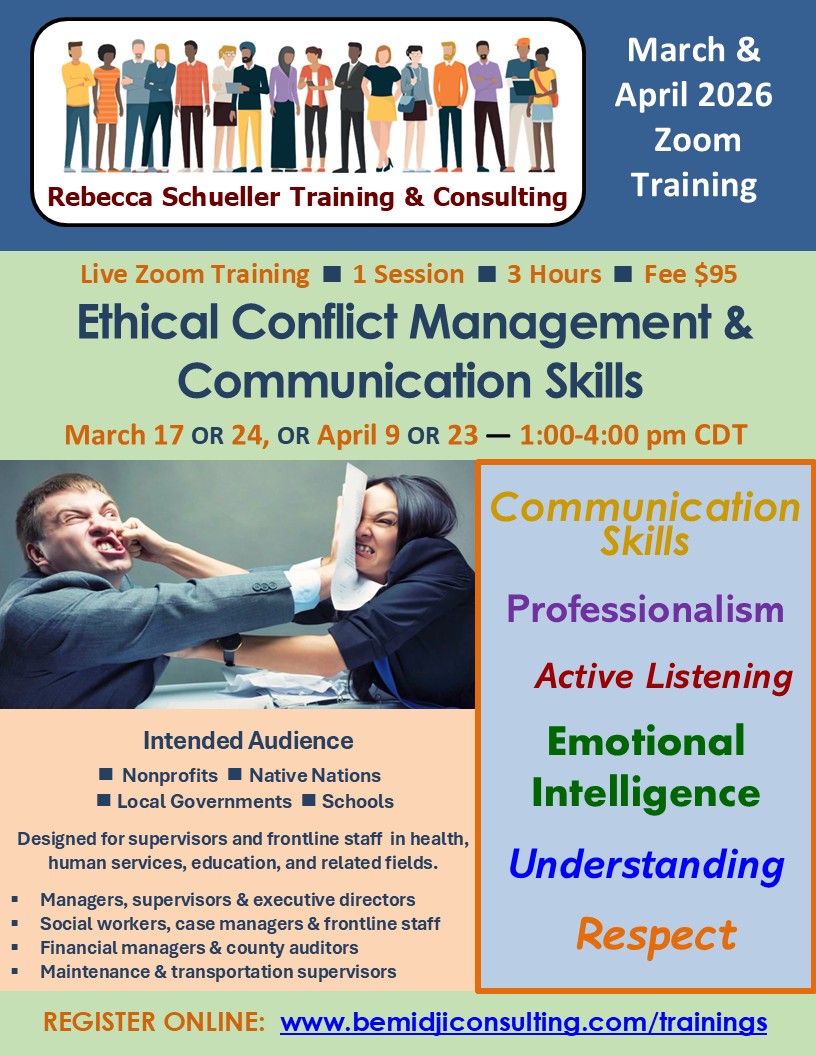
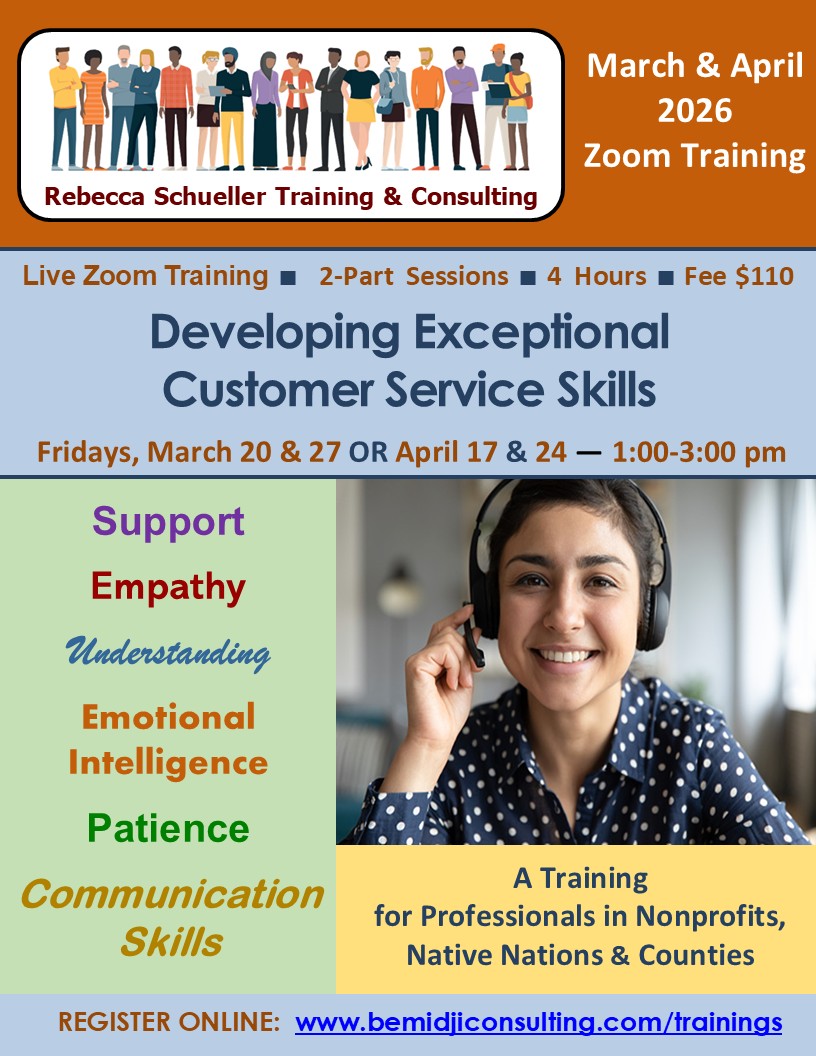
I specialize in helping leaders understand how to build relationships with their staff, conduct meaningful performance appraisals, hold important conversations (that we humans sometimes like to avoid), address conflict, and manage effective communication. I also help staff learn to write effective grants and understand the grantseeking process and manage their grants well. For frontline and direct service staff, I offer conflict management, developing exceptional customer service skills, and managing effective communication with supervisors and coworkers. I support boards of directors and executive directors by training on Board Governance Roles and Responsibilities, helping boards understand how to conduct a professional and respectful evaluation of their executive director, and training boards to successfully support, onboard, and retain their new executives. This is a period of significant executive transition, and it’s incredibly important that we make the very challenging roles of executives and CEOs in our organizations as manageable as possible.
What sets me apart is that I train on topics I feel passionate about, where I have extensive, real life, practical experience. Training participants don’t get an “academic style” or a “canned” product or “two years in the field” from me. They get depth. While I research and draw from many sources, in addition to my own experience, when I develop training, I am not using a “canned curriculum.” If I don’t believe it, I don’t teach it. I also work hard to engage staff in training and to offer high quality graphics in addition to powerful content that I update in real time. I think training and coaching participants experience me as being authentic and as caring about their work and their experiences, which I do. I offer unlimited follow-up questions, and some people actually use it!
I am proudest of the times I’ve invested in small and BIPOC-led organizations who needed training but couldn’t afford it. It is especially meaningful when these staff let me know they feel supported, less overwhelmed, and feel like they can use some of the practical tools and strategies we discuss. I’ve also provided some pro bono coaching that has been incredibly meaningful. Supervisors in nonprofits, tribes, and counties have incredibly stressful roles. I’ve been honored to support them through both personal and professional challenges. My goal is to help them find more joy in their work and to make their jobs feel more manageable.
What were you like growing up?
I always loved animals growing up. If there was a bird that fell out of a nest, I was always the kid who picked up the bird and found it a safe place and tried to feed it. I loved our cats and our dog, and I would sometimes pet sit for neighbors. I was definitely more introverted when I was younger, and gradually have moved along the introversion to extroversion continuum, but I still get my primary recharge from time alone thinking and reading. I call myself an “idea junkie” because I love new ways of looking at things and getting a new appreciation of things I might not have understood previously.
In junior high and high school, I worked on the school newspaper. Writing for understanding has always been something I’ve tried to do as well as I possibly can. I was also mentored well by teachers who were the newspaper advisors.
I was a debater in high school and college, which I think helps me as a trainer because I’m used to talking in groups. Debate also involves a lot of research and synthesis of different ideas, and this I is something I draw on heavily as a trainer and a consultant. I try not to rely just on my experience because experience is necessarily limited…it’s just ours, it’s not everybody’s so it’s important to talk to other people, to read extensively, to attend other training, and to know what’s going on in the field.
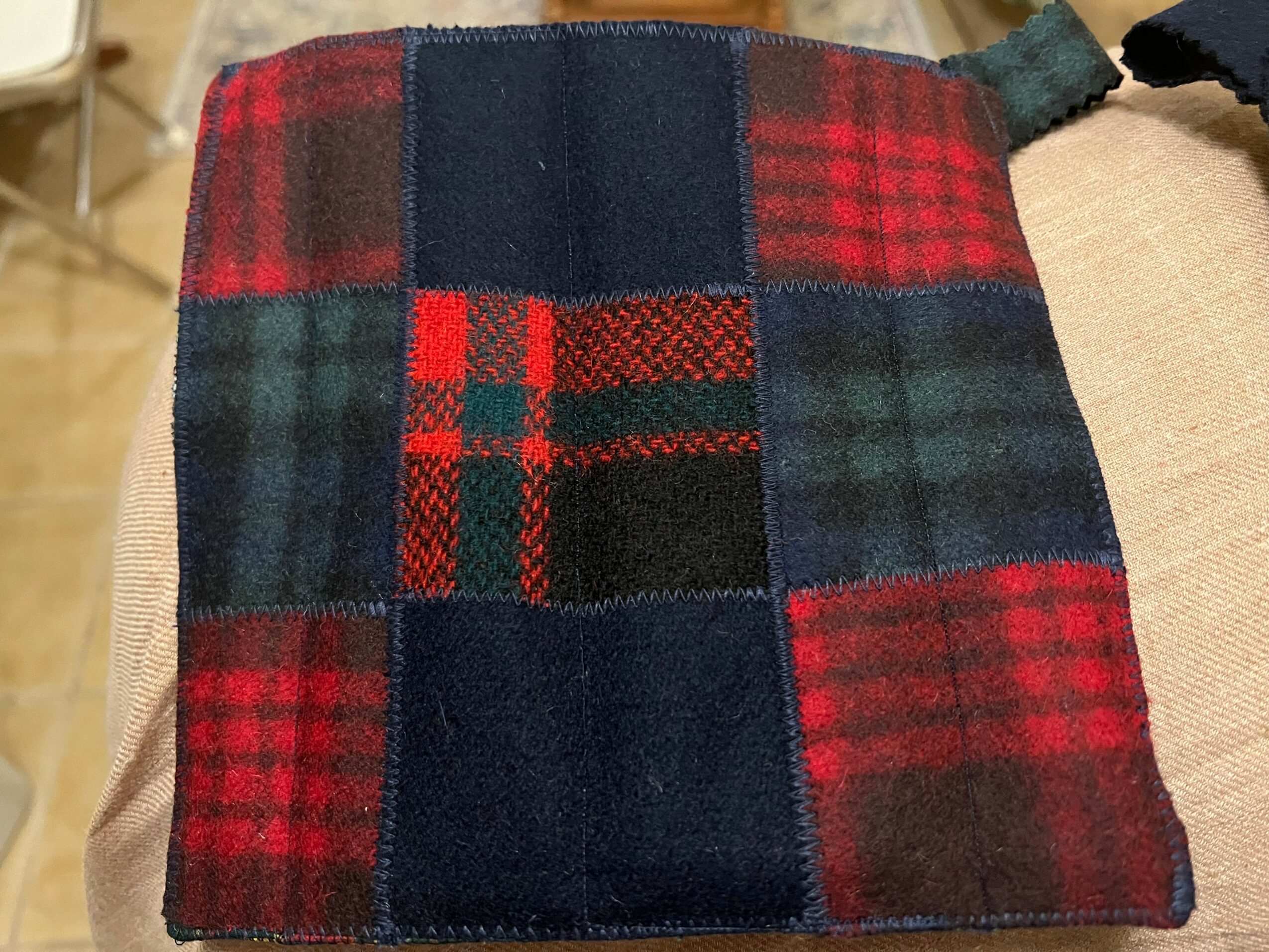
I always loved beauty and art. Many women in my family were artists. I don’t share their talent but I love textile art. I’m not a great seamstress (i.e. even straight lines are sometimes challenging for me), but I always look for small items like potholders that other women have made, that are beautiful but might be too think to protect your hands when cooking. I like sorting through scraps at my local woolen mill outlet and adding a wool backing to the potholders so that they are more functional for cooking but still cheerful.
Pricing:
- Available on my website. It’s 100% transparent.
- 3-hour training: $95 per participant.
- 4-hour training: $110 per participant.
- 10-hour training: $300 per participant.
- 15-hour training: $425 per participant.
Contact Info:
- Website: https://www.bemidjiconsulting.com
- LinkedIn: https://www.linkedin.com/in/rebecca-becky-schueller-133510a8/