




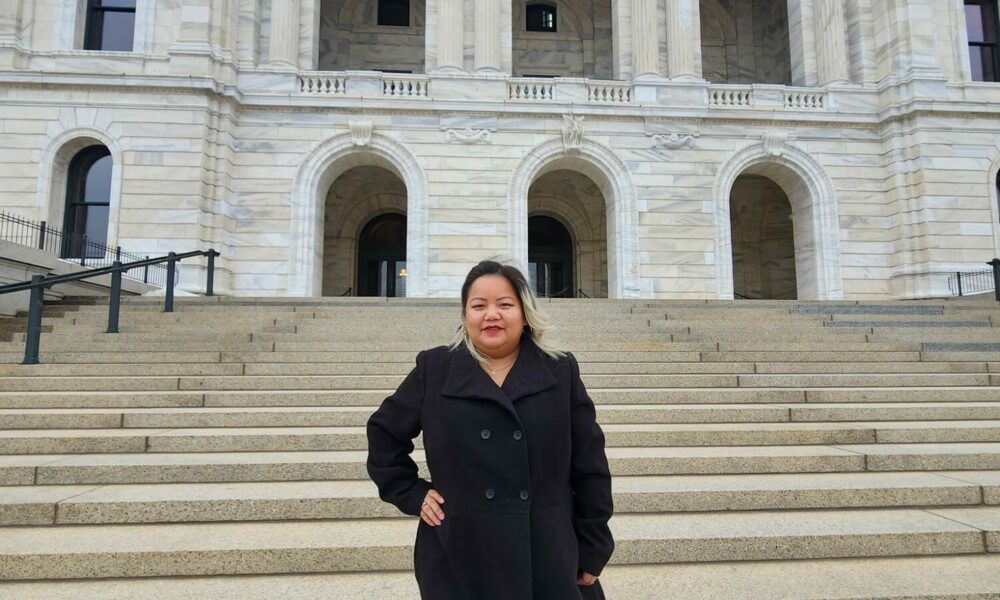
Today we’d like to introduce you to Xay Yang.
Hi Xay, we appreciate you taking the time to share your story with us today. Where does your story begin?
I come from a big family. I grew up in public housing. I start with this because people often talk badly about people like us who grew up this way. We didn’t have much, but we had a community, and community care was real. Everyone knew everyone. We knew which household had the naughtiest kids, which one had family violence, who was new to the neighborhood, and more. I had childhood friends from my neighborhood. They were from a similar class background and understood what it meant to be poor. I think it shaped the way I saw life. We didn’t get to go to cool places like Chuck E. Cheese or the movie theaters. We had a small dirt field with dead grass where we could play soccer and dodgeball, a community playground, grass hills where we could slide and roll around, and Pokemon cards (before it got super popular). We learned to be creative and innovative with what we had. My parents were refugees who didn’t speak or understand English. As kids, we accompanied them everywhere, from appointments to school conferences. My whole life, I have been learning how to live in two worlds – the “American” world and the “Hmong world,” often switching on and off between both. This has helped me see the value in culturally specific services and why it matters that someone not only speaks the language but can understand the nuances between both worlds and navigate that for folks like my parents.
By the time I was 17 years old, I had seen so much violence and injustice. I didn’t have the language for what all of these were called until much later in life, but I know this is why I care about social justice and am passionate about ending violence in communities because I’ve seen the impact of it. At 17 years old, we moved out of public housing, then I came out as queer and, shortly after that, went to college. I was a first-generation college student. In those 5 years, I had gone through relationships, found my queer community, and became politicized; college was hard. I was a full-time student, worked 4 to 5 jobs/gigs at a time, and was organizing in community. After I graduated, I realized. I wanted to be a therapist so I could work with other LGBTQ+ folks seeking mental health support and healing. I knew how big of a gap there was, and I knew how powerful it could be. So, I went to graduate school. After I graduated, I went on to work with Hmong men with co-occurring mental health and addiction/substance use. I continued working my job at the Asian women’s domestic violence shelter. Then, in 2016, I got involved with the Building Our Future (BOF) Campaign, a community campaign working to end abusive international marriages and relationships (AIM-R) in the Hmong community. I was invited to join the queer contingency. From there, we attended the first Global Hmong Women’s Summit in Thailand, organized by BOF. I got to see an international perspective on gender-based violence, in particular AIM-R and LGBTQ+ issues in the Hmong community.
After that, I went on to work for the Domestic Abuse Project as a therapist working with victims/survivors and children impacted by domestic violence. Throughout my time there, I continued to stay engaged in community work within the LGBTQ+ community. In 2019, I was invited to join Transforming Generations (TG) as their inaugural Queer Justice Director, which had been such a dream of mine. In that role, I was able to launch healing services, including mental health services for the LGBTQ+ Hmong and Southeast Asian community, and Hmong victims/survivors. We hired our first Queer Justice Coordinator, who co-facilitated our drop-in support group for Hmong LGBTQ+ folks, continued to build out programs that addressed economic justice for the LGBTQ+ community as well as created safer spaces for LGBTQ+ parents and their children. Then, at the beginning of 2023, I became Executive Director for Transforming Generations. It’s been a wild ride. I am still learning, and I have an excellent team at TG. I am grateful for all the mentors, friends, and family who continue to uplift me, keep me accountable, and motivate me.
It wasn’t obstacle-free, but would you say the journey has been fairly smooth so far?
It’s been quite the bumpy road! I wanted to be a singer when I was 11-12. Then, at 17-18 years old, I thought I wanted to be a soccer coach. At 20, I thought I would become a graphic designer and communications major. By 21, I didn’t fit any of those boxes. I wanted to design my major, focusing on youth studies, design studies, and social justice. I felt perfect about those decisions; it was the first time I felt like it was my jam. I struggled a lot as a first-generation college student who didn’t know the first thing about navigating college. I also struggled because I didn’t have the language to explain to my refugee parents what I was doing in college. I was working on figuring out who I was in the world. Even after figuring out who I was, I learned new things about myself. My journey has been a zig-zag to get to where I am today, but I know deep in my heart that these experiences have prepared me for this moment with a small sprinkle of luck.
Thanks – so, what else should our readers know about your work and what you’re currently focused on?
In the words of my friend and mentor, KabZuag Vaj of Moving Mountains, my work is to change the hearts and minds of people. My professional title is Executive Director, but as I reflect on my career and my work, it has always been to do one of these things: to deepen people’s understanding of those most impacted and oppressed, to expand people’s perspectives, to help people heal through mental health therapy and storytelling, or to teach. All of these fall under the work of changing hearts and minds. Our community deserves healing, access, autonomy, and liberation. Today, my work is on ending gender-based violence in the Hmong community, particularly against Hmong women, children, and LGBTQ+ folks, and it has been the most challenging and rewarding work I’ve ever done. I truly believe that for our community to be free, we need to end gender-based violence, which is exactly what the mission of Transforming Generations is. We lead by centering and uplifting LGBTQ+ folks, women, and children, and we speak the truth. We are building new wellness ecosystems and social support that don’t rely on patriarchal practices and constructs. We are envisioning a different way of building family and community, more inclusive ways of recognizing ancestral practices that aren’t oppressive and violent to women, queer and trans folks, and children. We are creating access to healing from a Western lens by recognizing and honoring our cultural practices and ancestral ways. We recognize the differences each generation experiences and are invested in bringing people along. We are leading conversations on taboo topics like sexual violence, incest, and abusive international marriage and relationships – the things that people want to hide, ignore, or are too scared to talk about. If we want to heal as individuals and communities, we need to talk about these things and find solutions for our community. These are the things that set us apart from others.
What makes you happy?
I am continuously learning more about what makes me happy because, over time, it changes, or I discover new things about myself that bring me joy. Currently, art and theater have been bringing me so much joy. Connecting with people I love and care about makes me happy. But my true happy place is in writing and photography. It is where I find solitude. Bonus if it comes with nature.
Contact Info:
- Website: www.transforminggenerations.
org
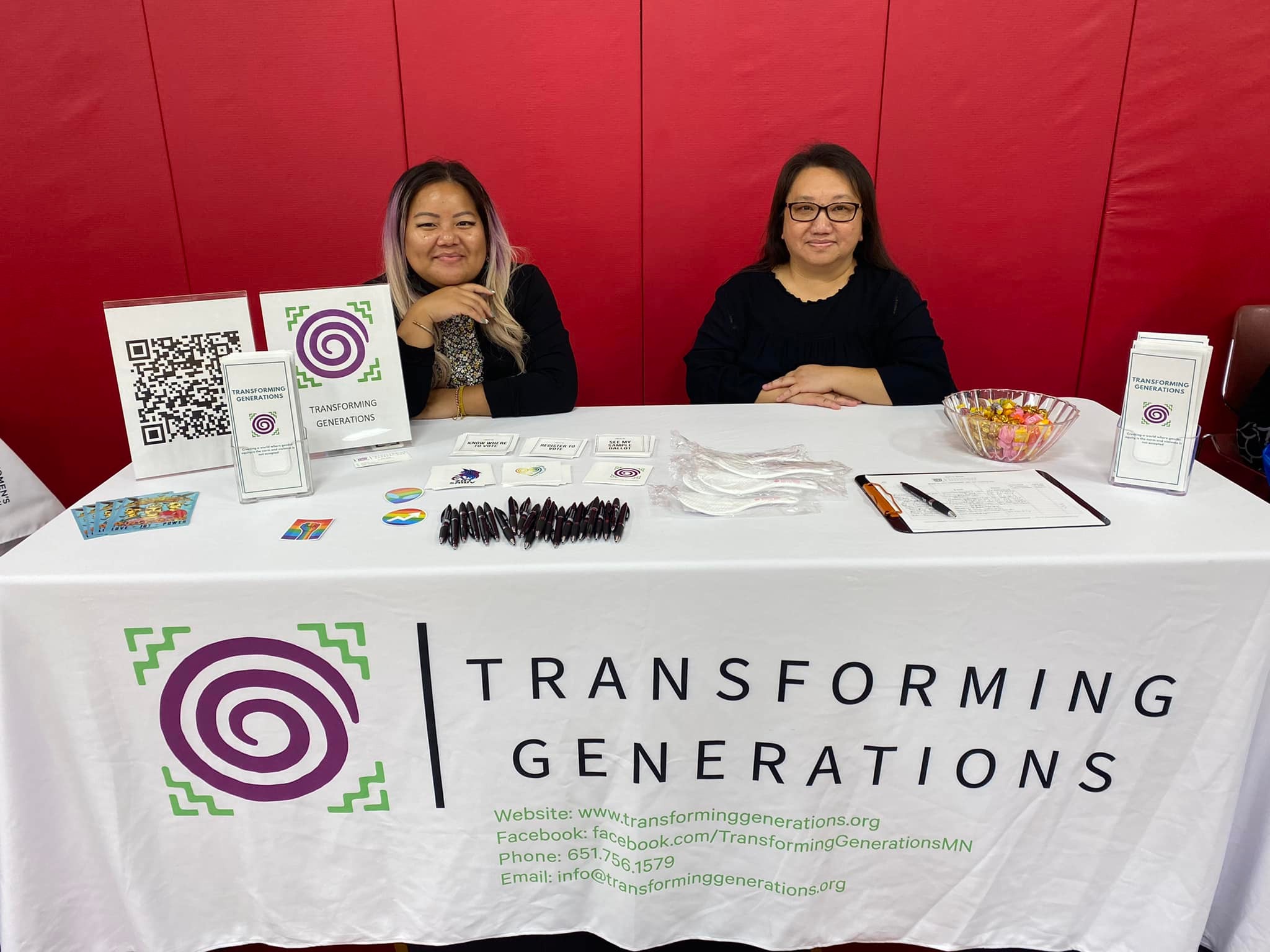
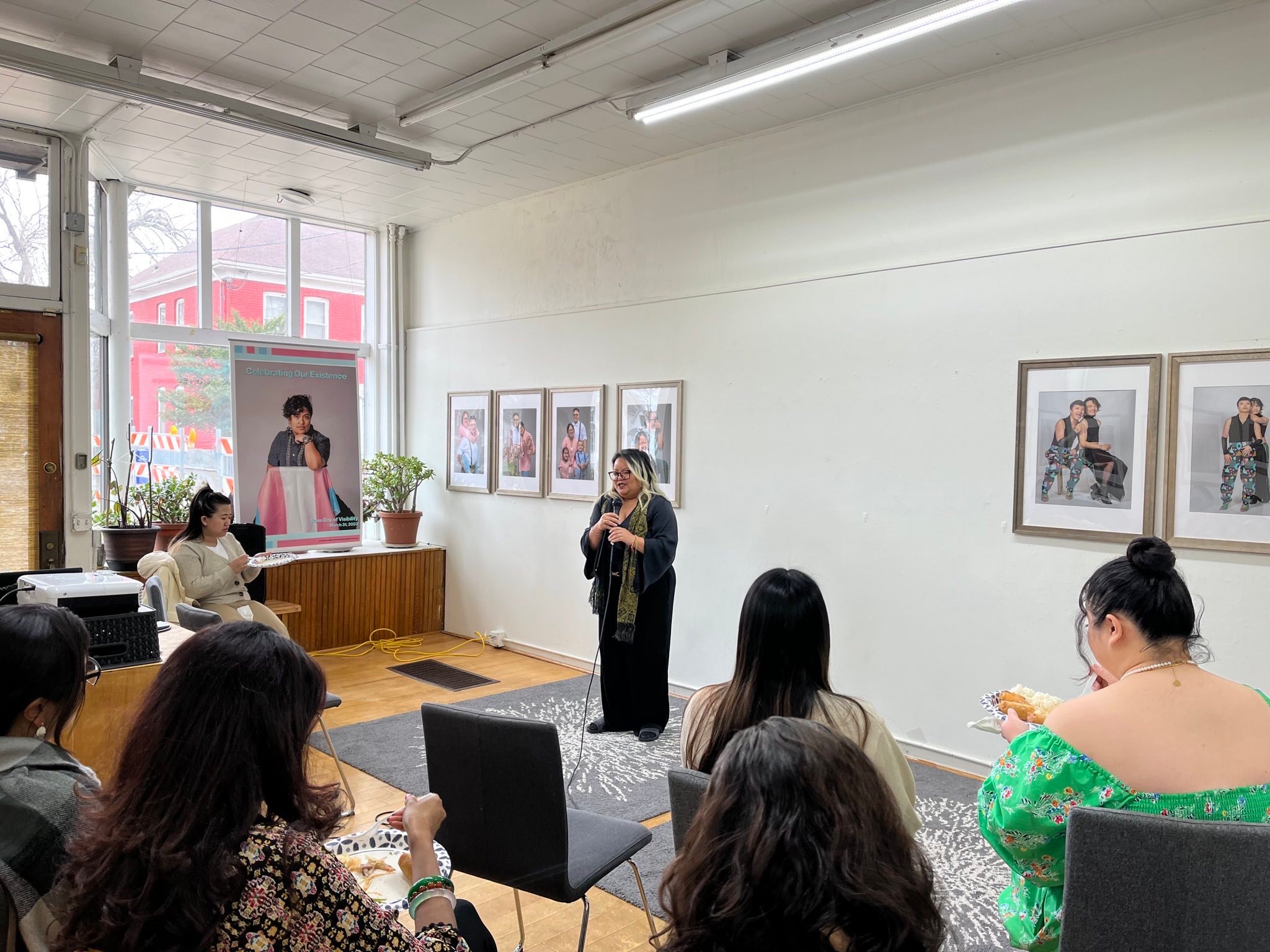
Image Credits
Photo Credit: Transforming Generations, Staff *For the photo with the white curtain back drop, credit: TJ of Jual Visuals