




Today we’d like to introduce you to Matthew Christoff.
Hi Matthew, can you start by introducing yourself? We’d love to learn more about how you got to where you are today?
I started off as a child of a musical family in Door County, Wisconsin. My earliest memories are sitting in the choir loft as my parents, Nancy and Jim Christoff, sang, or while my mother played organ, or for masses, weddings, and funerals at our Catholic Church and for many parishes in Door and Kewaunee counties. Eventually, I also sang, and in time, I was a ready page-turner. My two older sisters and I received private piano lessons, sang in choirs with school or church, performed in musicals and variety shows, and competed in music competitions throughout our childhood. Indeed, we were called the Von Trapp Family Singers more than once!
I went on to study a Bachelor of Music at Saint Norbert College, and then a Master of Music at the University of Florida. From there, I began freelancing with opera companies, choirs, churches, and performing arts organizations throughout the Upper Midwest and Florida. Finally, I moved to the Twin Cities to begin singing with the Minnesota Opera Chorus, study with George Smith, and continue developing my singing career. I’ve remained here since.
Can you talk to us a bit about the challenges and lessons you’ve learned along the way. Looking back would you say it’s been easy or smooth in retrospect?
Relatively speaking, I’ve had many advantages and privileges that have brought me to where I am today. I am quite fortunate to have a family and several communities that support me, my growth, my values, and my creative process. I would not be where I am without them, and for that, I am always very grateful. I have had bumps in the road, and each one has taught me something valuable. Living with ADHD since childhood has challenged my growth as an artist, and it has expanded my worldview as a human, for example.
That said, I would find most of my other challenges to be quite common to the human experience. If I had just one bit of comfort to those in tough times: You’re not alone. You’re never alone. No matter how singularly unique your problems may seem to you, someone else has walked this path, and there are likely answers and support out there for you. Ask for what you need, seek what you want to find, and advocate for yourself.
As you know, we’re big fans of you and your work. For our readers who might not be as familiar what can you tell them about what you do?
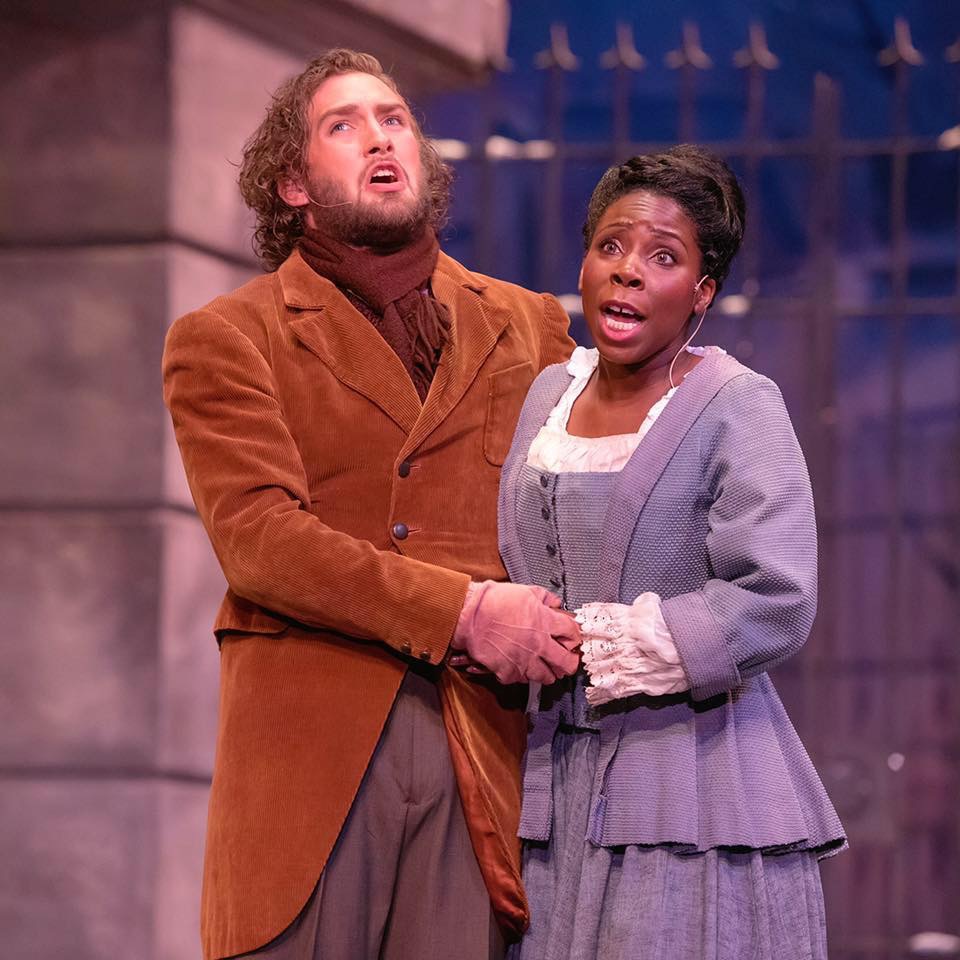
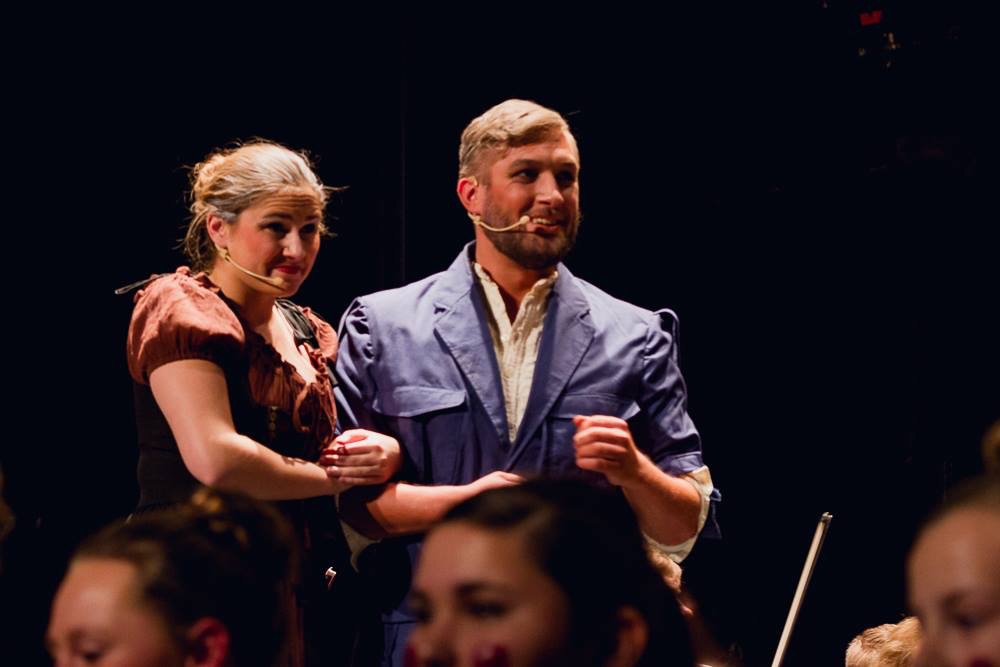
I sing with the Minnesota Opera Chorus, and I’ve also sung roles, solos, ensembles, and connected with many other arts organizations in this lively arts community, including Skylark Opera Theatre and An Opera Theatre. Concurrently, I sing all around the Upper Midwest and in Florida, taking on a variety of performing opportunities, both sacred and secular. Through continued vocal study with George Smith, I stay on the path toward refinement.
Additionally, I do my best to remain connected to where my singing began. I am an Abbey Singer at Saint Norbert Abbey and have been since my undergraduate days at Saint Norbert College. Under the direction of Devin Atteln, I have continued to serve as a cantor, soloist, ensemble singer, and choir member for feast days, holy days, and various special occasions as requested by the Praemonstratensian fraters.
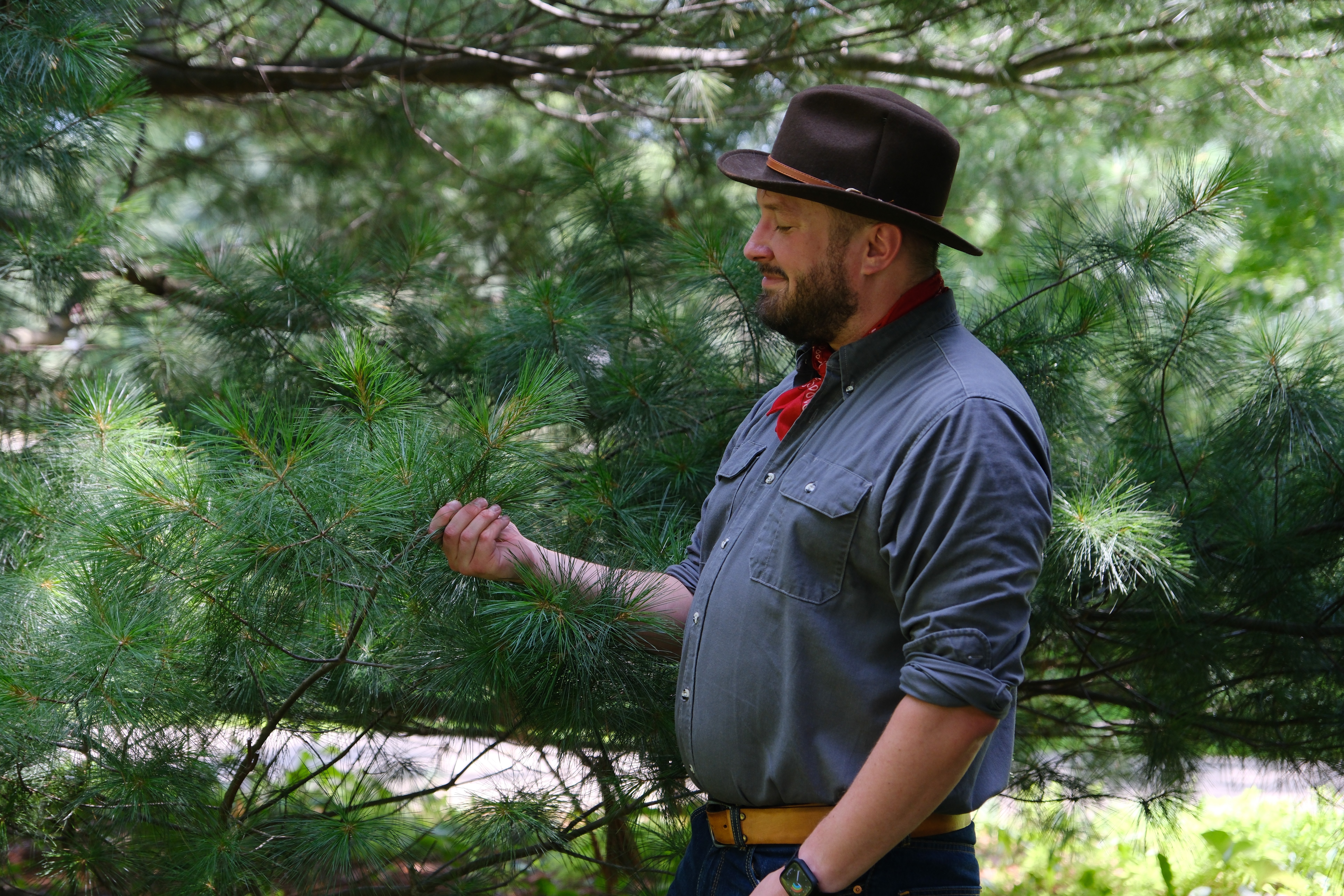
The Twin Cities have connected me to many artists and mentors, which has also led me to explore different genres of music. Thus, when the opportunity arose for me to research and present on lumberjack music as a guest lecturer at Saint Norbert College in 2024, I joyfully took it. Dr. Yi-Lan Niu and Dr. Jamie Waroff were instrumental in kickstarting what would unexpectedly become a new niche and passion within my singing career.
Folk music has always been a part of my life. Many summers were spent at Bear Paw Scout Camp as either a camper or a counselor, living in a tent, meeting all kinds of people, and singing plenty in the woods. As I continued through Saint Norbert College studying music, I was regularly brought back to those days of singing freely and earnestly. Many of the songs I learned at camp gradually led me to the lumberjack songs I sing today.
Even as I explored opera, musical theatre, sacred music, classical music, and jazz, folk music—particularly lumberjack songs—kept coming back into my life. My Uncle John Lampereur would find songs in the archives of the U.S. Forest Service while working for the Chequamegon-Nicolet National Forest. My grandmother, Joyce Lampereur, would find stories, memoirs, and songs through her research as a local historian and genealogist. Scout camp kept bringing me back to songbooks heavily inspired by work and occupational songs. Thus, a natural trove of information, resources, and personal interest has been growing for many years.
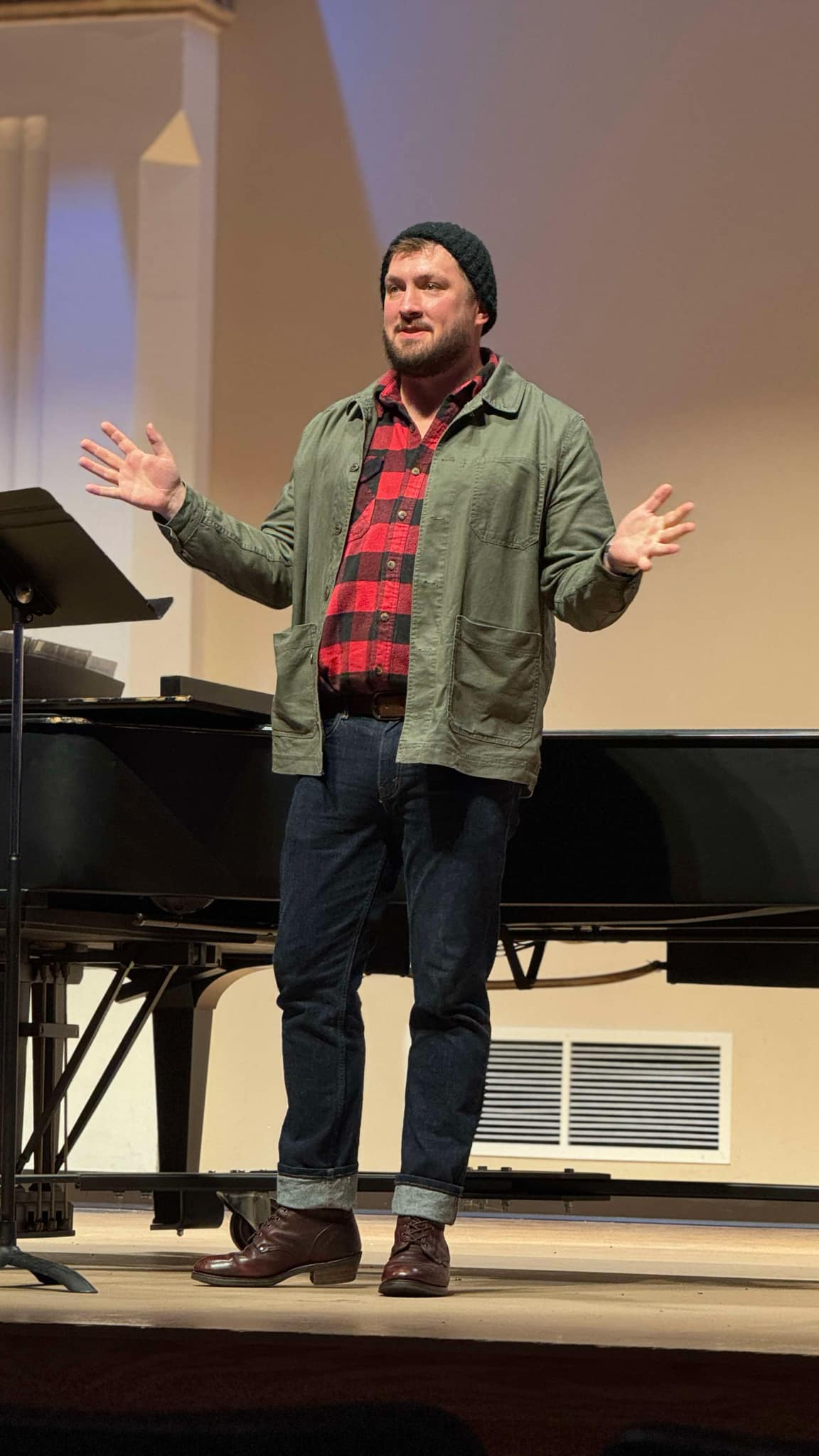
I took all these experiences and resources, formulated a presentation, built the Shanty Boys playlist on Spotify (now also on TIDAL), and the rest is history. I have since spoken and sung on the Wisconsin Today Show on Wisconsin Public Radio, toured around Wisconsin to deliver the lecture for community organizations and historical societies, and performed a set of lumberjack songs and tales in a 45-minute solo performance. I am currently preparing for my next lecture and performance, during which I also aim to share one or two new pieces of my own lumberjack songs.
Moving forward, I plan to bring this performance and lecture to new regions and to experiment with new formats. I’ve always thought a musical, opera, or variety show would be a fruitful setting for these songs and stories. I also know that, while my focus has primarily been in Wisconsin, many states, let alone nations, have shared in this musical tradition and contributed to its formation. I want to take this wherever I can! The further I dig into this aspect of the American musical tradition, the more I understand how it unites us all.
Before we let you go, we’ve got to ask if you have any advice for those who are just starting out?
First and foremost: a fulfilling music career is not cookie-cutter, nor is it likely what you conceive it to be at this moment. The more you accept that fulfillment, joy, and opportunity are created, not found, the happier you will be with whatever stage you are at in developing and growing your craft. Take a day job, go fully freelance, try new things, see new places, do whatever is best for your health and well-being. The process is the point, and the process is not one-size-fits-all.
Secondly, follow your passions. No matter how niche it may seem, what you are most interested in relating to your craft will fuel it far more than only sticking to convention. Once you can integrate the standards and fundamentals of study into your passions, the magic begins.
Finally, making mistakes is a normal, accepted, and natural part of learning and refining any skill. Musicians are often held to higher standards of perfection, and that can infiltrate the spaces we intentionally reserve for practice and experimentation. Seek compassionate, consistent, and knowledgeable guidance from a safe and trusted mentor, teacher, or professional. I would be remiss, therefore, to not thank Dr. Rosewall, Dr. Graham, George Smith, and David Cook for their continued support in my growth as an artist.
Contact Info:
- Email: matt.christoff.baritone@gmail.com
- Instagram: https://www.instagram.com/cattmristoff/
- Facebook: https://www.facebook.com/baritonechristoff/
- LinkedIn: https://www.linkedin.com/in/matthew-christoff/
- Youtube: https://www.youtube.com/@MattChristoff