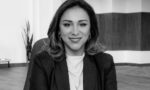



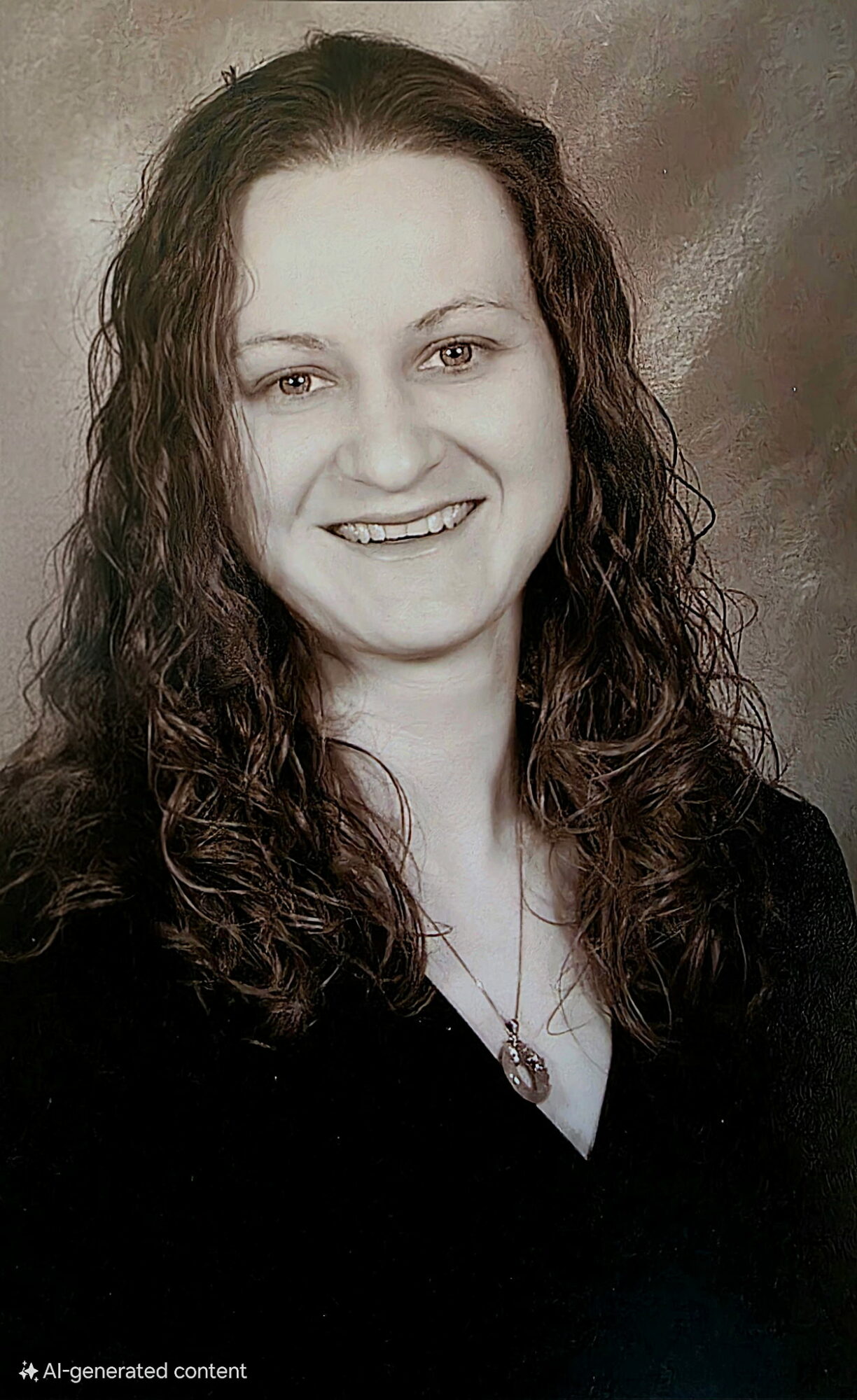
Today we’d like to introduce you to Lucy Kelleher.
Hi Lucy, thanks for joining us today. We’d love for you to start by introducing yourself.
I started as a Pre-PT during my undergraduate work at the University of North Dakota hoping to specialize in preventative physical therapist. As I experienced more of the PT world, I was guided by faculty to the field of biomechanics. This would allow me to analyze the physics of movement for efficiency and effective patterns as well as therapeutic interventions. A key member of the Athletic Training faculty was a physiotherapist from England who used manual therapies to help our teams. He shared with me many techniques that influenced the way I felt and understood the soft tissue of the body. No specific biomechanics degree was developed yet at UND, so I pieced together the required classes for a biomechanics graduate program with the help of the Physical Education chair.
After graduation, I relocated to Florida where, under state law, what I do in a clinical setting is considered massage. I attended a massage school to obtain the proper licensure. After this, I worked in clinical, sports, and resort settings gaining experience and further formulating my understanding of the effects of manual therapies on the soft tissue. When I had more questions than answers about soft tissue integrity and recovery, I started looking at graduate schools that would serve my research needs. I decided on the biomechanics program at Barry University in Miami Shores, FL.
At Barry, I was able to serve as the Biomechanics Laboratory manager and assisted with the data collection for many class and thesis research topics from differences in the velocity of bat swings between power and precision hitters to the ground reaction forces of the take off for a skateboard ollie trick. Personally, I was able to examine and present my research on the balance corrections between a free weight and a kettlebell for the Southeast Chapter of the American College of Sports Medicine in Birmingham, AL and completed my thesis on the internal joint forces of a catcher’s knee during three squat to throw scenarios.
After graduating from Barry University, I started teaching massage therapy back in Minnesota while working in spa and clinical settings. I was added to the faculty at St. Thomas University teaching biomechanics, anatomy and physiology, and research methods.
As I approached my dissertation, I moved back into a clinical setting to refine my topic. I met and worked with another massage therapist who had developed a technique of holding the head of the client against her abdomen while performing cervical work. After feeling the technique on my neck and being taught the modifications for the technique, I started thinking about what was creating the difference in feel for both the practitioner and patient. This formulated my interest in the comparison of the traditional lever system support hold versus the experimental wheel-axle system support hold during manual therapies on chronic whiplash sufferers. I am interested in furthering this research for implications in preventing whiplash and/or concussions in high risk athletic events.
I currently teach biomechanics for undergraduate and graduate students at Concordia University, St. Paul while running The Loony Bin. I opened The Loony Bin to focus on precise, biomechanically based therapeutic massage to improve athletic performance, aid in recovery from injury, illness, or chronic pain recovery, or deal with symptoms of progressive pathologies.
I’m sure it wasn’t obstacle-free, but would you say the journey has been fairly smooth so far?
I don’t fit into the massage world because the depth of anatomical and biomechanical education I have is usually more than what most massage employers and clients are looking for.
I have been called “just the massage girl” in academic settings.
I graduated from my M.S. in 2008 during the economic crash. This is why the only job I could find after grad school was teaching at a massage school.
After being accepted into A PhD program at Concordia University, Chicago and 5 months after having my 3rd child in under 4 years, my husband suffered from a rare condition called lymphocytic myocarditis and was put on ECMO in a medically induced coma before having an L-VAD implanted. During that process, he suffered a stroke in his right cerebral cortex making his ADHD symptoms a larger part of our experience raising the kids. I had to juggle his illness, therapies, and recovery process while doing the coursework and research for my dissertation. Lymphocytic myocarditis is when the white blood cells eat the muscle of the heart, so unlike a heart attack where one section of the heart gets damaged, my husband’s heart has scar tissue all over. Ironically, my work focuses on scar tissue stress-strain dynamics, so I uniquely understand that the damaged parts of his heart create a stress and tearing on the healthy parts of the heart that are left. This leads to a dramatic decrease in the heart’s ability to endure and recover from activity. His limited energy reserves place the majority of the responsibility as a parent and homemaker on me. While he works as a Supervisory Fraud Analyst, a normal 40 hour a week job leaves little energy to care for the house and kids. In addition to the numerous medications he needs to keep his heart functioning as well as the medical visits and procedures that are needed to understand the progression and treatment for his condition, we spend a lot of time and money on medical needs. This limited my ability to save the resources needed to open The Loony Bin until this past year, 10+ years after his initial illness. But being a spouse of a chronically ill individual gives me a unique empathy not only for my patients in pain but for their spouses.
We’ve been impressed with The Loony Bin, but for folks who might not be as familiar, what can you share with them about what you do and what sets you apart from others?
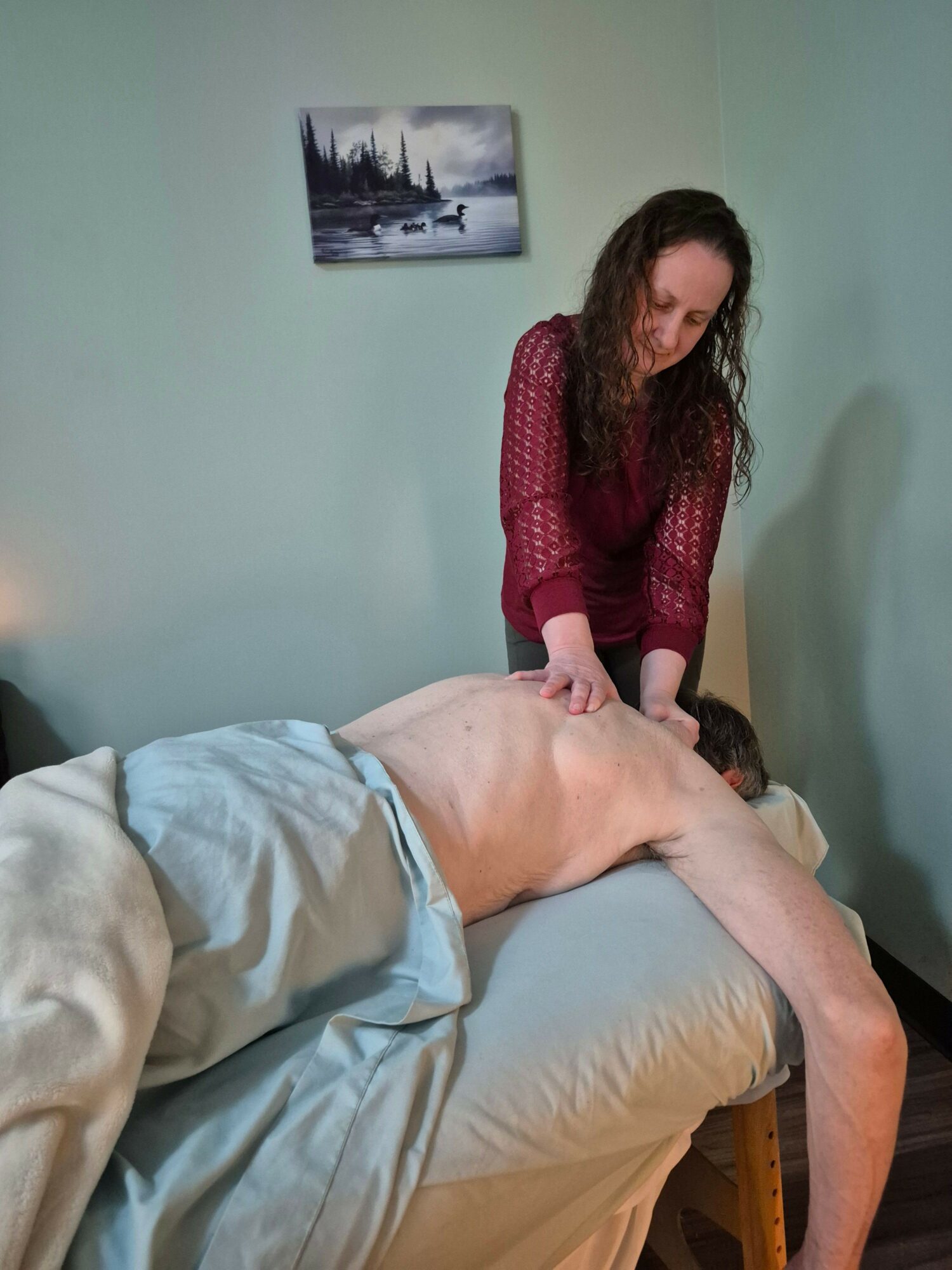
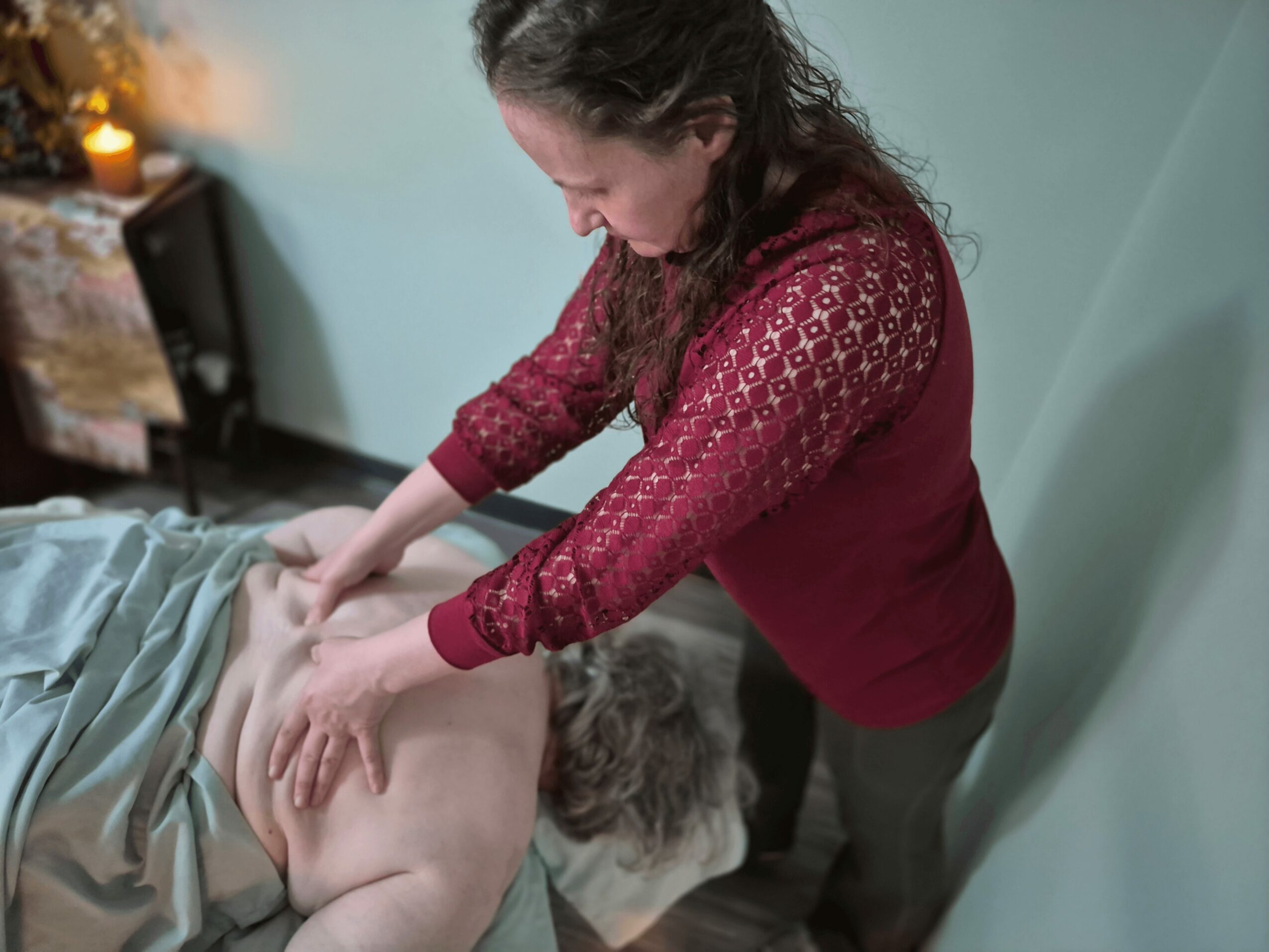
The Loony Bin is focused on manual therapies based on the stress-strain relationship of tissue. Each session comes with a 15 minute consult to determine the goals for the day by exploring what hurts, how it hurts, and what the individual’s movement and posture are revealing. The prices are all inclusive and there is a no tip policy. This is important to me as I do not believe individuals living in pain should have to extra pay to find relief. I do one type of massage, which may or may not be the correct fit for a person. I cultivate a strong network of varied practitioners with developed skills different from my own to whom I can refer if a person’s body does not respond to my type of specific therapy.
I specialize in targeted touch to modify movement patterns. It is precise in the depth of the target tissue, but not forceful. I do not believe in the “no pain, no gain” mindset. While specific and precise, real pain from a massage means tissue is being pushed beyond its limits and become damaged. This is not the purpose of a session. It should not result in the need for more work, but less. The more you see me, the less you should need to see me. Massage is like a 3rd party efficiency manager assessing the productivity of a department. It creates an external stimulus on the area that makes the brain understand the positioning and health of the tissue beyond the internal signals it receives from the nerves on a daily basis. I focus on muscles and refer to myself as a muscle advocate because I use manual therapies to accentuate the texture of the tissue to the brain allowing the brain to see the topography of the adhesions and mobility in the layers of the muscles and tendons. When it understands where damage has built up, it can focus the macrophages on that area for cleaning and repair. This is especially true when breaking down scar tissue in and between muscle fibers and other connective tissue.
I have a deeper understanding of the physics of movement and anatomical specifics that create movement than most massage therapists most movement practitioners. I also understand and study the different types of pain stimuli, what creates the pain, and the meaning behind how one describes pain. My work has been compared to taking one to the edge of pain to look over the cliff, but then not dropping them in. This balance of creating enough stimulus to alert the brain to know change needs to happen without creating damage allows the tissue to get the appropriate amount of attention for not over or under healing during tissue recovery.
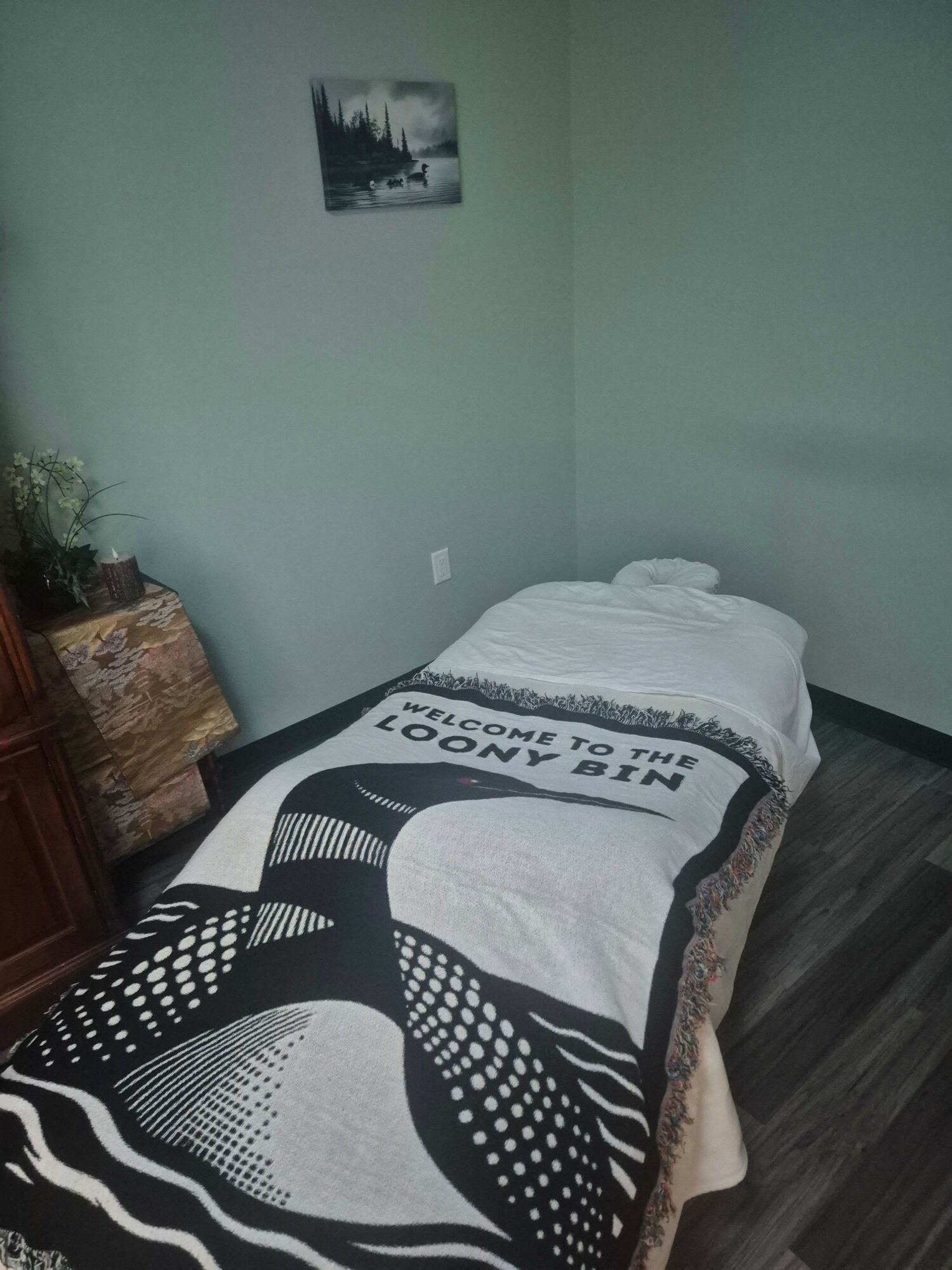
The Loony Bin got its name from the Minnesota state bird, the loon. In Ojibwe stories, the loon was is a spiritual messenger, leader, and a helper in creation; this is similar to how I see the role of manual therapies as a stimulus for tissue healing. Loons are also known as ideal co-parents for their chicks for the first 12-14 weeks. Then, the adult loons migrate having taught the chicks to be independent and self-sufficient. This is the way massage should work….fix the issue at hand so the person can manage their recovery on their own seeking help from practitioners for occasional flare ups.
Chronic or progressive pathologies need specialized care with which to slow symptom progression. Understanding the tissue’s response to the applied force needs to be paramount during a session as overstimulation can be delayed creating pain later. Many chronic pain issues can be hard to understand and relief may be frustrating to find making the patient feel lost navigating through different practitioners. With musculoskeletal pain and neurological pain patterns, a deeper understanding of the kinetic chain can answer questions and validate a patient’s experience. I often say that my patients are not crazy for feeling the pain they are in. They tease back that they must be crazy to come back for the intense massage experience but do appreciate the increased freedom in movement felt afterwards.
Where we are in life is often partly because of others. Who/what else deserves credit for how your story turned out?
My parents who cultivated curiosity, mechanics, science, and exploration of educational discovery. I am known for taking a student’s research interests and narrowing their topic into a precise, innovative hypothesis. The pride and excitement my parents demonstrate for every new adventure and question is amazing. Their support is positive and refocusing during troubles and failure, indescribable and unrelentingly beautiful during growth and success.
My husband is the best cheerleader who believes in my ability to succeed no matter how frustrated I become. He challenged me each time I wanted to not enroll or quit my educational journey. He fully supported my role to open The Loony Bin during unsure times.
My father-in-law, who I know I can turn to with any question or for any help. His effortless caring is such a model to follow as the complete support system for anything. Even if he isn’t confident, he’ll say “yes” and then ask all the questions to be successful.
My colleagues who are just as curious and inquisitive as I am. They listen to my musings and supplement with their expertise in their specialities.
My patients for their gratitude, support, and trust. It is an honor to be trusted by those whose pain creates a sense of vulnerability and humbling to be mentioned as having a role in their ability to feel more independent.
Pricing:
- $100 for 30 min session (45 minute total appointment time)
- $185 for 60 min session (75 minute total appointment time)
- $250 for 90 min session (105 minute total appointment time)
- Taxes and fees included
- No gratuities accepted
Contact Info:
- Website: https://Loony-Bin.massagetherapy.com
- Instagram: @LucyMassageMinnesota
- Yelp: https://www.yelp.com/biz/the-loony-bin-saint-paul