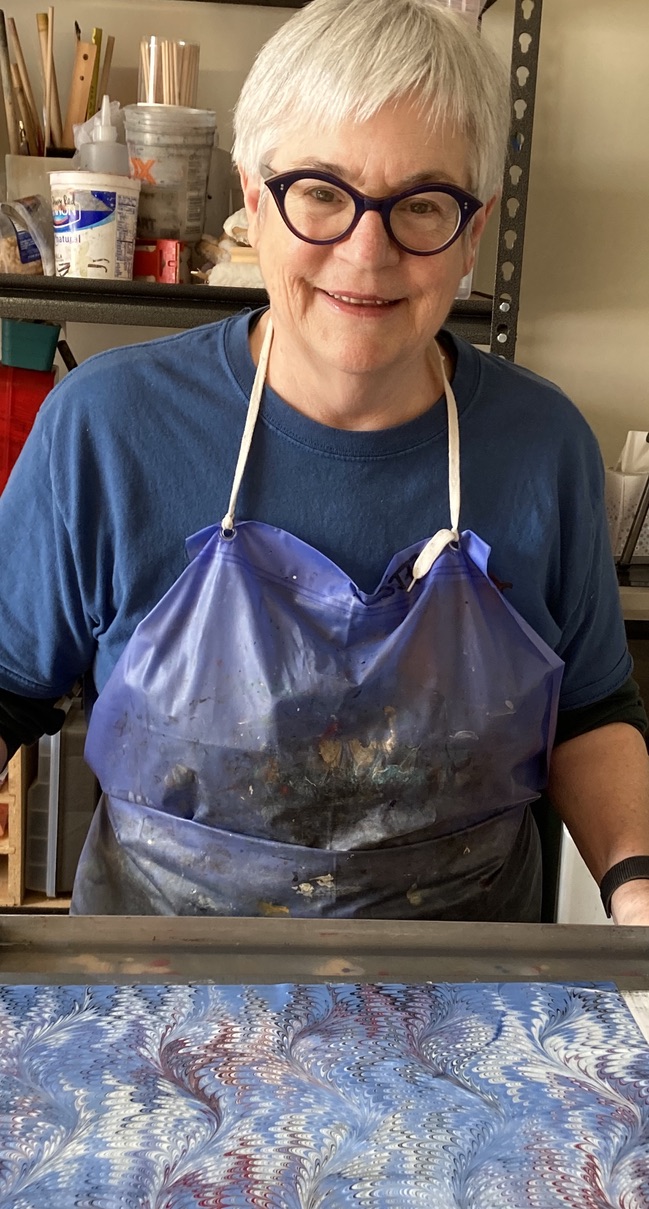





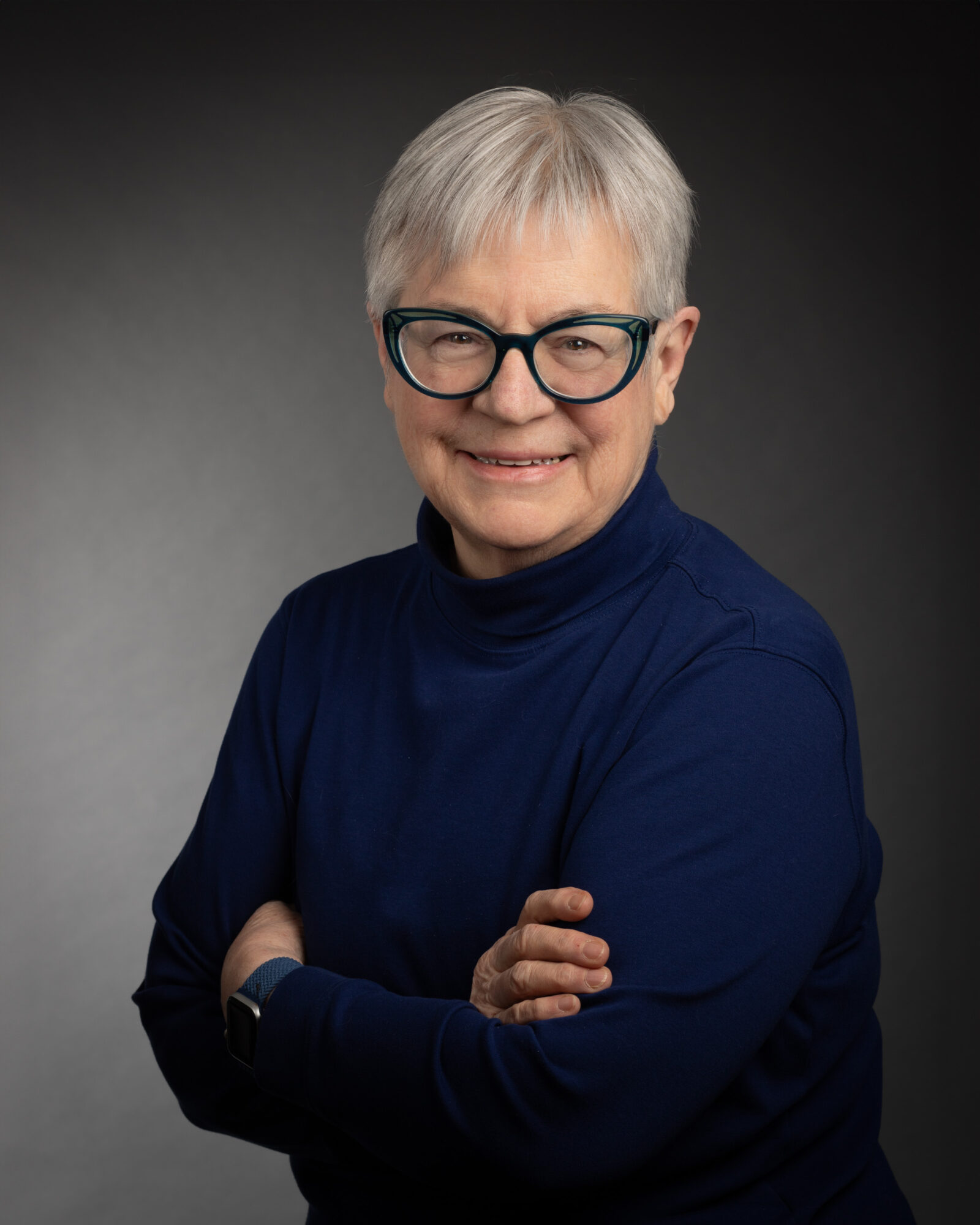
Today we’d like to introduce you to Sally Power.
Alright, so thank you so much for sharing your story and insight with our readers. To kick things off, can you tell us a bit about how you got started?
In 2001, I first saw marbling demonstrated at an event that celebrated the first anniversary of Mn Center for Book Arts’ (MCBA) new studios. My response: “I want to learn how to do that! Where do I sign up!?!”
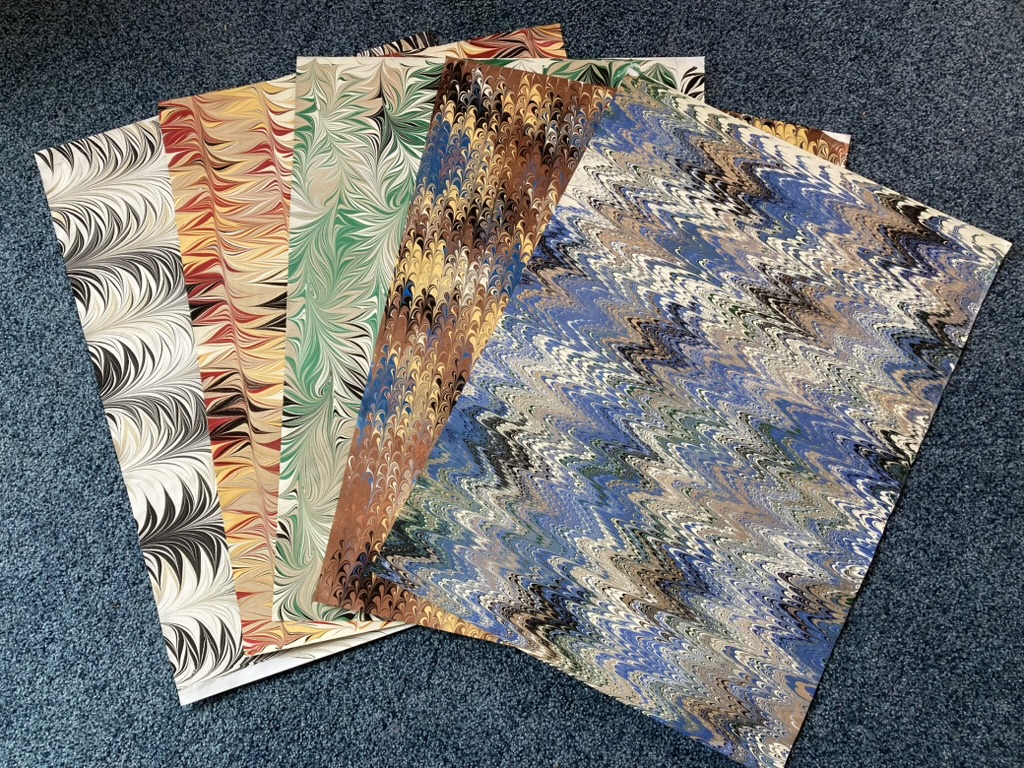
Marbling is a mesmerizing process — paint is dropped on the surface of a liquid and you watch as the different colors expand with varying dimensions. Then the marbler begins to pull combs across the surface producing patterns; each pattern is beautiful but then the next comb through the vat produces a different, beautiful pattern. As a finishing touch, the marbler lays a sheet of paper down on the surface and then pulls it up and the last pattern is magically transferred to the paper. My response was the same when i first saw it as the same as most people who are smitten with the marbling bug.
For the next decade marbling was my hobby — I was a full-time college professor teaching MBA students about organizations and so my time was limited. In 2011, I retired and as soon as I realized I didn’t have to continue to earn money, I turned my full attention to marbling. I was very lucky because at that time MBCA was very open in terms of making the studios and marbling equipment available if people were already trained in the basics of how to use them. That allowed me to work on my craft/art more than the norm. Also, I became part of the extended staff for the studio and so I also began to learn more about how to prepare and manage the studio for marbling. And, MCBA had attracted a number of working artists in various aspects of the Book Arts who were very generous with their time and knowledge about how the art world worked.
I also learned something about the history of marbling. The primary way marbled papers were used during the 17th, 18th, and into the 19th centuries were as decoration on the end pages and covers of books. While this popularized the art form it also pigeon-holed it as a branch of the book arts and as a purely decorative art form. It wasn’t until about the 1960s when artists “rediscovered” marbling and began to experiment with it as an art. Their work has now been collected at the Metropolitan Museum in New York in the Paper Legacy Collection and described in the book, Pattern and Flow: A Golden Age of American Decorated Paper, 1960s-2000 by Mindell Dubinsky.
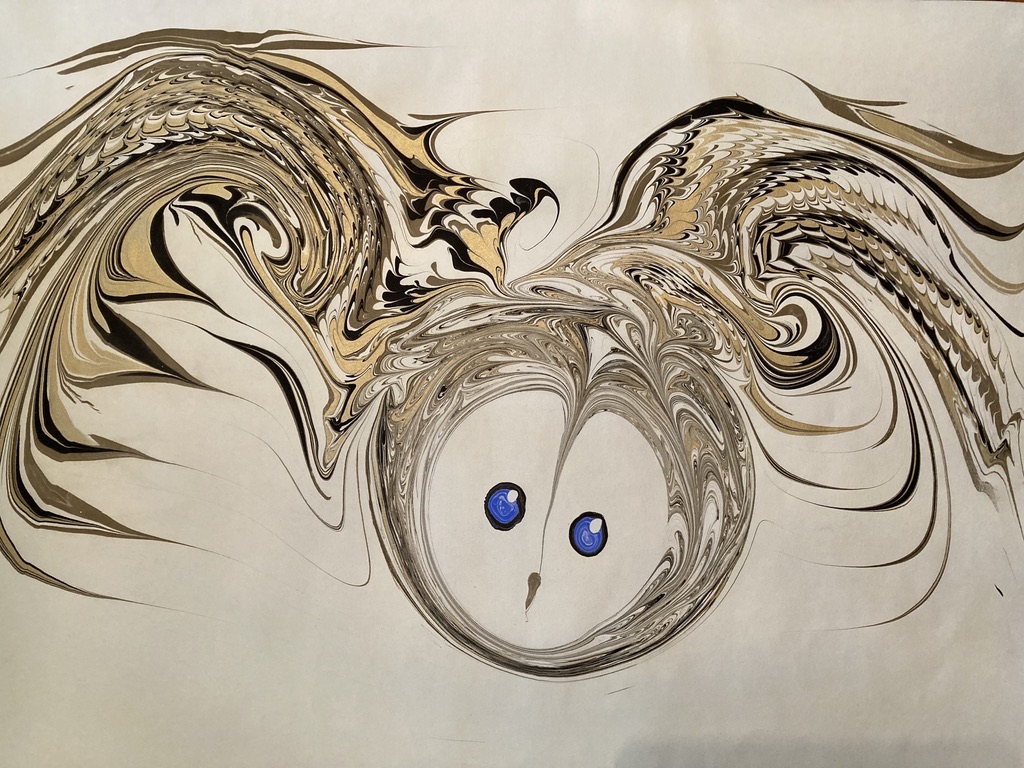
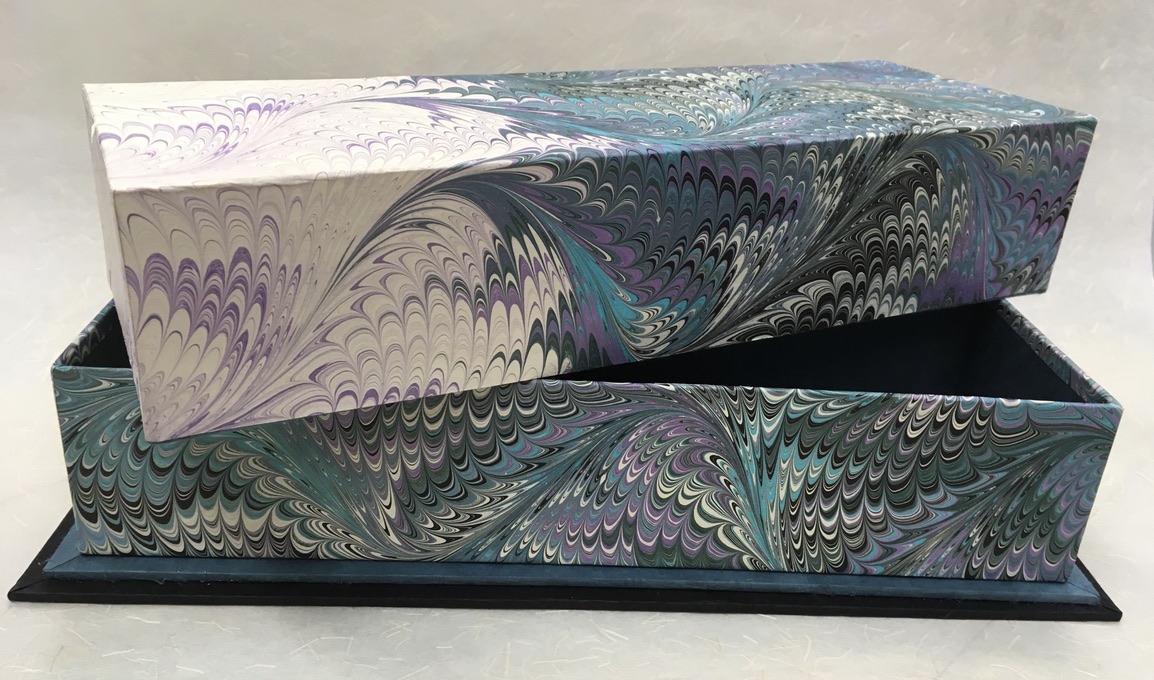
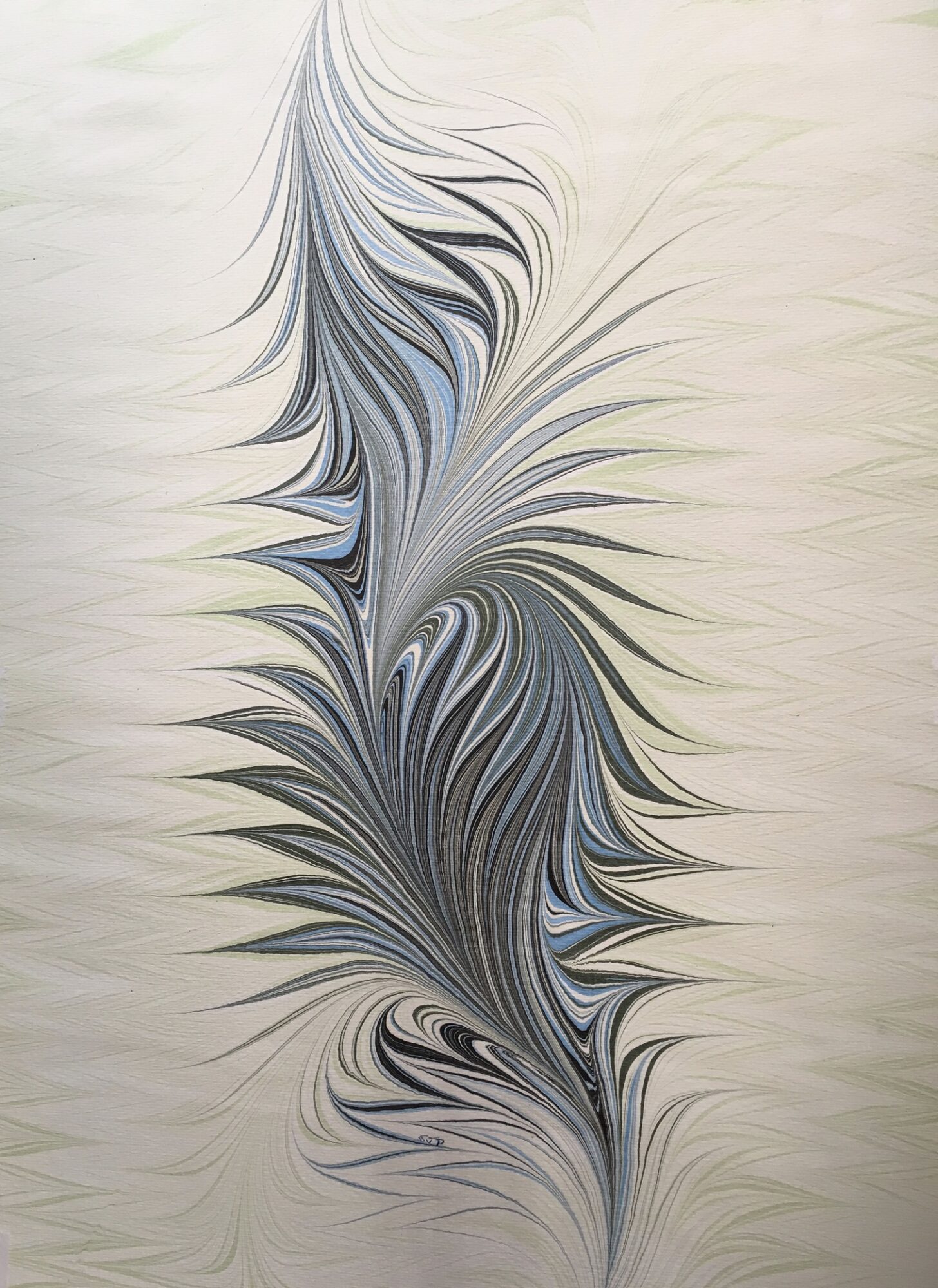
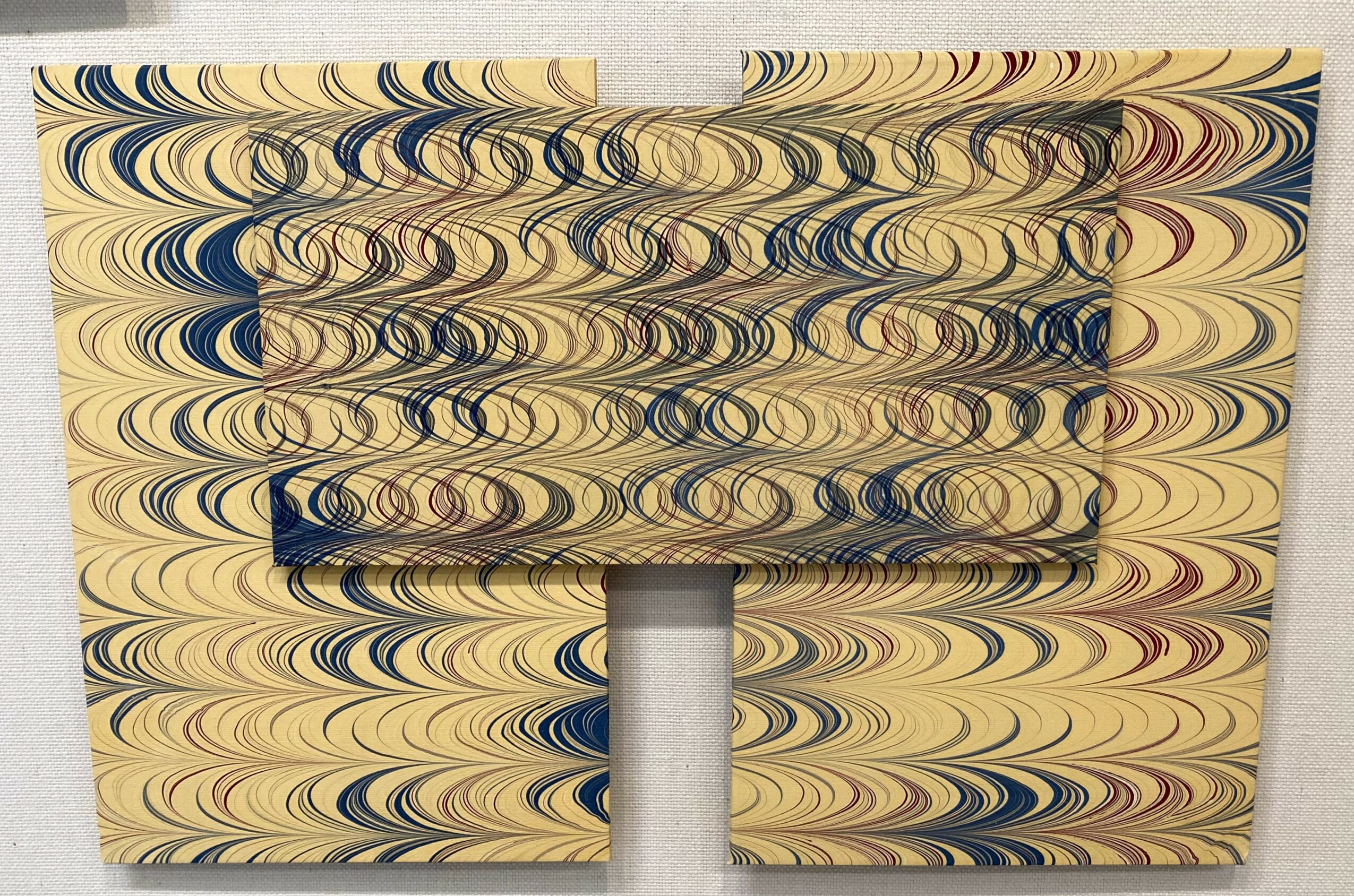
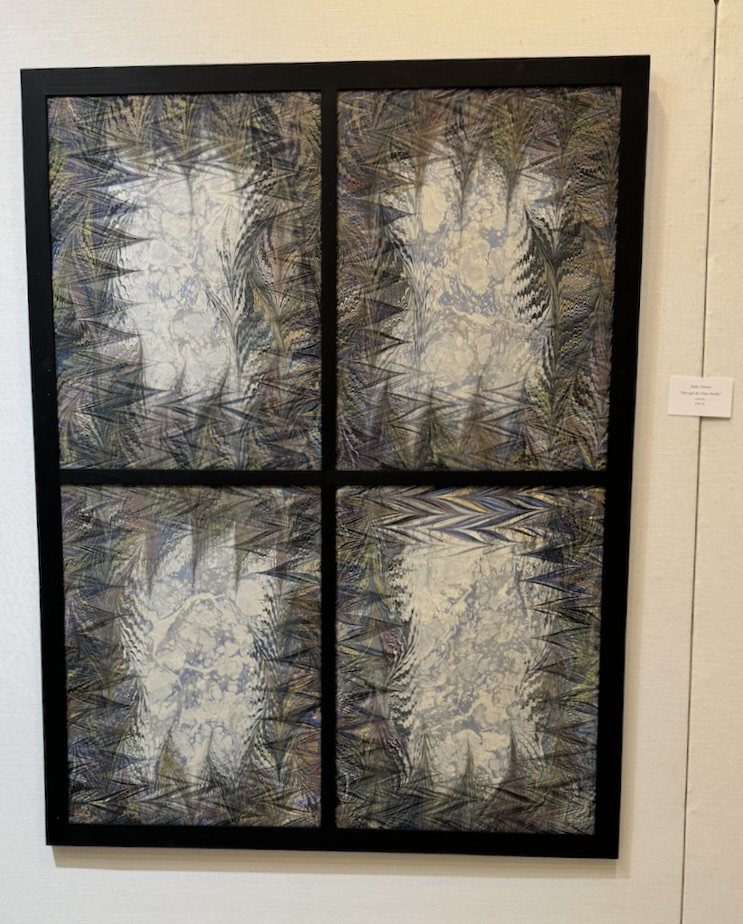
My knowledge and abilities as a marbler grew. I delved into the craft side of the marbling by making books and boxes, decorating them and selling them. I also branched out and explored a number of variations on the art of marbling. I learned from the work being done in the US, Canada, Turkey, and Europe. I also sought out other teachers, most specifically, Antonio Vélez Celemin and the Chena River Marblers. My work thus far has been as a variation on Turkish Ebru art that focuses on drawing on the water with a stylus, as well as using negative space. This approach to marbling is different because rather than producing a sheet of paper to be cut up and used to decorate something else, it produces a picture which can be hung. I’ve also experimented with creating bigger pieces by mounting related sheets onto boards and connecting decorating those boards.
In this time period I also began teaching at MCBA and developed a curriculum within marbling to share what I had learned with other developing marblers. This provided me with a view of arts programing and I could see how crafters/artisans could progress in their work from being an occasional marbler to submitting pieces for shows, to submitting to juried shows, to doing his/her own solo show. Also, I was able to see how shows were put together and hung.
In 2019 I heard a presentation by Regina St. John of the Chena River Marblers in which she made the point that marbling is an endangered art form and pointed out that in the Heritage Crafts Foundation in the United Kingdom had identified it as such in a study of various crafts in the UK. This made a lot of sense to me given what I had observed and I could see the danger to an art form I thought was unique and deserved to be continued.
The observations that supported that conclusion included:
Marbling is a totally different art form from most printing, the primary focus of the book arts. So, marbling must compete with all the other book arts for programing time, energy, and resources at the various art centers.
MCBA is unique among American art centers in that it teaches marbling regularly. Because of this a group of marblers had formed. We had put together a group to discuss marbling techniques and challenges and called it the Marbling Forum. It allowed us to exchange ideas and concerns about not just marbling but also it’s future.
Most teaching of marbling nation-wide is done by teachers who move around bringing their equipment (vats, combs, paints, boards for managing the paper, etc.) with them — and, when the classes are over, they move on with their equipment. This makes it very difficult for people who have been introduced to marbling, to begin to marble because assembling the equipment as well as finding a place to marble is a big challenge. In essence, this approach to teaching does not allow the infrastructure to sustain and grow the art form to be built.
When activities started up again after covid, the group found it harder to get access to the resources needed to work and develop their marbling skills. We decided to attempt to put together a group whose focus would be on marbling and decided to call it Midwest Marbling (https://www.midwestmarbling.art/). A smaller group among us committed to renting a studio if we could find one within our means. After more than a year searching (it is hard to find a small studio with a sink and water!), we were able to find a studio and started renting in July 2024. It is small but so far it is meeting our needs and it is ours to schedule as we see fit. Midwest Marbling a range of activities — workshops, shows, opportunities for those without access to good space for marbling to practice their skills, and educational presentations of all sorts. In July 2025, the two entities, Midwest Marbling and the studio, began to combine organizationally with Midwest Marbling taking on a share in the rent. It is our plan to continue this process as the the income from Workshops continues to grow. Essentially we have started an Art Center with a focus on Marbling and we believe this is the first such center in the U.S. Thus far it has totally been a volunteer effort.
As I learned when I was starting as a marbler — resources and space to practice are very important. I was lucky; I had the space to practice and the opportunity to learn about the art form and it’s world from a range of artists. This center can provide that. Assuming it succeeds it can also provide an institutional base for activities that involve more and more people and larger and larger areas via shows, workshop programs, and conventions. To date, there have been only a few art shows that have focused on marbling — without such shows, how can more people be introduced to marbling and without such show, how can artists learn from each other and see possibilities so that the art form evolves? I firmly believe that marbling can be more than a decorative art — a classification that fit it in the 18th century when it was a supplier to the book binding world. It can be much more than that as I hope some of my pieces show.
Many have contributed their time and energy as well as their funds to this endeavor so far. And of course when you take time and energy to contribute to an organization, you are taking time and energy away from your artistic endeavors. I certainly never expected to be running an organization at this stage in my life!! But we hope there is a pay-off for all of us in terms of more opportunities to grow our art and to share it with others. It is our hope that Midwest Marbling’s success continues and it provides the institutional energy and structure to marbling when (if?) its popularity ebbs again as it did in the 1950s.
I’m sure it wasn’t obstacle-free, but would you say the journey has been fairly smooth so far?
1. Finding a studio
2. Finding people who would enjoy marbling but don’t know it exists (marketing)
Thanks – so what else should our readers know about your work and what you’re currently focused on?
I’m a paper Marbler who is also running an center focused on marbling.
Where we are in life is often partly because of others. Who/what else deserves credit for how your story turned out?
The artists I have learned from at MN Center for Book Arts and elsewhere and the members of Midwest Marbling who have contributed their time, effort, minds, and resources to this ongoing effort. Specifically: Mary Holland, Parry Cadwallader, Stacy Gabriel, Caron Moore, Michelle Blodgett, Sandra Potter, Chante Wolf, Gail Steward, and all the other members of Midwest Marbling (we now number 39 in our third year of existence.
Contact Info:
- Website: www.sallypower.com and www.midwestmarbling.art
- Instagram: midwestmarbling
- LinkedIn: https://www.linkedin.com/in/sallypower/
- Other: https://www.tpt.org/mn-original/profile/sally-power/